English
 中文简体
中文简体 русский
 Español
Home / Blog / Industry News / Why Is Ultrasonic Welding the Preferred Bonding Method for Disposable Products?


Request A Quote

Content
Ultrasonic technology applied to disposable products refers primarily to ultrasonic welding — a manufacturing process that uses high-frequency mechanical vibration, typically between 20 kHz and 70 kHz, to generate localised frictional heat at the interface between two thermoplastic components. This heat causes the plastic at the joint zone to soften and flow, and when the vibration stops and pressure is maintained momentarily, the softened material solidifies into a molecular bond that is structurally continuous with the parent materials on either side. The result is a weld — not an adhesive joint, not a mechanical fastening — that integrates the two components into a single unified structure.
For disposable products, this welding method offers a specific set of advantages that align precisely with the requirements of high-volume, single-use manufacturing. Disposable products must be produced rapidly at very high unit volumes, must meet strict contamination and sterility standards, must be sealed with sufficient integrity to contain fluids or withstand handling, and must be manufactured without introducing any materials — adhesives, solvents, or fasteners — that could compromise product safety or regulatory compliance. Ultrasonic welding addresses all of these requirements simultaneously, which explains its dominant role across the disposable product manufacturing sectors of medical devices, personal hygiene, food packaging, and consumer single-use goods.
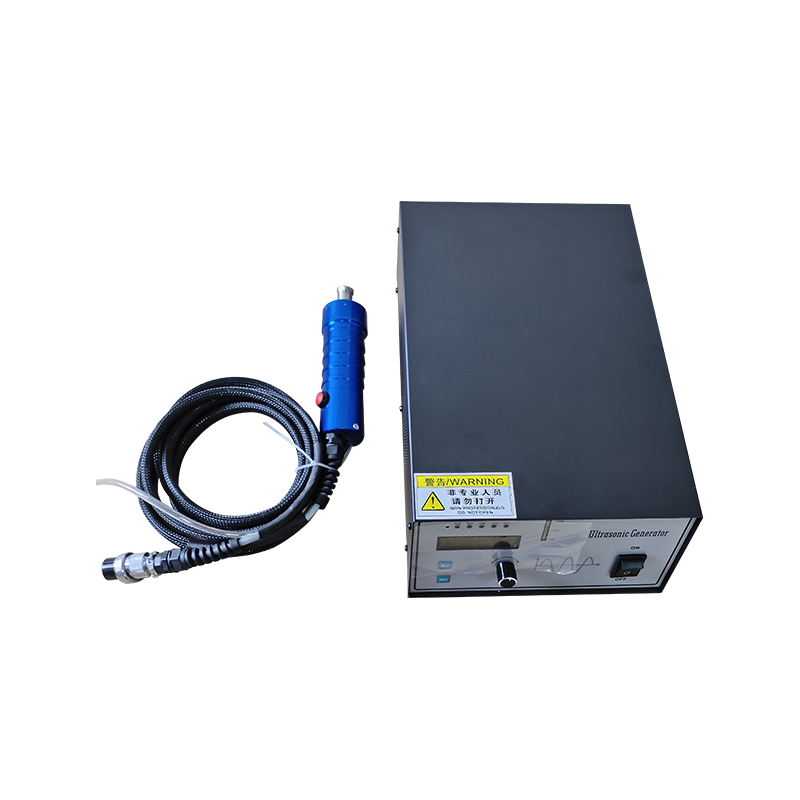
Understanding the mechanics of the ultrasonic welding process clarifies why it is so well suited to disposable product manufacturing. The process involves four core components working in sequence: the ultrasonic generator, the converter, the booster, and the horn (also called the sonotrode). The generator converts standard electrical power into a high-frequency electrical signal at the operating frequency of the system — typically 20 kHz, 30 kHz, or 40 kHz depending on the application. The converter transforms this electrical signal into mechanical vibration of the same frequency using piezoelectric crystals. The booster modifies the amplitude of the vibration, and the horn — a precision-machined metal tool shaped to match the geometry of the part being welded — transmits the vibration directly to the work surface under controlled pressure.
When the horn contacts the upper component and pressure is applied, the ultrasonic vibration travels through the material to the joint interface, where the designed geometry of the energy director — a small raised feature moulded into one of the components — concentrates the vibrational energy at a precise location. The energy director melts first, then flows across the joint surface as welding progresses. The entire weld cycle for a typical disposable product component lasts between 0.1 and 3 seconds, making it one of the fastest joining methods available for thermoplastic assembly. After the vibration stops, a hold phase of typically 0.2 to 1 second allows the molten material to solidify under pressure before the part is released, completing the weld.
The medical disposable product sector — which includes syringes, IV drip chambers, blood collection tubes, surgical drapes, wound dressings, dialysis filters, and hundreds of other single-use components — has specific manufacturing requirements that make ultrasonic welding not merely preferable but in many cases the only practical joining method. Medical disposables must meet stringent biocompatibility and sterility standards, which means that any material introduced into the product during manufacturing — including adhesives, solvents, or lubricants — must be evaluated for biological safety and its potential to contaminate the product or leach into patient contact surfaces.
Ultrasonic welding introduces no foreign material whatsoever into the joint — the bond is formed entirely from the thermoplastic material already present in the components. This eliminates biocompatibility concerns related to the joining process itself and simplifies regulatory documentation for medical device manufacturers seeking approval under standards such as ISO 13485 or FDA 21 CFR Part 820. The hermetic seals achievable through ultrasonic welding on thermoplastic components also meet the fluid containment requirements of products such as IV bags, blood bags, and diagnostic cartridges without requiring secondary sealing operations.
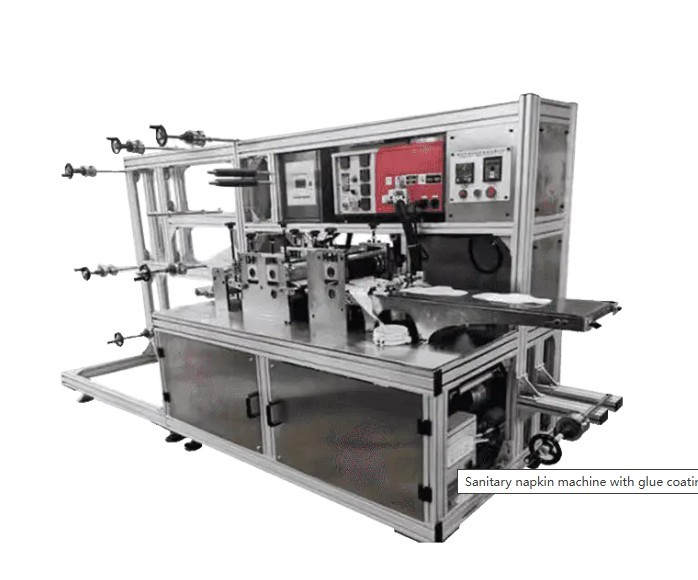
The personal hygiene disposable sector — encompassing diapers, adult incontinence products, feminine hygiene items, and disposable wipes — represents one of the highest-volume applications of ultrasonic welding technology globally. These products are manufactured at production speeds that can exceed 800 units per minute on modern automated lines, and the joining technology used must keep pace with this throughput without compromising seal quality or product integrity.
In nonwoven disposable manufacturing, ultrasonic welding is used in a continuous rotary format rather than the intermittent press-and-release cycle used for rigid thermoplastic components. A rotary ultrasonic horn rotates in contact with a patterned anvil roll, and the nonwoven material — typically a multi-layer laminate of polypropylene spunbond and absorbent core materials — passes continuously through the nip between them. The horn's vibration and the anvil pattern create a grid of weld spots or a continuous weld seam that bonds the layers together and, in products like diaper side panels, creates the elastic waistband attachment that gives the product its fit. The speed, cleanliness, and reliability of rotary ultrasonic welding make it effectively irreplaceable in this manufacturing context.
In food packaging, ultrasonic sealing is used to close flexible packaging formats — pouches, sachets, and bags — that contain powders, liquids, or semi-solid food products. Unlike conventional heat sealing, which applies heat to the outside of the packaging material and conducts it inward to the seal zone, ultrasonic sealing generates heat directly at the seal interface through friction. This distinction has a critical practical implication: ultrasonic sealing can produce consistent, strong seals even when food product contamination is present at the seal zone.
In conventional heat sealing, food particles or liquid residue trapped in the seal area acts as a thermal insulator, preventing the packaging film from reaching sealing temperature at that point and creating a weak or open seal — a leading cause of packaging integrity failures and food spoilage. Ultrasonic sealing generates heat through the vibration of the film layers themselves, displacing liquid contamination from the seal zone during the weld cycle and producing a reliable seal despite the presence of residue. This makes it the preferred sealing method for liquid-filled pouches, sauce sachets, and dairy product packaging where contamination of the seal zone is difficult to prevent entirely.
Consumer disposable goods outside the food and medical categories — including disposable razors, single-use cutlery and tableware, travel hygiene kits, and cosmetic sample packaging — also use ultrasonic welding for assembly and sealing operations where adhesive-free, rapid, reliable bonding is required.
Ultrasonic welding is applicable to a specific range of thermoplastic materials, and the weldability of a material is determined by its acoustic transmission properties, melting point, and stiffness. Amorphous thermoplastics — materials with a disordered molecular structure — transmit ultrasonic energy efficiently and melt within a narrow temperature range, making them generally easier to weld reliably. Semi-crystalline thermoplastics transmit energy less efficiently and require more precisely controlled process parameters to achieve consistent weld quality.
| Material | Type | Weldability | Common Disposable Applications |
| ABS | Amorphous | Excellent | Diagnostic cartridge housings, medical device casings |
| Polystyrene (PS) | Amorphous | Excellent | Petri dishes, sample containers, food trays |
| Polycarbonate (PC) | Amorphous | Very Good | IV drip chambers, optical diagnostic components |
| Polypropylene (PP) | Semi-crystalline | Good (near-field) | Syringe bodies, nonwoven hygiene products, food pouches |
| Polyethylene (PE) | Semi-crystalline | Moderate (near-field) | Flexible packaging seals, bag closures |
| PVC | Amorphous | Good | Blood bags, IV tubing assemblies, blister packaging |
Manufacturing disposable products at scale — where millions of units are produced per day across multiple production lines — requires ultrasonic welding systems capable of maintaining consistent weld quality across the entire production run without continuous operator intervention. Modern ultrasonic welding systems used in disposable product manufacturing incorporate closed-loop process control that monitors weld energy, peak power, collapse distance, and weld time on every cycle and compares the measured values against a defined process window. Parts that fall outside the acceptance window are automatically flagged or ejected, providing 100% in-process quality control at production speed.
This capability is particularly critical for medical disposables, where a seal failure in a product like a syringe or IV set has direct patient safety implications. The data logging capability of modern ultrasonic welding controllers also supports the traceability requirements of medical device quality management systems — every weld can be associated with a time stamp, machine identifier, and process parameter record that supports investigation if a product quality issue is identified downstream.
For manufacturers and product developers evaluating joining and sealing technologies for disposable product applications, the practical advantages of ultrasonic welding can be summarised across several dimensions that directly affect production economics, product performance, and regulatory compliance:
The alignment between ultrasonic welding's technical capabilities and the manufacturing requirements of disposable product categories — speed, cleanliness, seal integrity, material compatibility, and process controllability — explains its entrenched position as the joining technology of choice across medical, hygiene, food packaging, and consumer single-use product manufacturing. For product developers designing new disposable products, or manufacturers evaluating process improvements for existing lines, ultrasonic welding represents a proven, scalable, and regulatory-compatible solution that continues to evolve with advances in generator electronics, horn materials, and automation integration.

Copyright © ChangZhou AoHeng Machinery Co., Ltd. All Rights Reserved