English
 中文简体
中文简体 русский
 Español
Home / Blog / Industry News / Ultrasonic Welding of Plastics: Process, Materials, Joint Design & Equipment


Request A Quote

Picture a production line where thousands of injection-moulded plastic parts need a permanent, watertight joint every few seconds. Adhesive takes minutes to cure, solvent welding creates fume and inspection headaches, and fasteners add weight and cost. Ultrasonic welding of plastics completes the same joint in under one second, with no consumables, no glue, and no external heat source. That is why it has become the default joining method for everything from car door panels to medical filter housings, provided the material pair and joint geometry are chosen correctly.
Content
Ultrasonic welding converts high-frequency electrical energy into mechanical vibration. A generator, also called a power supply, turns mains electricity into a 15 kHz to 40 kHz electrical signal. A transducer, or converter, turns that signal into mechanical vibration. A booster modifies the amplitude. A horn, also known as a sonotrode, delivers the vibration to the upper plastic part. The parts are held under pressure in a fixture, and the horn presses down on the top part while vibrating perpendicular to the joint line.
Friction between the two mating surfaces generates heat exactly at the interface. The thermoplastic melts, the molecules of both parts interdiffuse, and when vibration stops and the part is held still for a few hundred milliseconds, the melt solidifies into a weld that is often as strong as the bulk material.
Two operating modes are common:
The advantages are measurable rather than theoretical. Weld cycles of 0.5 to 1.5 seconds give throughput that adhesive or hot-plate welding cannot match. No solvent, adhesive, or mechanical fastener enters the product, so the bill of materials shrinks and there is no curing time. Because heat is generated only at the joint interface, the rest of the part stays cool, protecting heat-sensitive components and fine surface details. The process is easily automated and gives a clean, flash-free joint that is suitable for hermetic seals in filters, valves, and packaging.
The limitations matter just as much. Ultrasonic welding only works with thermoplastics, and semi-crystalline grades such as polyethylene and polypropylene need more energy and careful joint design than amorphous grades like ABS or polystyrene. Parts must be able to transmit vibration to the joint. A large, flexible part with the joint far from the horn may not weld reliably. Tooling is part-specific; a change in part geometry normally means a new horn and fixture.
Material selection is the first thing to get right. The table below summarises typical behaviour for common engineering thermoplastics. The reference article on ideal materials for ultrasonic welding goes into more depth on less common resins and blends.
| Material | Weldability | Practical notes |
|---|---|---|
| ABS | Excellent | Low energy, forgiving, works in near-field and far-field |
| Polystyrene (PS) | Excellent | Easy to weld; tends to flash if energy is too high |
| Polycarbonate (PC) | Good | Needs controlled amplitude; risk of stress cracking |
| Polypropylene (PP) | Good | Semi-crystalline; needs higher energy and a shear joint |
| Polyethylene (PE) | Fair | High melt flow; joint geometry is critical |
| Nylon (PA) | Good | Moisture content affects quality; dry parts preferred |
| PET / PBT | Fair | Requires high amplitude and careful fixture design |
| PVC | Fair | Stabilisers influence results; adequate venting needed |
| POM (Acetal) | Good | Excellent with shear joints; avoid thin sections |
| PMMA (Acrylic) | Good | Clean welds; watch for surface marking |
Dissimilar materials can be welded only when they are chemically compatible, generally amorphous-to-amorphous or semi-crystalline-to-semi-crystalline pairs with similar melting temperatures. A quick compatibility check before tooling is made will save far more time than any later process tuning.
The joint geometry determines whether the horn's vibration becomes a weld or just a hot spot. Two classic designs cover most applications.
A triangular ridge moulded onto the joint face concentrates the initial contact area, so melt forms quickly and predictably. It is the standard choice for amorphous plastics. Typical energy director height is 0.3 to 0.7 mm; the width and angle should be matched to the material's melt behaviour.
A shear joint is an interference fit: a small step on one part is forced into the mating part as the material melts, creating a continuous melt zone. Semi-crystalline plastics such as PP and PE are much more reliable with a shear joint because the process creates vertical melt that resists the material's tendency to snap back. Designers usually specify an interference of 0.2 to 0.5 mm per side.
Step joints, tongue-and-groove joints, and chisel designs are variations used to seal against liquid, control flash, or strengthen thin-wall sections. Whatever the geometry, the horn must touch a flat, rigid surface close to the joint. Tooling is fully custom: the horn is shaped to the part contour and the fixture holds the lower part without damping vibration. For unusual part shapes, custom-machined horns and moulds are normally unavoidable.
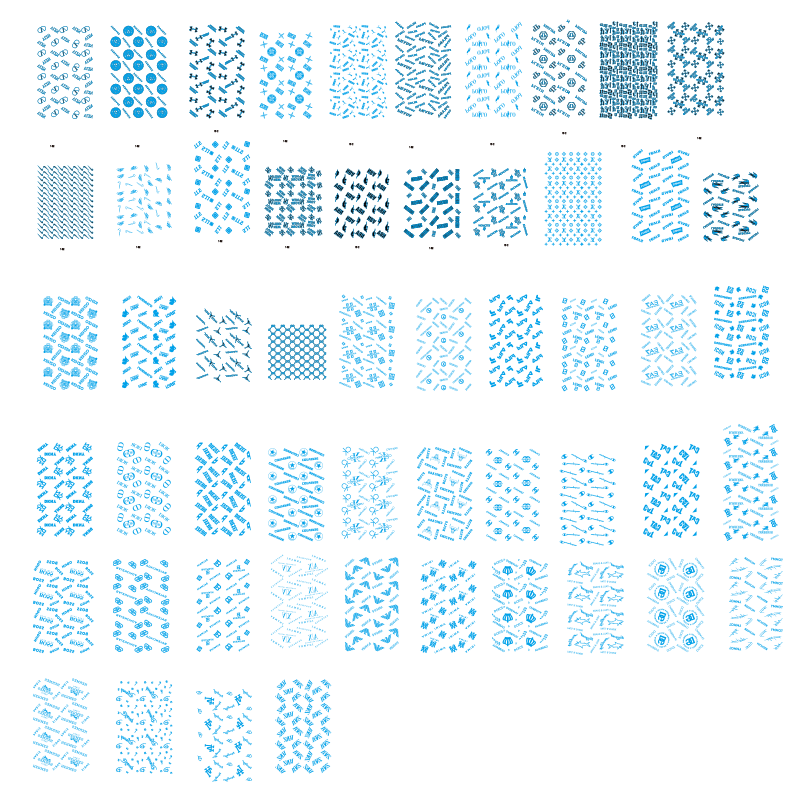 Custom Ultrasonic Molds for Precision Welding ApplicationsThis customized mold option suits unusual part geometries, complementing standard tooling. It supports welding, cutting, or sealing jobs and is made from industrial-grade steel for balanced durability and performance.View Product →
Four variables are under your control: frequency, amplitude, weld time, and pressure. Frequency is fixed by the machine, typically 15, 20, 30, or 35 kHz. Higher frequencies suit smaller, more delicate parts. Amplitude is the vibration distance and is tuned via the booster and horn ratio. Weld time and pressure are set on the controller. More advanced machines also monitor weld distance, known as collapse, and absolute part height, which gives far better consistency than time alone.
Common defects trace back to specific causes:
Ultrasonic welding appears wherever thermoplastic parts must be joined in volume. Automotive suppliers use it for dashboards, door panels, fluid reservoirs, and lamp housings. Medical device makers rely on it for blood filters, IV connectors, valve housings, and respirator components, because the weld produces no adhesive residue and the joint can be hermetic. Consumer electronics factories assemble battery packs, charger shells, and switch housings with bench presses running cycle times below one second. The same physics also welds nonwoven fabrics, which is why manufacturers who already use ultrasonic textile equipment often find the move to plastic part welding straightforward.
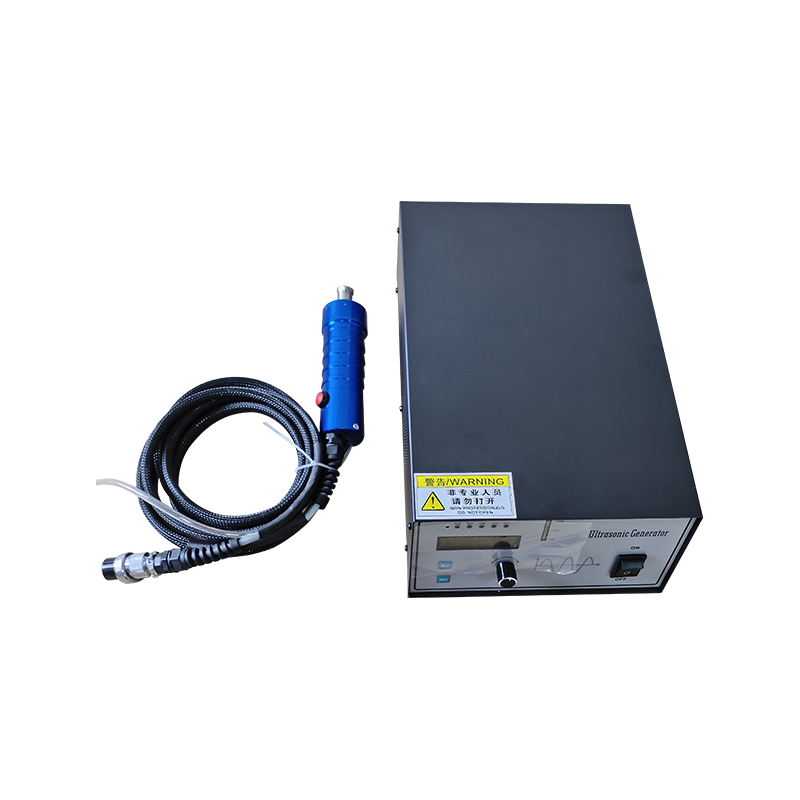
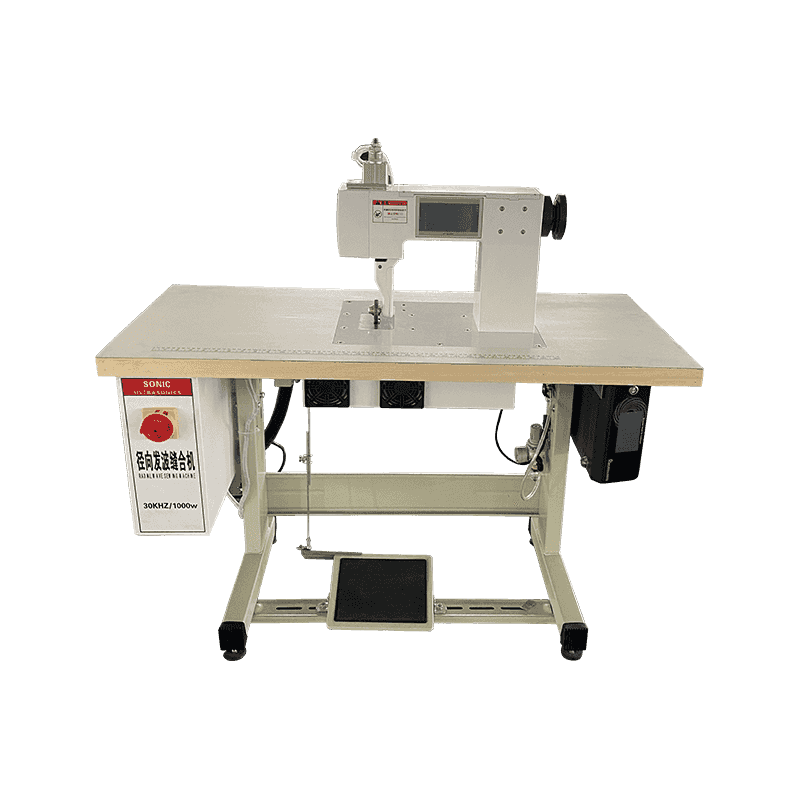
For jobs that do not justify a full press, such as prototype batches, small-series assembly, repair welding, or tacking before a secondary operation, a spot welding machine with a handheld horn is often the most cost-effective option.
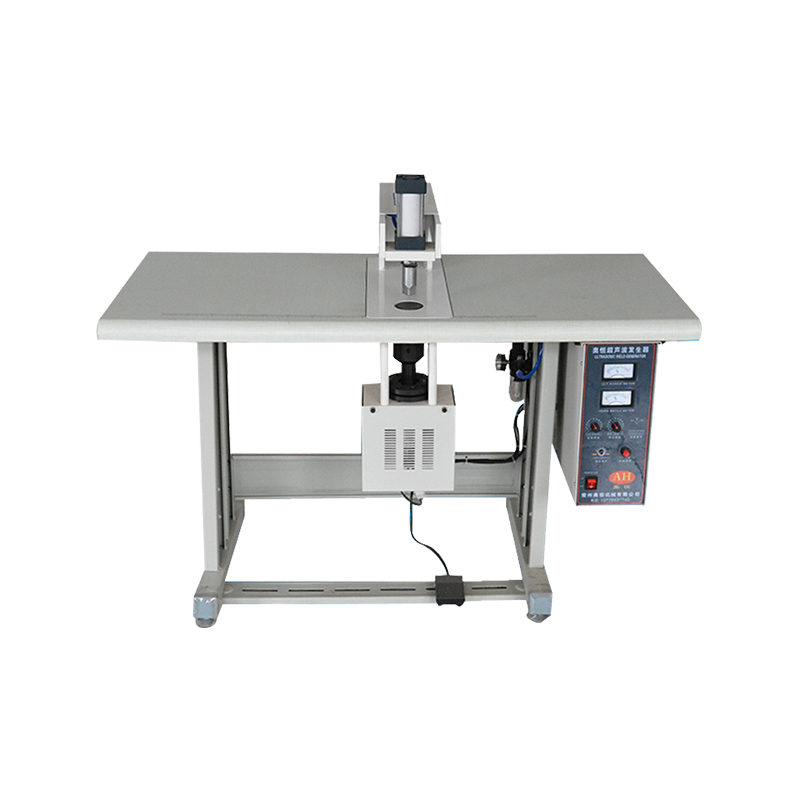
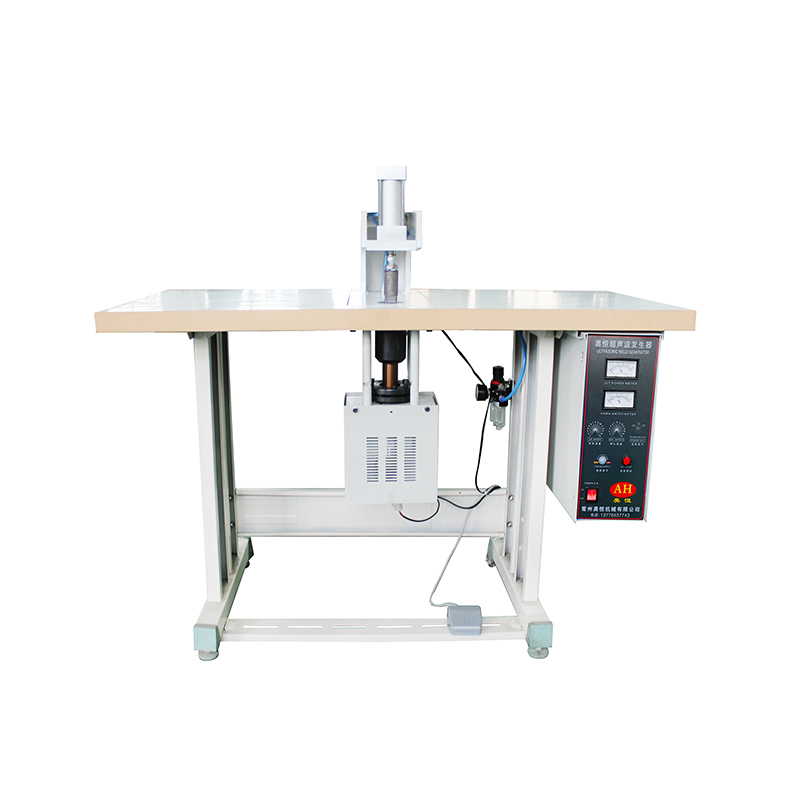 AH-50Q Ultrasonic Spot Welding Machine for Nonwoven FabricsIdeal for prototype, small-series, or repair welding, this spot welder welds nonwoven bags and masks without preheating. It offers adjustable width and interchangeable patterned molds for versatile fabrication.View Product →
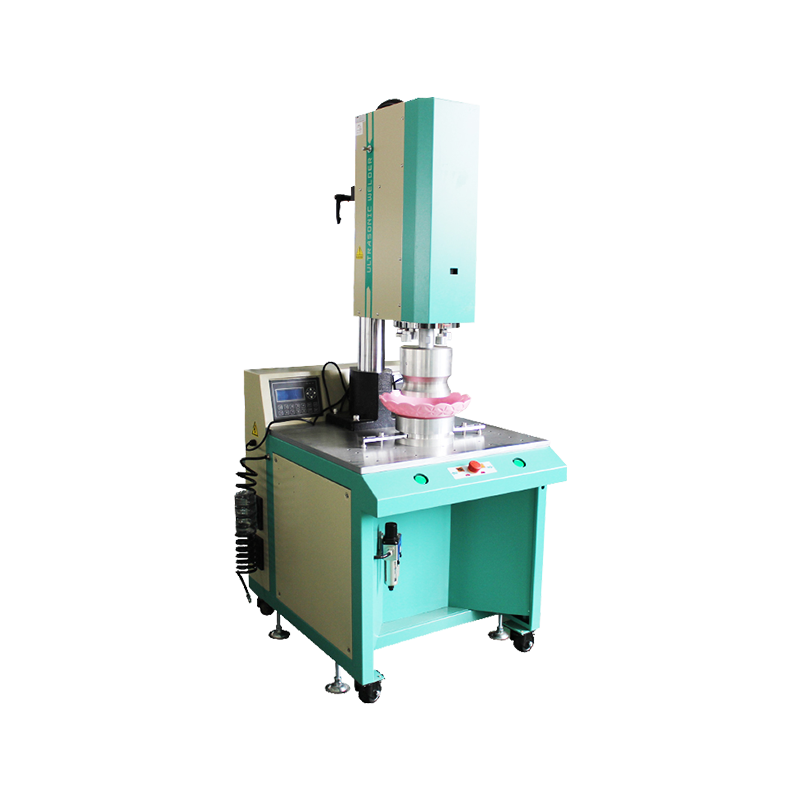
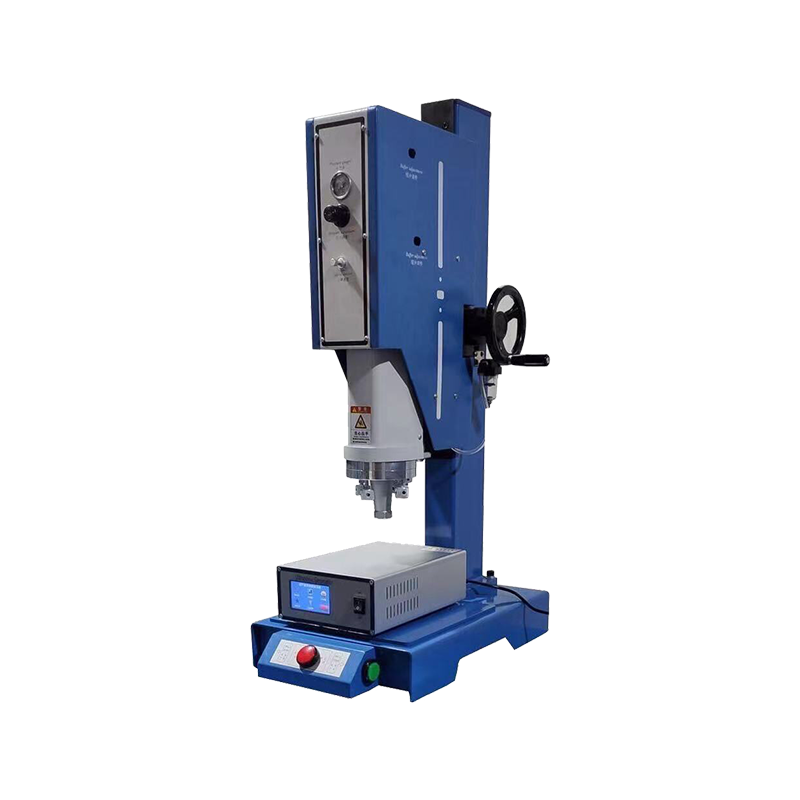
Equipment choice follows the part, not the other way around. Start with part size and material. A small ABS consumer product with a 1 mm joint may be perfectly served by a 20 kHz press with 1 to 2 kW output. A large PP automotive component with a seam length of 300 mm needs a 15 kHz system with 3 to 4 kW to deliver enough amplitude to the far end of the joint. For thin, delicate parts, 30 or 35 kHz machines give gentler, more controllable energy.
Control mode is the next decision. Basic time-based controllers are fine for stable parts and simple joints. Distance-based welding, which stops the weld when the part collapses by a set amount, removes the influence of part height tolerance. Height-based welding guarantees the final part dimension rather than the weld duration, which matters for parts that must withstand pressure or seal hermetically.
Do not overlook the tooling budget. The horn and fixture often cost as much as the machine itself, and they are project-specific. If you need to weld several part numbers, choose a machine that accepts interchangeable boosters, horns, and fixtures quickly.
Safety is part of the purchase decision. The press must have a two-hand start, a protective enclosure or curtain, and a reliable emergency stop. Our guide to safety considerations when operating an ultrasonic welding machine lists the specific items to verify before commissioning.
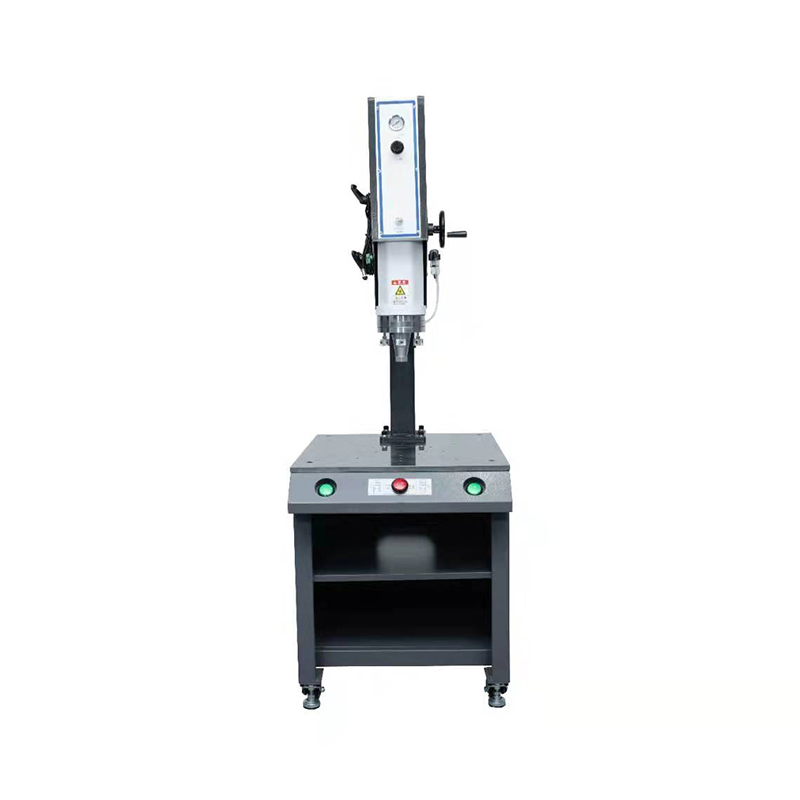 AH-DSL 15 kHz 4200 W Plastic Welding Machine for Large PartsThis high-power press handles large thermoplastic components and nonwoven assemblies. Its gravity die-cast frame, four-screw leveling, and dual-button safety suit demanding production with consistent results.View Product →
Ultrasonic welding of plastics is a mature, repeatable process when three things are aligned: a weldable material combination, a joint designed for ultrasonic energy transmission, and a machine with enough power and control for the part's size. Start with the material table, confirm the joint geometry with your mould maker, and then match the equipment to the production volume. Done in that order, ultrasonic welding will give you joints that are faster, cleaner, and often stronger than anything a screw or an adhesive can offer.

Copyright © ChangZhou AoHeng Machinery Co., Ltd. All Rights Reserved