English
 中文简体
中文简体 русский
 Español
Home / Blog / Industry News / Ultrasonic Welding of Plastics: How It Works, Materials, and Joint Design


Request A Quote

Plastic parts rarely leave the moulding machine ready to use. A housing has to be closed, a filter frame fixed, a connector sealed so it will not leak. Ultrasonic welding of plastics does those jobs by turning high-frequency vibration into heat exactly where two parts meet: the plastic softens, melts and re-solidifies in a fraction of a second, with no adhesive to mix, no solvent to ventilate and no screw insert to mould in.
We build this equipment and spend a great deal of time on customers' shop floors, where the same questions come up again and again. Which plastics can actually be welded? How should the joint be shaped? What do the numbers on the controller really control? The sections below follow the process from the basic physics through material choice and joint design to the settings on the operator panel.
Content
An ultrasonic machine is a chain of energy conversions. Mains power goes in at one end and a controlled melt appears at the joint at the other.
There are two ways to apply it. In plunge welding the horn descends onto a stationary part and welds a spot, a rib pattern or an entire joint in one cycle. In continuous welding the horn travels along the part, sealing long seams and wide panels without a tool the size of the product.
The advantages are easy to list:
The limits are just as clear. Thermoset plastics, most elastomers and foams do not weld usefully; they char or absorb vibration without melting. The part must give the horn somewhere to sit and a clear path for vibration to reach the joint. Very thick walls are difficult, and long flat components may need several horns or a scanning motion. Fixtures and a properly tuned horn are part of the process, not optional extras.
The biggest factor is how the polymer behaves as vibration passes through it. Amorphous plastics such as ABS, polystyrene, polycarbonate, PMMA and PVC transmit ultrasonic energy efficiently. They soften gradually over a temperature range, weld at moderate amplitude, and can often be joined far from the horn — the joint may sit 10 mm or more below the contact point.
Semi-crystalline plastics, including PP, PE, PA, POM, PET and PBT, behave differently. Their sharp melting point and crystalline structure absorb vibration, so they need higher amplitude, more force and a joint close to the horn, usually within about 6 mm. When a strong or hermetic seal is required, they generally need a shear joint rather than a simple energy director. We look at this in more detail in our note on which materials ultrasonic welding suits and where the practical limits lie.
Three other details decide success more often than the resin data sheet suggests. Hygroscopic grades such as PA and PC should be dried before welding. Fillers and colourants change stiffness and energy transmission, so 30% glass-filled nylon behaves quite differently from the unfilled grade. Finally, grease, mould release agent or silicone contamination on the joint surface can stop a weld completely. Two different plastics can be welded only when their melting ranges overlap and the pair is chemically compatible; otherwise the design needs a mechanical interlock instead.
Ultrasonic welding is unforgiving about geometry. The joint has to concentrate energy at a small initial contact area so that melting starts predictably. That is the job of the energy director: a moulded triangular ridge, typically 0.2 to 0.5 mm high in amorphous plastics and 0.5 to 0.8 mm in semi-crystalline ones, with an apex angle of roughly 60 to 90 degrees. It melts first, flows across the joint and forms the bond. Where parts must self-align, or where the material is semi-crystalline, a step, tongue-and-groove or shear joint usually serves better.
| Joint type | Typical use | Points to watch |
|---|---|---|
| Butt joint with energy director | Simple housings and small amorphous parts | Lowest strength; needs uniform contact all round |
| Step joint | Parts that must align themselves during assembly | Moulding tolerance controls weld quality |
| Tongue and groove | Joints that must stay aligned and resist flash | Larger joint area, slightly longer cycle |
| Shear joint | Semi-crystalline plastics and hermetic seals | Needs tighter tolerances and higher force |
| Criss-cross or textured surface | Large flat parts with uneven contact | Useful for first trials; lower strength than moulded directors |
Above the joint sits the tooling. A horn that is too small concentrates stress and marks the part; one that is too large may not resonate evenly. Fixtures must hold the lower part rigidly, because energy that moves the fixture is energy lost from the weld. Custom tooling is the part of the process we discuss most with customers, and it explains a large share of stubborn production problems.
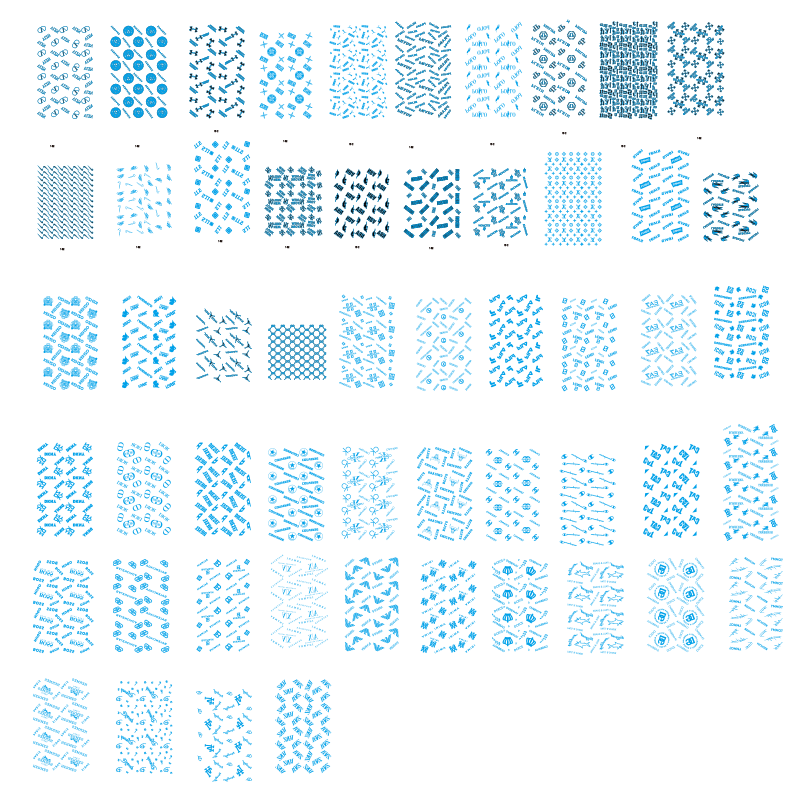 Custom Ultrasonic Molds for Welding, Cutting, and SealingFor custom tooling needs where horn and fixture fit affect repeatable ultrasonic processing, this product offers adaptable, high-precision molds.View Product →
Once the part and the joint are right, the machine settings decide whether the process repeats itself shift after shift. The main variables are:
Change one variable at a time, and record a window rather than a single golden setting. A process that works at exactly one weld time is not under control; one that produces good parts across a small band of energy values usually is.
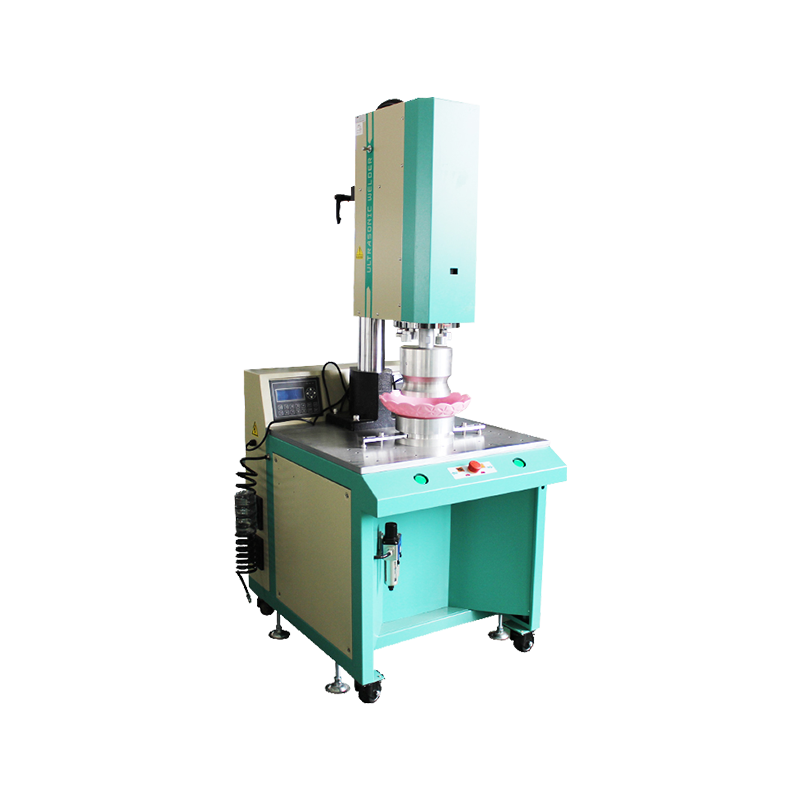
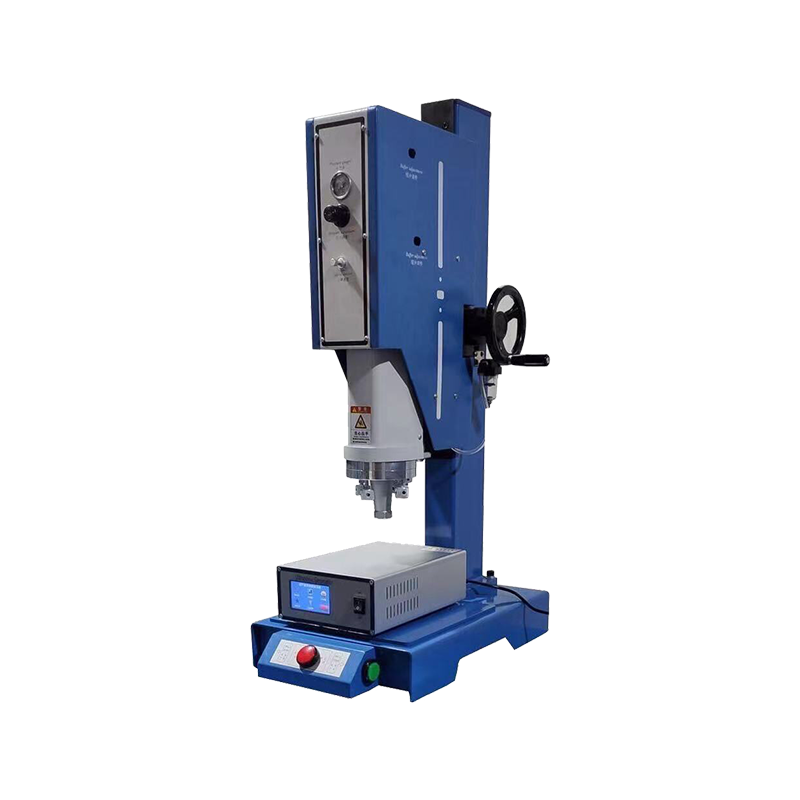
For volume production the usual answer is a bench machine with a rigid column, a pneumatic or servo press and a well-tuned stack. Frequency matters: 15 kHz units deliver more amplitude for larger or semi-crystalline parts, 20 kHz is the general-purpose workhorse, and 30 to 35 kHz machines suit small, delicate components where marking or over-welding is a real concern.
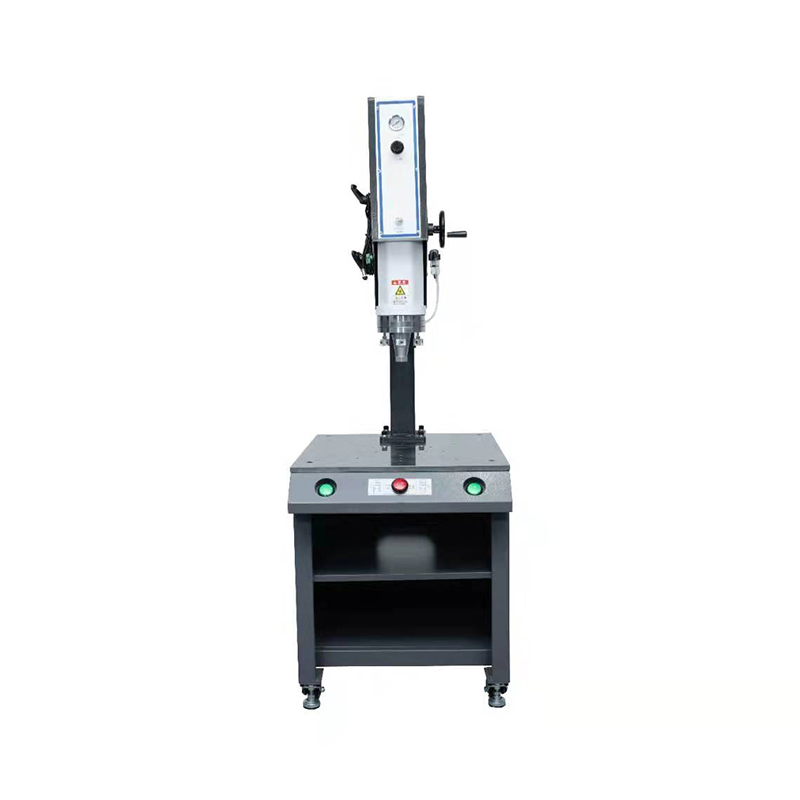 AH-DSL 15KHz 4200W Ultrasonic Plastic Welding MachineFor volume production, this 15 kHz ultrasonic machine offers adjustable mold level, digital frequency tracking, and a round-column rack for plastic welding and embedding.View Product →
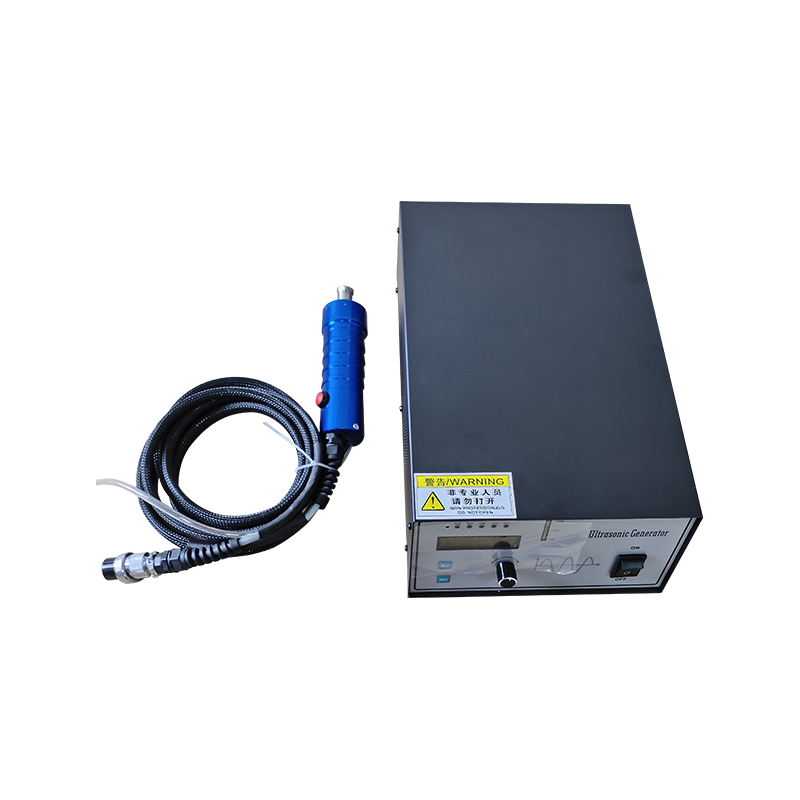
Not every job deserves a production cell. For prototypes, repair work, low-volume assembly or parts that cannot be carried to a bench, a handheld welder does the same job in the operator's hand. Spot welding units sit in between: they reach into a large moulding to weld a boss, a clip or a local rib without a full-size horn.
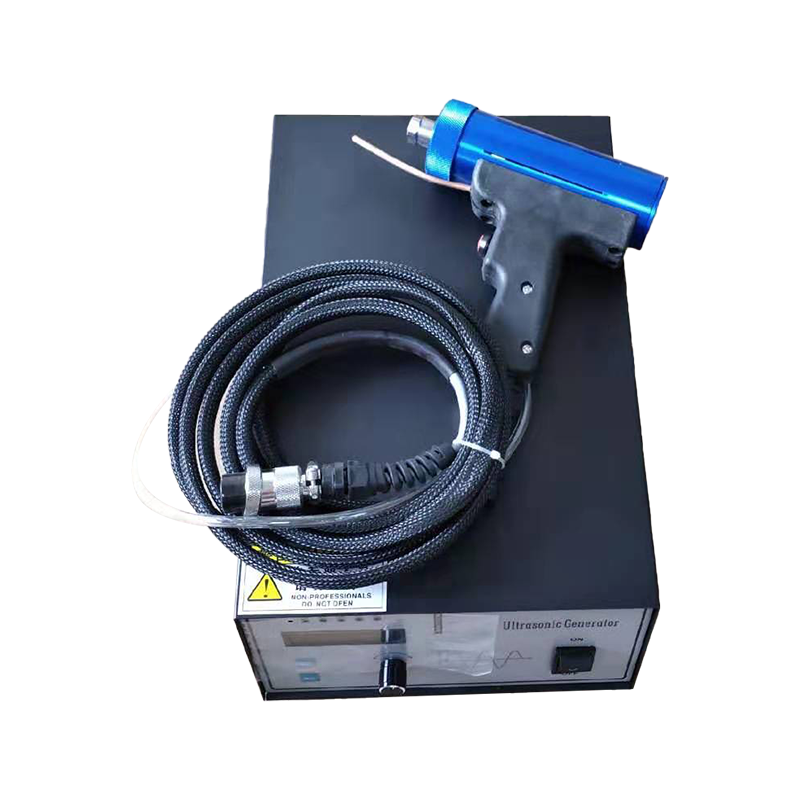 AH-30 Sonic Handheld Ultrasonic Spot WelderFor prototyping, repair, or low-volume assembly, this compact handheld spot welder offers 28/35 kHz operation and clean welds without filler material.View Product →
Most problems on the line come down to a handful of causes. This is the shortlist we work through first.
| Symptom | Usual cause | What to try first |
|---|---|---|
| Weak or inconsistent weld | Insufficient amplitude, worn horn, contaminated joint | Check horn torque and condition, clean the parts, raise energy |
| Flash or melted-through surface | Excessive amplitude or weld time, wrong energy director | Reduce amplitude, shorten weld time, resize the director |
| Marking around the horn | Sharp horn edges, small contact area, high force | Radius the horn face, add a protective film, revise the profile |
| Parts not welding at all | No contact at the joint, fixture movement, wrong resin pair | Check part fit and fixture rigidity, confirm both resins are weldable |
| Cold or partial joint after hold | Hold time too short, melt squeezed out by excessive force | Lengthen hold, reduce weld force, watch collapse distance |
After a few hundred installations, the routines that matter are unglamorous. Keep joint surfaces clean and dry, and store hygroscopic resins properly. Check horn torque at the start of every shift, because a loose stack changes frequency and quietly ruins welds. Treat the fixture as part of the machine rather than as an accessory. Log the energy and collapse distance of a good part, then use that record as the reference when something drifts. And when a joint proves difficult, look at the geometry before reaching for more power — most of the time the answer sits in the part design, not in the controller.
If you would like to talk through a specific part, the team at Changzhou Aoheng Machinery has been building ultrasonic welding, cutting and sealing equipment for textile, nonwoven, medical and plastics manufacturers for years, and we are always glad to look at a drawing or a sample and say honestly whether ultrasonic welding is the right answer.

Copyright © ChangZhou AoHeng Machinery Co., Ltd. All Rights Reserved