English
 中文简体
中文简体 русский
 Español
Home / Blog / Industry News / What Is Heat Staking? Process, Methods, and Tooling Explained in Practice


Request A Quote
Heat staking is a joining process that uses heat and controlled pressure to reshape a plastic feature, usually a molded boss or post, into a formed head that clamps another component in place. Nothing is glued and nothing is screwed down: the plastic itself becomes the fastener. The boss softens, flows into the shape of the tool, and then cools into a rivet-like head that mechanically locks the assembly together. Because the joint is formed from the part, the result is permanent and free of loose hardware.
You will also see the process described as thermal staking, thermal riveting, or hot staking. It shows up wherever a plastic housing needs to hold a metal insert, a printed circuit board, a bracket, a terminal, or a small sub-assembly that must not come apart in service. The idea is simple, but the details of heat, force, and cooling are what separate a clean joint from a cracked one.
Content
A typical cycle follows a predictable sequence, and every step matters:
Temperatures usually sit just above the material's softening or glass transition range: warm enough for the polymer to flow, cool enough to avoid degrading it. Most cycles finish in a few seconds, which is why the process automates so well. Time, temperature, and force are the three variables that decide whether the head forms fully or the boss cracks under stress.
Several variants exist, and they differ mainly in how heat reaches the plastic and how much of the surrounding part gets warmed along with it.
| Method | How heat reaches the plastic | Typical cycle | Usually chosen for |
|---|---|---|---|
| Hot air (convection) | Heated air is blown over the boss | Slowest of the common options | Large or multiple posts where a tool cannot easily make contact |
| Hot stamp / contact punch | A heated tip touches the boss directly | Fast | High-volume lines that need a consistent head shape |
| Pulsed thermode | A probe delivers a controlled heat pulse with quick cool-down | Fast, tightly controlled | Thin walls and temperature-sensitive components |
| Ultrasonic staking | High-frequency vibration creates heat by friction at the joint | Fastest | Small posts, tight spaces, low thermal load on nearby parts |
| Non-contact infrared | Radiant energy softens the boss without touching it | Moderate | Parts with cosmetic surfaces that a hot tool would mark |
Contact staking covers the majority of everyday work because it is fast and repeatable. Go to hot air when geometry makes contact awkward, and consider ultrasonic or infrared when the parts around the joint cannot tolerate much heat. The deciding factors are almost always part geometry, cycle time, and how much thermal load the assembly can absorb.
The two processes look similar on the factory floor, because both end with a formed plastic head. The difference is where the heat comes from. In heat staking, an external tool raises the temperature of the boss until the plastic softens. In ultrasonic staking, a horn vibrates at 20 to 40 kHz, and the friction between the vibrating boss and the part above it generates heat right at the interface, so the energy stays local and the surrounding plastic barely warms up.
That locality is why ultrasonic staking often wins on small posts, closely spaced features, and assemblies with heat-sensitive electronics nearby. Cycle times are shorter, there is no hot tool to cool between strokes, and the same equipment can usually be switched to welding or inserting by changing the horn. The trade-off is that tooling design matters more: horn geometry, amplitude, fixture support, and part fit all have to be right, and thin or poorly supported walls can crack if the setup is rushed.
In practice, most plants end up with both. Heat staking handles large bosses and awkward shapes, while ultrasonic equipment takes the small, fast, high-volume work. If you are weighing the two, it helps to review the ideal materials and practical limitations of ultrasonic welding before committing to a process.
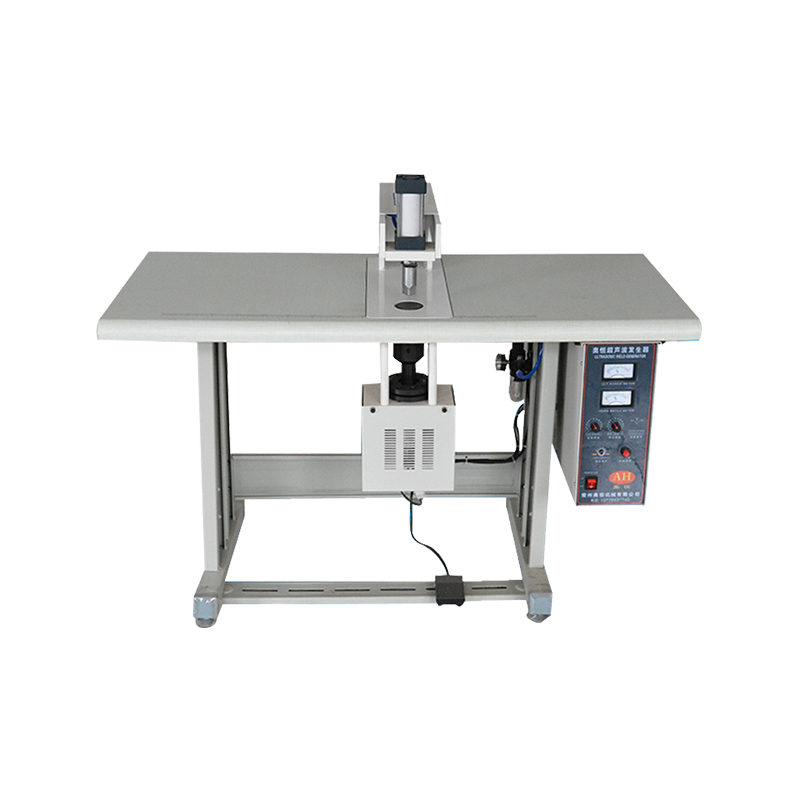
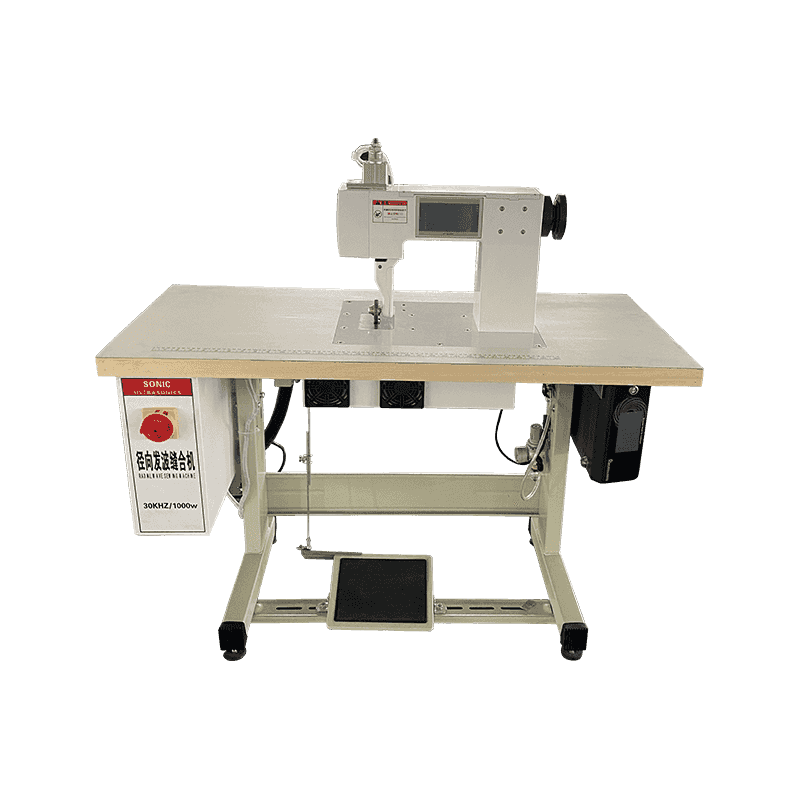
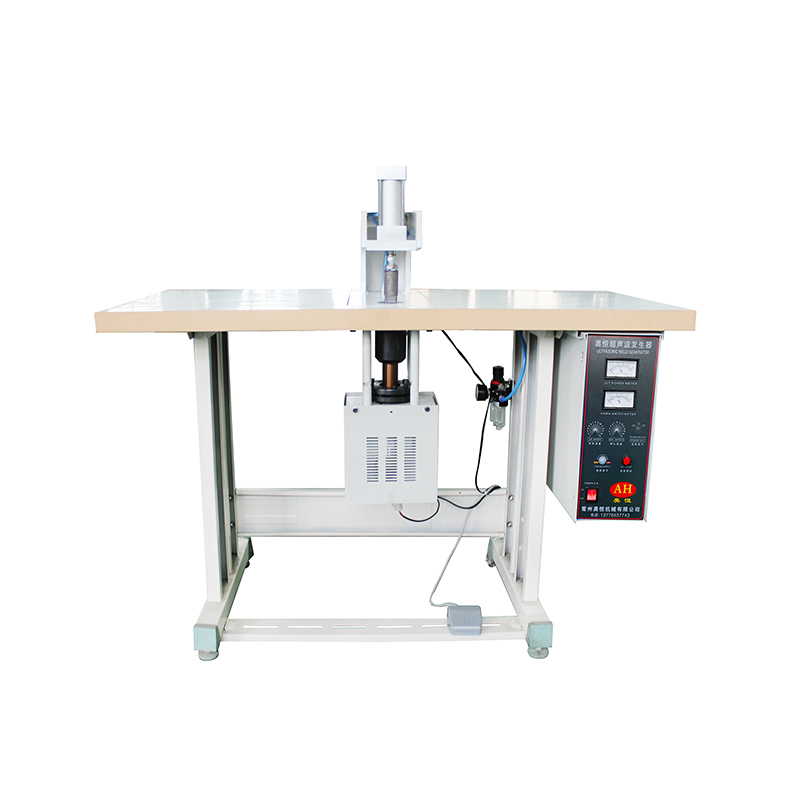 AH-50Q Ultrasonic Spot Welding Machine for Nonwoven and Plastic BondingSemi-automatic ultrasonic spot welder for nonwoven and plastic bonding, including bags and masks; foot pedal control, adjustable width, no preheating.View Product →
Heat staking is a rigid-plastics process, but many of the same factories also run ultrasonic equipment on soft goods. A nonwoven line that seals and cuts fabric, a textile plant that quilts padding, and a workshop that stakes plastic housings are often part of the same production chain, which is why the two technologies are frequently bought and maintained together. We build both kinds of machines, from fabric cutting and quilting systems to ultrasonic welders, and the staking questions we get asked are almost always about the same basics: heat control, tool condition, and part support. You can see the full range of ultrasonic welding and cutting equipment we manufacture for these applications.
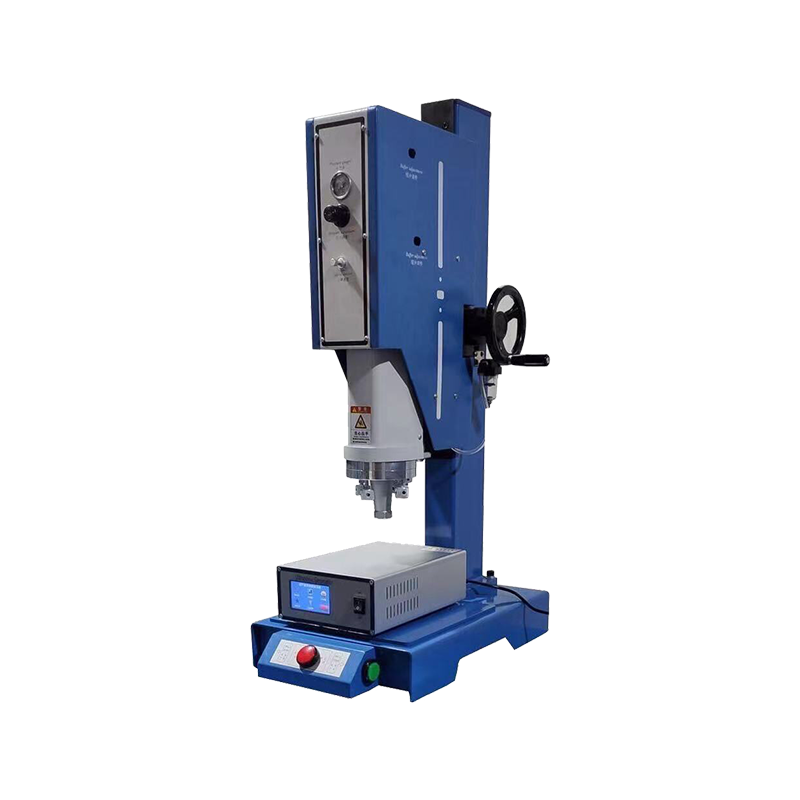
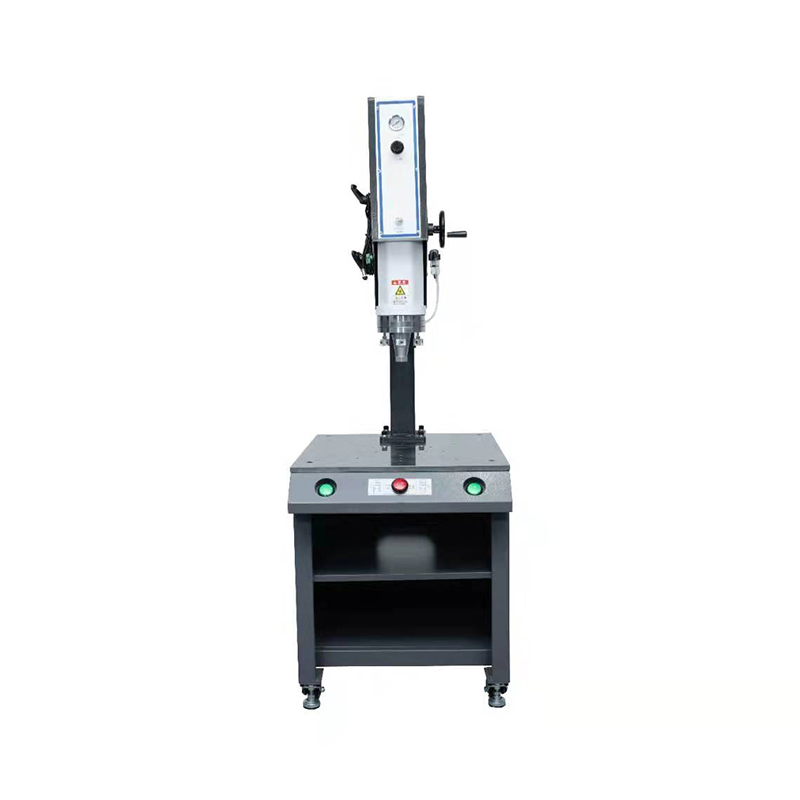 AH-DSL 15KHz 4200W Ultrasonic Plastic Welding MachinePneumatic ultrasonic welder for thermoplastics and non-wovens, with digital frequency tracking, adjustable mold level and space, and double-button safety start.View Product →
Most staking failures are designed in long before the machine is switched on. A few geometry habits prevent the majority of them:
When a joint has to survive vibration or repeated temperature swings, these proportions matter more than the machine settings. Getting the boss right is cheaper than adding a metal fastener later.
The tool is the part of a heat staking system that decides what the finished head looks like. Its tip profile controls how the softened plastic spreads, and its material and thermal mass determine how quickly it recovers between cycles. Worn or contaminated tips produce inconsistent heads long before they fail outright, so a simple inspection routine and a spare set of tips pay for themselves quickly.
On the machine side, look for closed-loop control of temperature, dwell, and force rather than open-loop timers. Multi-point heads let one stroke stake several posts at once, and rotary tables or walk-in fixtures keep loading and staking time overlapping. The tooling discipline is much the same as with ultrasonic horns and custom molds, where the profile has to match the joint exactly to get a clean, repeatable result. That is the work we do every day, and it is why we keep both ultrasonic and heat-based tooling in the same conversation.
 Custom Ultrasonic Molds for Welding, Cutting, and SealingHigh-precision steel molds for ultrasonic welding, cutting, and sealing; customizable design and size to match joint profiles for repeatable results.View Product →
When a staked joint goes wrong, the symptom usually points straight at the cause:
Working through these one at a time, rather than changing several settings at once, keeps the process predictable and makes the next setup much easier to dial in.
Heat staking remains one of the simplest ways to join plastic parts permanently, and that simplicity is exactly why the small details matter. Boss geometry, tool condition, and control of heat and force decide whether the joint holds for years or fails in the field. If you are planning a new assembly or troubleshooting an existing one, the useful starting point is always the same: understand the material, respect the boss proportions, and give the tool a stable, repeatable cycle to work with.

Copyright © ChangZhou AoHeng Machinery Co., Ltd. All Rights Reserved