English
 中文简体
 русский
 Español
Home / Blog / Industry News / Sonic Welders Explained: How Ultrasonic Welding Works and How to Choose One


Request A Quote
Sonic welders do not look impressive at first glance. There is a power box, a cable, a handpiece or a small press, and a metal horn that barely seems to move. Then you press the trigger and two pieces of fabric or plastic become one seam in under a second, with no thread, no glue and no drying time. We have spent years building ultrasonic machinery in Changzhou, and the questions new customers bring us are almost always the same: will it weld my material, how strong is the joint, and what exactly do I need to buy? This guide answers those questions in plain language.
Content
A sonic welder, more accurately called an ultrasonic welder, converts ordinary mains power into a high-frequency electrical signal, usually somewhere between 15 kHz and 40 kHz. That signal drives a transducer, which turns it into mechanical vibration of the same frequency, and a horn amplifies that movement into a small but extremely fast stroke, measured in microns.
When the horn presses the vibrating tip against two overlapping thermoplastic parts, the vibration is concentrated at the interface between them. The friction there generates heat quickly and locally, melting a thin layer of polymer. The vibration stops, the pressure holds for a fraction of a second, and the melt solidifies into a bond. The energy never needs to travel through the whole part, which is why an ultrasonic seam is usually clean, precise and cold to the touch a few seconds later.
The word "sonic" is a little misleading. Sound is a byproduct, not the working principle; the audible hum you hear is simply the vibration leaking into the air. If you want the fuller technical picture, our engineers wrote a detailed explanation of how ultrasonic welding fuses plastic and fabric.
Ultrasonic welding only works on materials that soften and re-solidify. That single rule sorts most enquiries for us.
Our usual advice is simple: send us a sample. A five-minute trial weld on your actual material tells you more than any specification sheet.
Most production floors end up choosing between a handful of machine families. The table below is a rough map rather than a rulebook, because power ratings overlap heavily between categories and the right answer depends on material, seam length and cycle time.
| Machine type | Typical power | Best suited to | Practical notes |
|---|---|---|---|
| Handheld ultrasonic welder | 30 W to 500 W | Spot tacking, repairs, prototypes, awkward assemblies | Portable and quick to deploy; ideal for low volume |
| Ultrasonic spot welder | 1 kW to 3 kW | Staking, riveting and point bonding of plastic parts | Bench or press mounted, foot or pneumatic actuation |
| Placket and buttonhole machine | 1.5 kW to 3 kW | Garment plackets, buttonholes, waistbands | Seam-free finishing on synthetic fabrics |
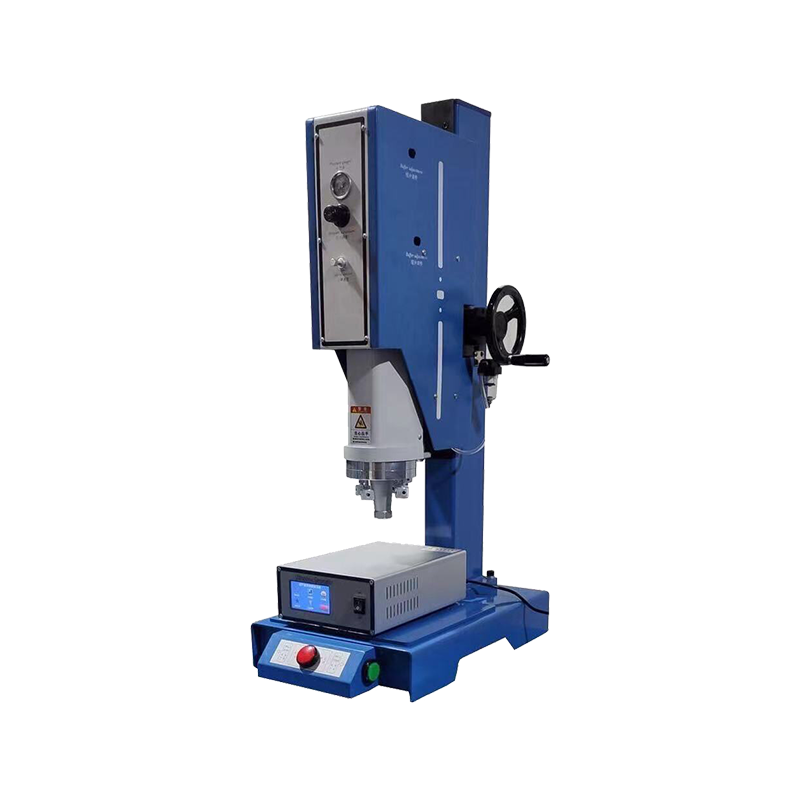
| Bench plastic welding machine | 2 kW to 4.2 kW | Rigid plastic housings, filters, containers | Needs proper tooling and a thought-through joint design |
| Lace and sewing machine | 1 kW to 3 kW | Lace, edge sealing, embossing, quilting | Pattern rollers, continuous high-speed production |
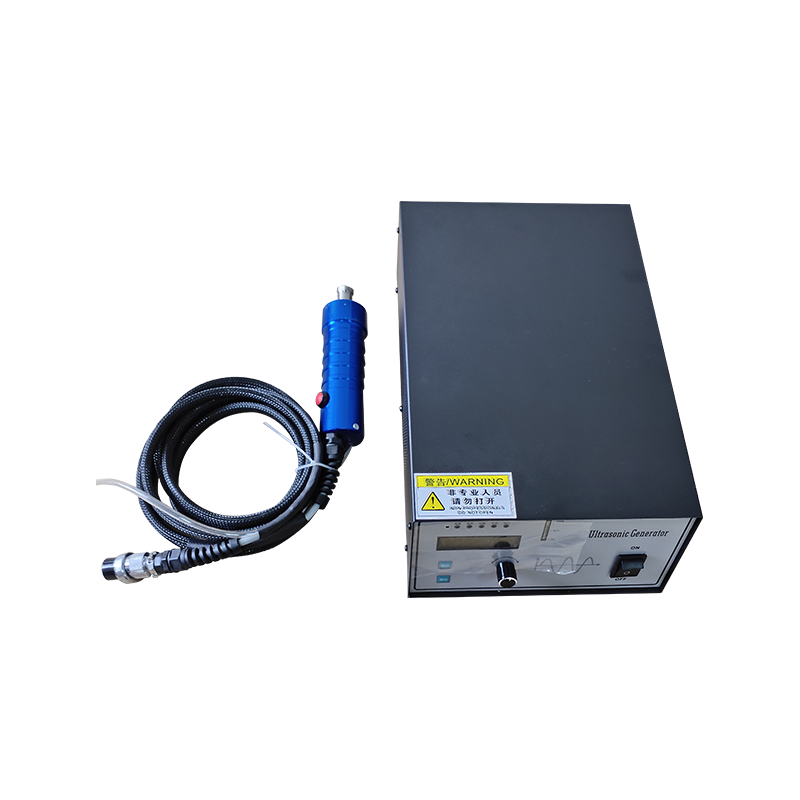
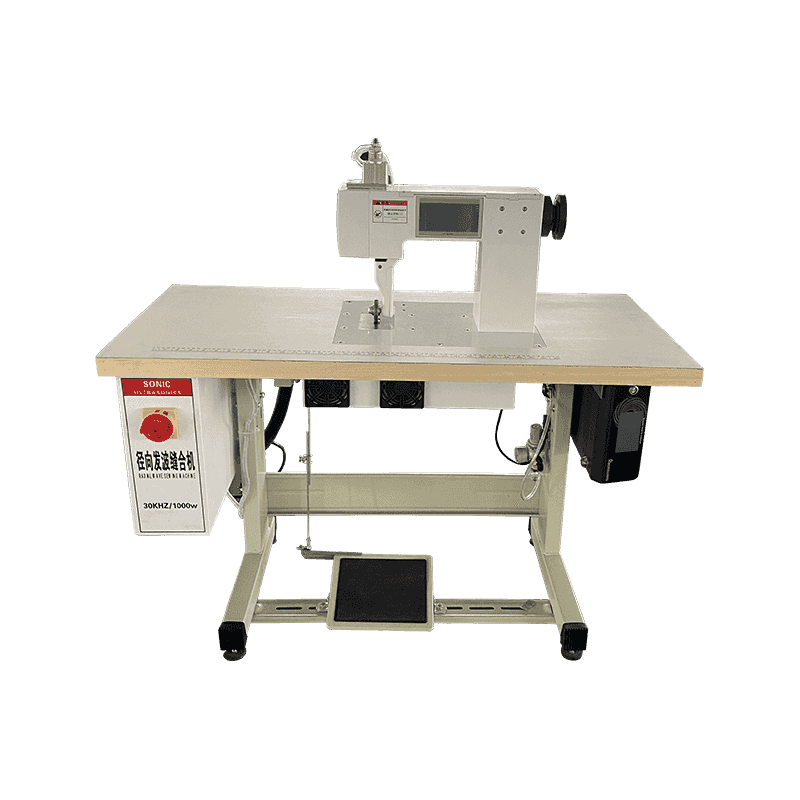
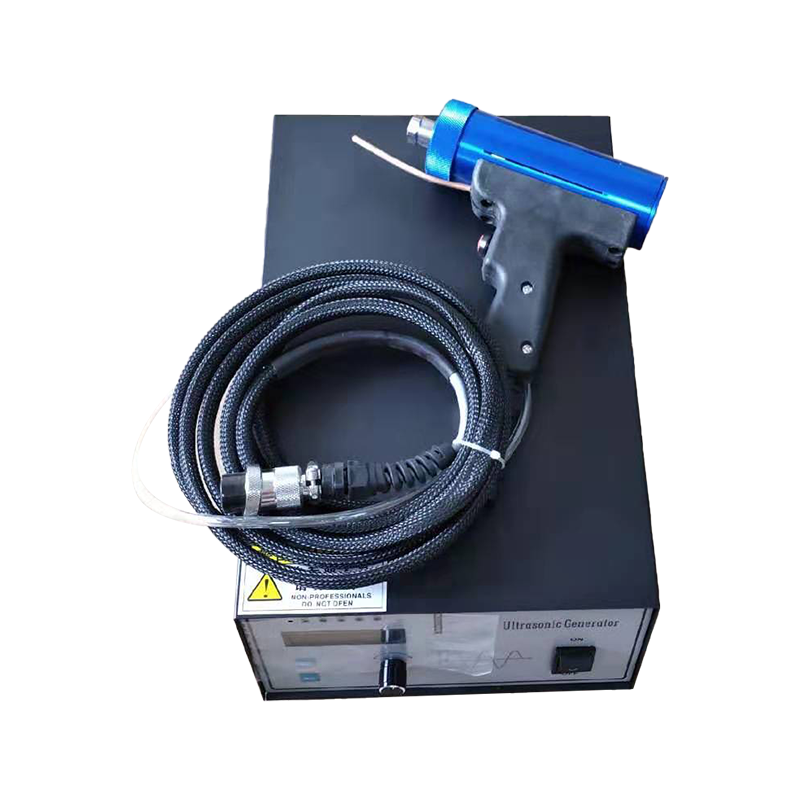 AH-30 Sonic Handheld Ultrasonic Welder for Process TrialsA compact 28/35 kHz, 1000 W handheld spot welder for trying ultrasonic bonding on thin sheet, wire, plastics, and nonwovens before moving to fixed production.View Product →
If you are still testing whether ultrasonic bonding suits your product, a handheld unit is the cheapest way to find out. It lets a technician walk up to the part, try different pressures and see how the seam behaves. Once the process is proven, the same weld is normally moved onto a fixed machine with a fixture, which is where consistency and cycle time come from.
The horn does most of the work. Its shape, material and amplitude decide how the energy reaches the joint, and a horn that is wrong for the part will produce flashing, burnt edges or cut-through no matter how the parameters are set. Aluminium handles most fabric and film work, titanium lasts longer under continuous high-amplitude duty, and hardened steel suits abrasive filled compounds.
Joint design matters just as much on rigid parts. An energy director, a small triangular ridge moulded into one half, concentrates the first burst of energy exactly where you want melting to begin. Shear joints give the strongest sealed assemblies; step joints are easier to mould but weaker. On textiles and nonwovens there is no joint to design, so the pattern on the anvil roller becomes the tooling: it decides whether you get a solid seam, a perforated tear line or an embossed decorative finish.
Parameters are then tuned in a fixed order: amplitude first, then pressure, then weld time, then hold time. Thin nonwovens punish excess amplitude almost immediately, while thick moulded parts usually need more weld time rather than more force.
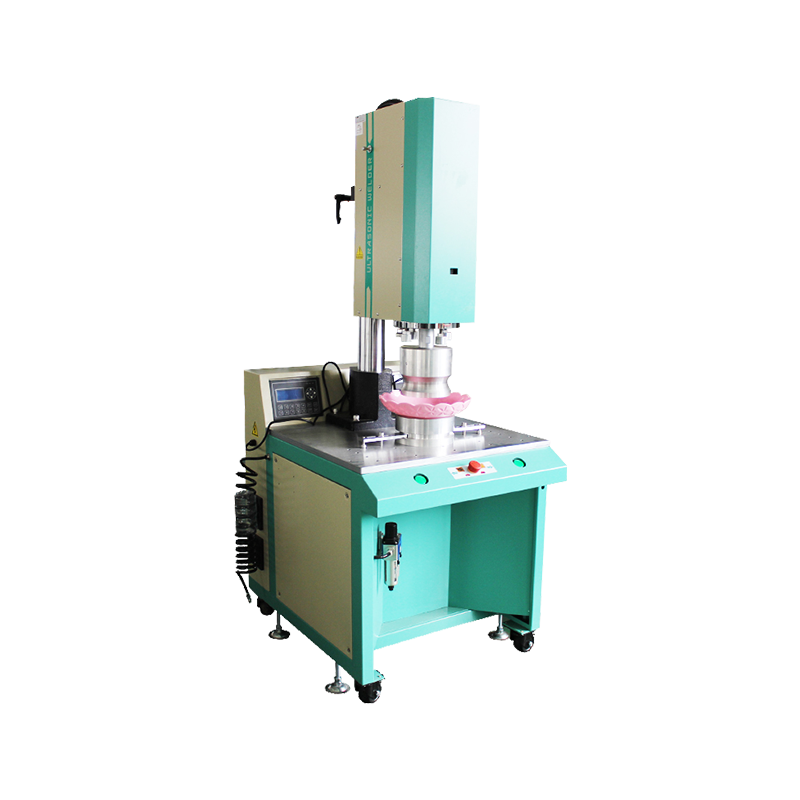
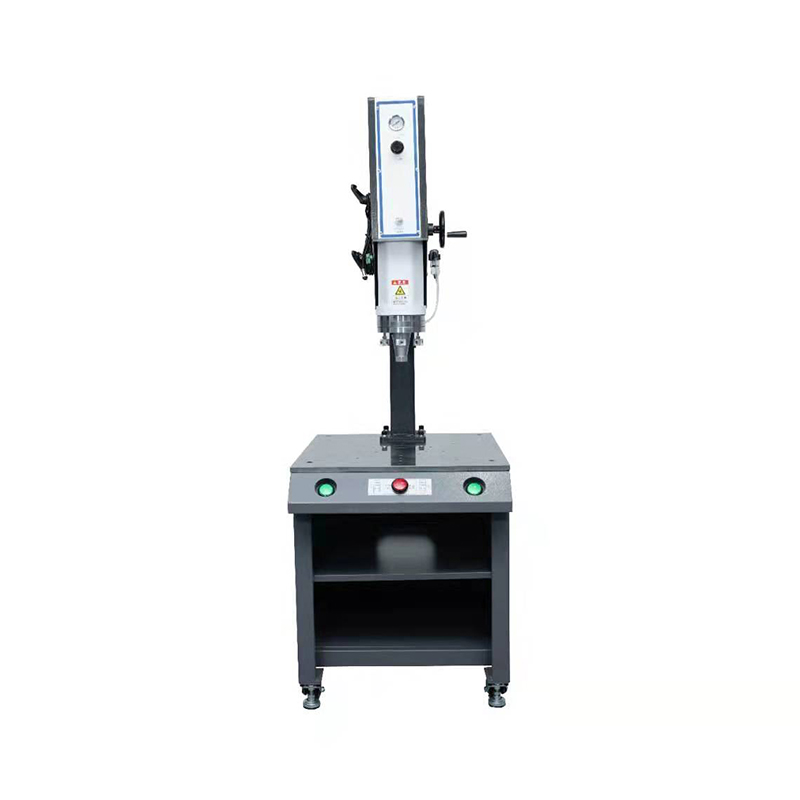 AH-DSL 15 kHz 4200 W Ultrasonic Plastic Welding MachineA pneumatic 15 kHz unit for welding, riveting, spot welding, cutting, and embedding in thermoplastics and nonwovens, relevant to textile and apparel bonding lines.View Product →
Textile and apparel production was one of the first places ultrasonic bonding replaced stitching, and it is still the largest application we see. Hemming, seam sealing, lace edging, quilting and embossing all benefit from a process that seals a synthetic edge as it joins it, so no overlocking or anti-fray finishing is needed downstream. Our textile industry solutions page covers the machine combinations we typically propose for those lines.
Medical and hygiene manufacturing is the other big one. Masks, gowns, drapes, shoe covers, pillowcases, caps and sanitary napkins all rely on ultrasonic seams because the bond is strong, dry and free of adhesives that could introduce unwanted chemistry into a sterile product. Packaging follows closely behind, particularly pouch sealing and spout insertion where a leak-free seal is the whole point.
On the assembly side, spot welders handle staking and point bonding of small plastic components, from filter housings to automotive trim clips, where a screw or an adhesive would be slower or simply impossible.
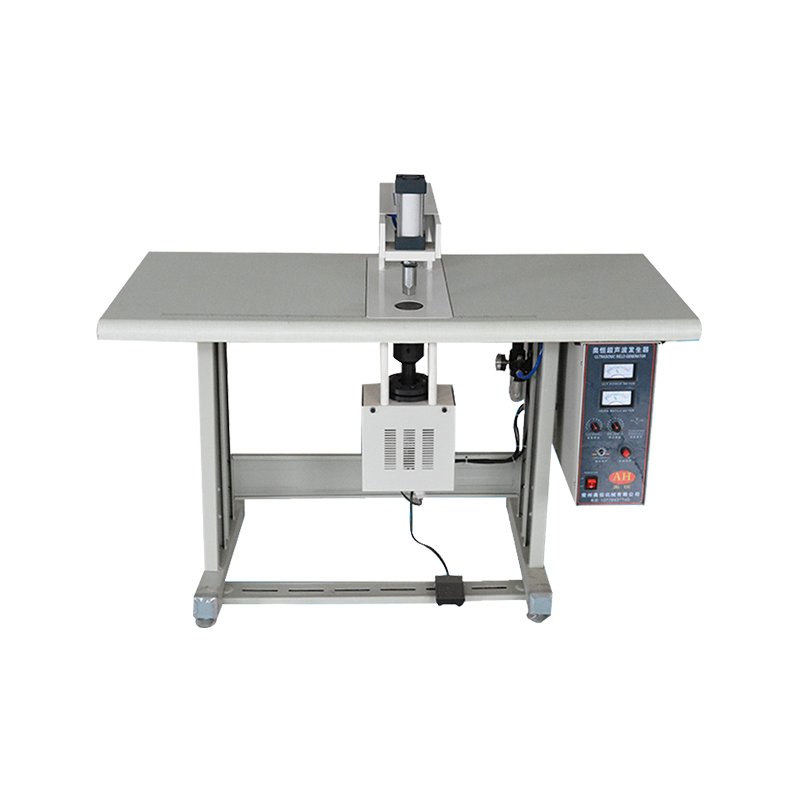
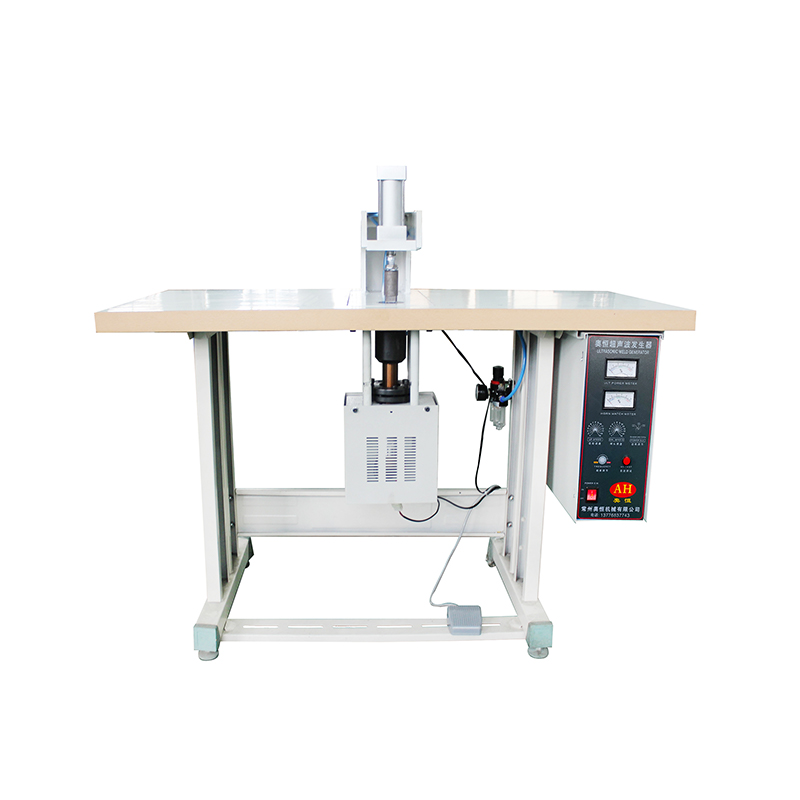 AH-50Q Semi-Automatic Ultrasonic Spot Welder for Non-Woven BagsA semi-automatic 20 kHz spot welder for non-woven bags, mask ear loops, and chemical fiber fabrics, with foot-pedal operation and customizable molds.View Product →
Before you compare quotations, work through these points. They are the ones that most often change the recommendation.
An ultrasonic machine is a consumable wearing against a consumable: horns gradually lose amplitude, transducers drift, circuit boards age. The plants that run smoothly are the ones that keep a spare horn and a spare converter on the shelf rather than waiting for a shipment. We supply the full chain, from replacement horns and boosters through to industrial-grade generator boxes and custom moulds, which keeps older machines productive long after their warranty has passed.
If you are unsure where to start, describe the part and send a photo. We build cutting, slitting, quilting, lace, welding and disposable-product machinery here in Changzhou, ship to more than thirty countries, and would rather spend ten minutes steering you toward the correct machine than sell you the wrong one.

Copyright © ChangZhou AoHeng Machinery Co., Ltd. All Rights Reserved