English
 中文简体
 русский
 Español
Home / Blog / Industry News / Heat Staking Explained: Methods, Stud Profiles, Materials, and Equipment


Request A Quote
Heat staking, often written as one word — heatstaking — is one of those processes nobody notices until it fails. A thermoplastic stud is heated until it softens, then pressed by a shaped tool so it mushrooms over a metal insert, a circuit board, or a second plastic component. When the tool lifts and the material cools, that deformed head becomes a mechanical lock. No adhesive, no screw, no loose fastener rattling around inside the housing.
We build ultrasonic joining and cutting equipment for textile, nonwoven and plastics production, and the questions customers bring us about heat staking are remarkably consistent: which stud shape to use, how much heat, how long to hold, and why a batch of heads cracked three weeks after the shipment left. What follows is a practical summary drawn from our own shop-floor experience and from the technical literature.
Content
The important thing to understand is that heat staking does not weld two surfaces together. It reshapes one of them. Energy is delivered to a stud or boss that was moulded into the part, the polymer softens into a rubbery state, and a cold or heated punch deforms it into a head that is wider than the hole it passes through. The joint that results is purely mechanical: the head simply cannot pull back through the insert.
That distinction matters when you are deciding between staking and welding, because the two processes solve different problems:
The classic approach. A heated probe — or a whole heated platen carrying dozens of probes — descends onto the studs, holds under pressure while the polymer softens, then retracts. Multi-point platens are what make the process economic in automotive and appliance work: twenty or thirty stakes in a single two-second cycle. The trade-off is thermal mass. A large platen takes time to reach equilibrium and can radiate heat into areas you would rather keep cool.
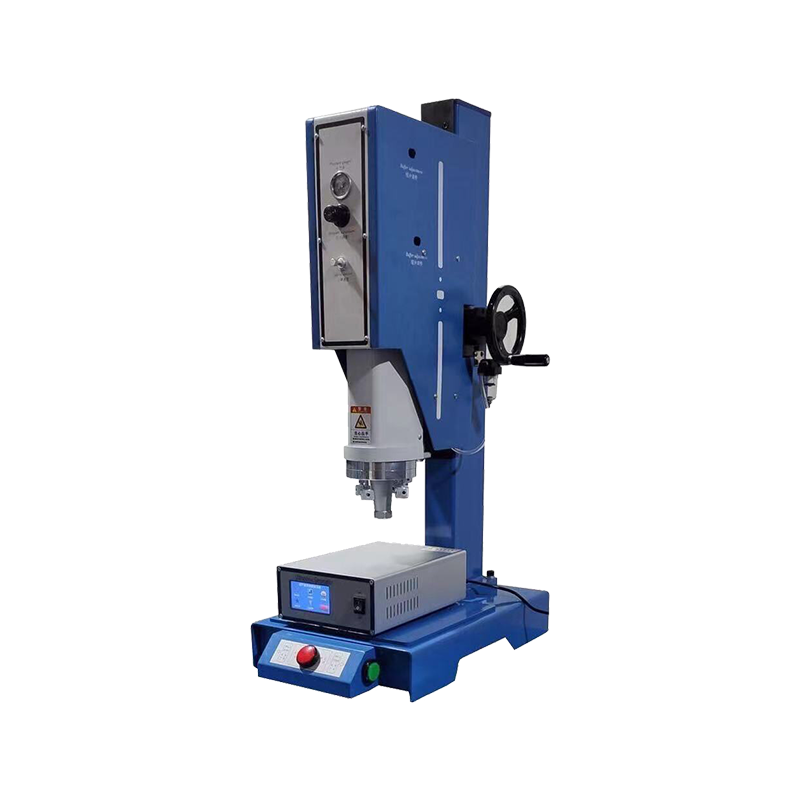
Here the heat is generated inside the material rather than conducted into it. A horn vibrates at 15–40 kHz, and friction at the horn-stud interface plus internal molecular friction softens the stud in a fraction of a second. Cycle times are short, energy is applied only where it is needed, and there is no hot tool to burn an operator or mark a visible surface. Tooling design matters more than with thermal staking — horn amplitude, contact geometry and the anvil supporting the stud all influence the finished head. Our guide to the heat staking process, its methods and its tooling goes deeper into the mechanics if you want the detail.
Hot-air staking, infrared staking and laser staking all deliver energy without touching the stud. They exist for one reason: some assemblies cannot survive contact. A probe pressing on a stud transmits force into everything beneath it, and if that is a thin-walled housing or an already-populated board, the force itself is the problem. Non-contact methods are slower and demand tighter process control, but they solve a genuine constraint.
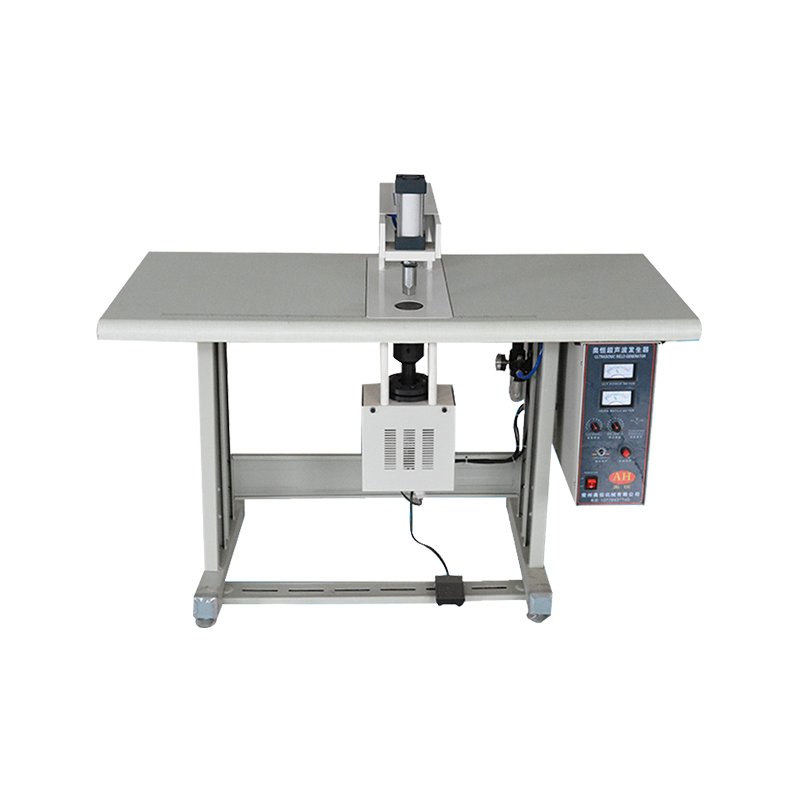
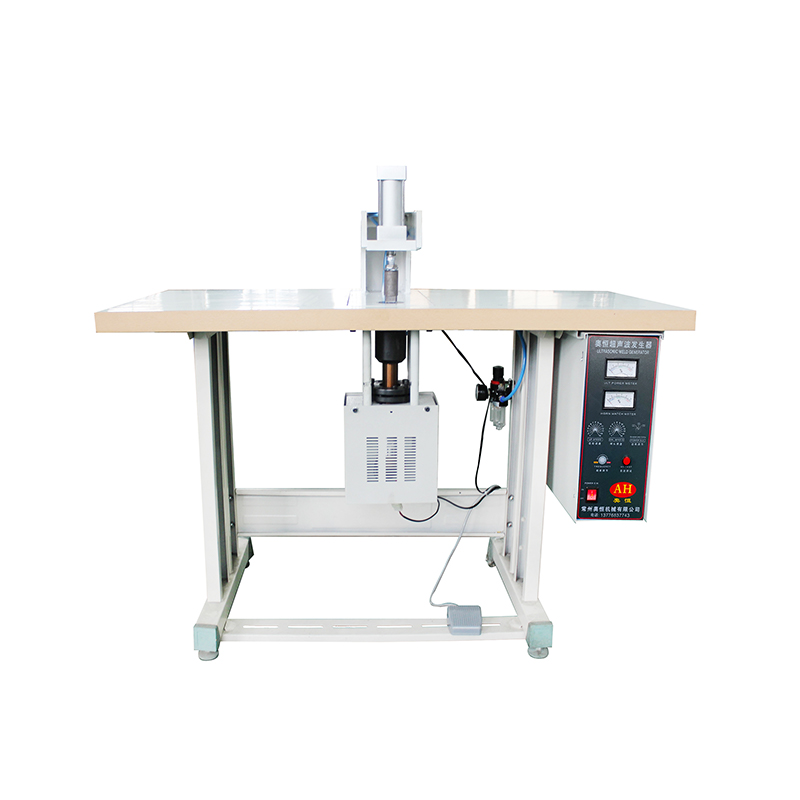 AH-50Q Semi-Automatic Ultrasonic Spot Welding MachineA foot-pedal ultrasonic spot welder for non-woven fabric welding, sealing and bonding, with adjustable width and custom mold options.View Product →
The shape of the tool — and therefore the shape of the finished head — decides how the joint behaves under load. The common profiles have been established for decades, and choosing between them is usually a matter of stud diameter, material grade and cosmetic requirements rather than personal preference.
| Profile | Typical size | Best suited to | Watch out for |
|---|---|---|---|
| Dome, high profile | Head height around 0.75 in / 19 mm | General purpose joints needing strong pull-through resistance | Requires clearance above the stud |
| Dome, low profile | Head height around 0.375 in / 9.5 mm or less | Low-clearance assemblies, clean appearance, counter-bored holes | Displaces less material, so holding force is lower |
| Rose | Large-diameter posts | Moving more material with less staking force; an even 360° hold | Alignment is critical and heated platens cause thermal expansion issues |
| Hollow / tubular | Medium to large posts | A controlled flare, often used on brittle or glass-filled grades | The tool must enter the bore cleanly every cycle |
| Knurled / star | Small to medium posts | Anti-rotation retention as well as axial holding | More complex tooling and higher maintenance |
The single most common cause of a failed heat stake is treating every polymer the same way. Semi-crystalline and amorphous plastics respond to heat in fundamentally different ways, and the process window for one is often a trap for the other.
Nylon, PBT, POM and similar materials have a sharp melting point. They go from rigid to fluid across a narrow temperature band, which means the window between "not enough" and "too much" is small. They also need positive cooling: hold the tool in place until the head has re-solidified, or the stake will relax and lose preload. Glass-filled versions — 30% or 33% GF nylon, for example — are excellent candidates for staking, but the abrasive filler wears probes quickly, so hardened tooling and a shorter inspection interval pay for themselves.
ABS, polycarbonate, polystyrene and acrylic soften gradually, which makes them forgiving to form but slow to cool. Polycarbonate in particular is prone to stress cracking around a stake if the head is formed too cold or too fast. If you see fine crazing radiating from the head a few days after assembly, the material was deformed below its proper softening range.
There are only a handful of variables in the whole process, and every one of them is worth writing down on the setup sheet:
Walk through any automotive interior plant and you will find staking at almost every station: door trim, instrument panels, sensor brackets, air-duct mounts, clips that hold a fabric panel to a carrier. The reason is not that staking is cheap — it is that the joint survives vibration and thermal cycling without a threaded fastener working loose. Beyond automotive, you will see the same logic in white goods, power tools, consumer electronics with moulded PCB standoffs, medical device housings and disposable assemblies that need a permanent closure without adhesive.
Our work in automotive parts welding has taught us one thing that applies everywhere: the joint design is decided long before the machine is chosen. Involve the equipment supplier while the part is still on the drawing board and the process usually fits on the first attempt.
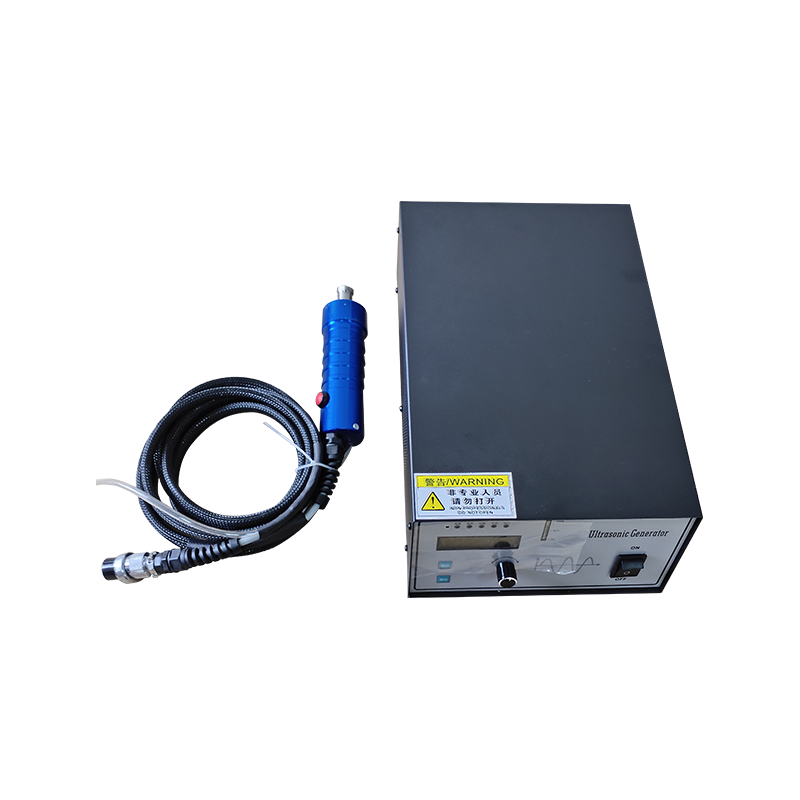
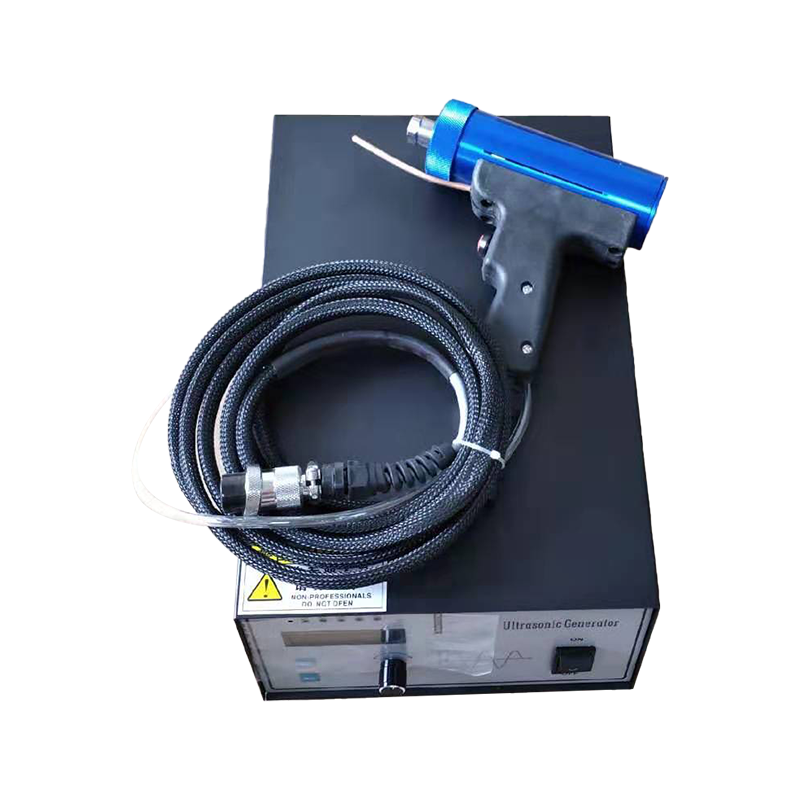 AH-30 Sonic Handheld Ultrasonic Spot WelderA compact handheld ultrasonic spot welder for thin sheet, wire and plastic spot welding, with 28/35 kHz operation and no filler material usually required.View Product →
A single-station bench machine with a properly controlled heated tool will handle a surprising amount of production. Multi-point platens make sense once you are staking more than a handful of posts per part, or when cycle time is the binding constraint. What separates good machines from adequate ones is rarely the headline specification — it is how well temperature, pressure and stroke are held cycle after cycle.
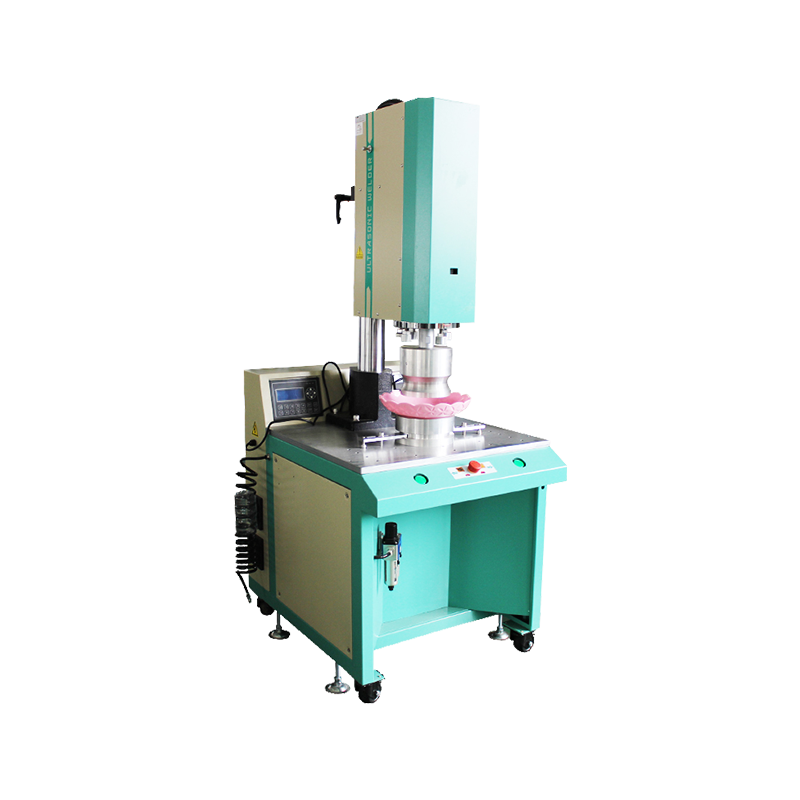
For larger plastic assemblies that need more energy than a bench unit can deliver, a 15 kHz, 4200 W platform gives you the headroom to stake thick posts and weld structural housings with the same generator. If you would rather talk it through, our team is always happy to look at a drawing and tell you honestly whether staking is the right answer.
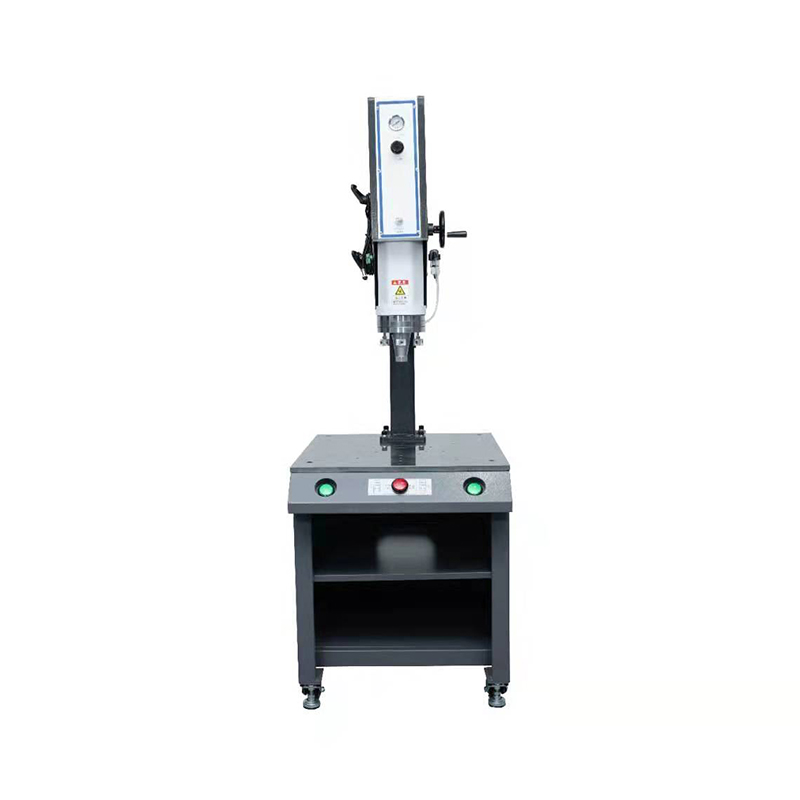 AH-DSL 15 kHz 4200 W Ultrasonic Plastic Welding MachineA pneumatic 15 kHz ultrasonic platform for welding, riveting and embedding in thermoplastics, offering higher power for larger plastic assemblies and structural housings.View Product →
Heat staking is not a complicated process, but it is an unforgiving one. The material has to be brought into the right state, held there long enough to form, and cooled under control — and any one of those three steps skipped will show up later as a cracked head, a loose insert or a warranty claim. Get the stud profile right at the design stage, match the method to the assembly rather than to the machine you already own, and the process will quietly do its job for a hundred thousand parts.
If you are working through a staking application and want a second opinion on the joint design or the equipment, we are glad to help — that conversation usually takes less time than a rejected batch.

Copyright © ChangZhou AoHeng Machinery Co., Ltd. All Rights Reserved