English
 中文简体
中文简体 русский
 Español
Home / Blog / Industry News / Ultrasonic Welding for Plastics: Process, Materials, and Machine Selection Guide


Request A Quote

A disposable medical device maker contacted us with a consistent quality headache: every tenth polypropylene component failed its pull test, and no amount of parameter tweaking solved it. When we examined the molded part, the energy director at the weld interface was barely visible under a magnifier. After correcting the joint geometry, the reject rate dropped from 9% to below 0.5% within a single shift. That episode captures the central truth about ultrasonic welding for plastics: the process is fast, clean, and economical, but it delivers those benefits only when material selection, joint design, and machine specification are engineered as one system.
Content
Ultrasonic welding uses high-frequency mechanical vibration to generate heat exactly where two thermoplastic parts meet. A transducer converts electrical energy into mechanical vibration at 15, 20, or 40 kHz depending on the application. A booster adjusts the amplitude, and a horn delivers the vibration to the upper part while applying a controlled downward force.
The vibration passes through the upper part and concentrates at the joint interface. Molecular friction raises the temperature rapidly, melting a thin layer of plastic. The molten material flows into the joint geometry, and once the vibration stops, it cools and solidifies into a permanent weld. A typical cycle lasts 0.3 to 1.5 seconds, which makes ultrasonic welding one of the fastest joining methods in plastics manufacturing.
Three parameters determine weld quality:
Modern plastic welding machines regulate these variables digitally, so once a process is validated, it remains consistent across thousands of cycles. Because the heat is generated only at the joint interface, the rest of the part stays at ambient temperature, avoiding distortion, flash, and the need for consumables such as adhesives or solvents.
Not every plastic responds to ultrasonic energy in the same way. The most important distinction is between amorphous and semi-crystalline resins.
Amorphous plastics, including ABS, polystyrene, polycarbonate, PMMA, and SAN, have a wide softening range. They transmit vibration efficiently, melt gradually, and produce clean, strong welds with minimal parameter sensitivity. This is why ABS enclosures and PC components are the most common success stories in ultrasonic assembly.
Semi-crystalline plastics such as polypropylene, polyethylene, polyamide, and POM require more energy to melt because the crystalline regions must be disrupted first. They also cool and solidify quickly, which makes the weld more sensitive to timing and joint design. These materials are fully weldable, but they benefit from a shear joint and a machine with enough power and amplitude headroom.
| Material type | Common resins | Relative weldability | Recommended joint |
|---|---|---|---|
| Amorphous | ABS, PS, PC, PMMA, SAN | Excellent | Energy director butt joint |
| Semi-crystalline | PP, PE, PA, POM, PET | Good with correct design | Shear joint |
| Filled or reinforced blends | GF-PA, GF-PP, mineral-filled resins | Conditional | Shear or hybrid; expect faster horn wear |
Before committing to a material for your next part, review our practical guide to ultrasonic welding materials and limitations. It explains why some resins produce brittle joints and how filler content changes the equation.
Joint geometry is the single most influential design decision in ultrasonic welding for plastics. A properly designed joint concentrates the ultrasonic energy, controls molten flow, and prevents the weld from weakening the part.
For amorphous materials, a triangular energy director molded onto one surface is the standard solution. The tip of the triangle melts first, spreading molten material evenly across the joint surface. A butt joint with a small energy director is inexpensive to mold and works well for most ABS and PS parts.
For semi-crystalline materials, a shear joint is usually required. The upper part fits inside the lower part with a small interference, and the vertical wall melts and fuses along its full circumference. Shear joints produce a stronger mechanical bond and a positive seal, making them the preferred choice for housings that must resist pulling forces.
The choice between these designs is not cosmetic. A long shear joint demands more power, a larger horn, and usually a lower frequency. A short energy director can be welded with a compact bench-top unit. When buyers compare machines before deciding on joint geometry, they often end up with either too much or too little capacity.
Once the material and joint design are fixed, machine selection becomes a clear decision. Evaluate the following specifications against your part geometry and production volume.
20 kHz machines are the workhorses of the industry, covering most small and medium plastic parts. A 15 kHz machine provides higher amplitude and suits large parts, long weld lines, or semi-crystalline resins that need direct energy delivery. High-frequency units at 35 or 40 kHz are reserved for small, thin-wall parts in electronics and precision assemblies. Power ratings typically range from 1,000 W to 4,200 W; larger horns and longer weld lines need more power to maintain amplitude.
| Frequency | Typical power range | Part size | Common application |
|---|---|---|---|
| 15 kHz | 2,000-5,000 W | Large housings, long weld lines | Automotive components, appliance bodies |
| 20 kHz | 1,000-3,000 W | Medium parts | Consumer products, medical devices |
| 35/40 kHz | 200-1,000 W | Small, thin-wall parts | Electronics, delicate assemblies |
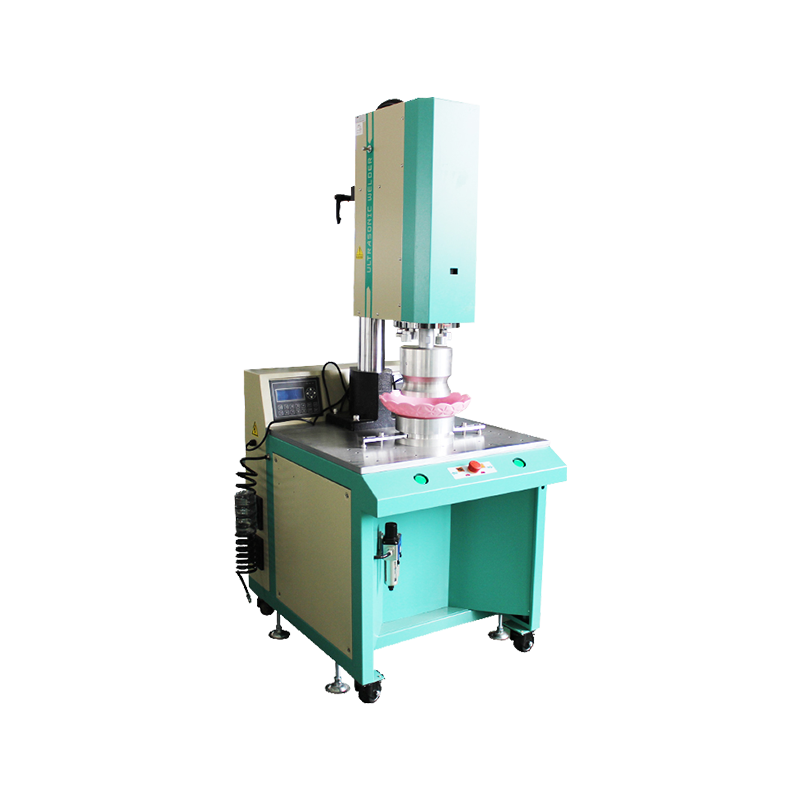
For medium-to-large parts made from semi-crystalline resins, a 15 kHz system such as the 15 kHz 4200 W plastic welding machine provides the amplitude reserve needed to produce complete fusion across a long weld line.
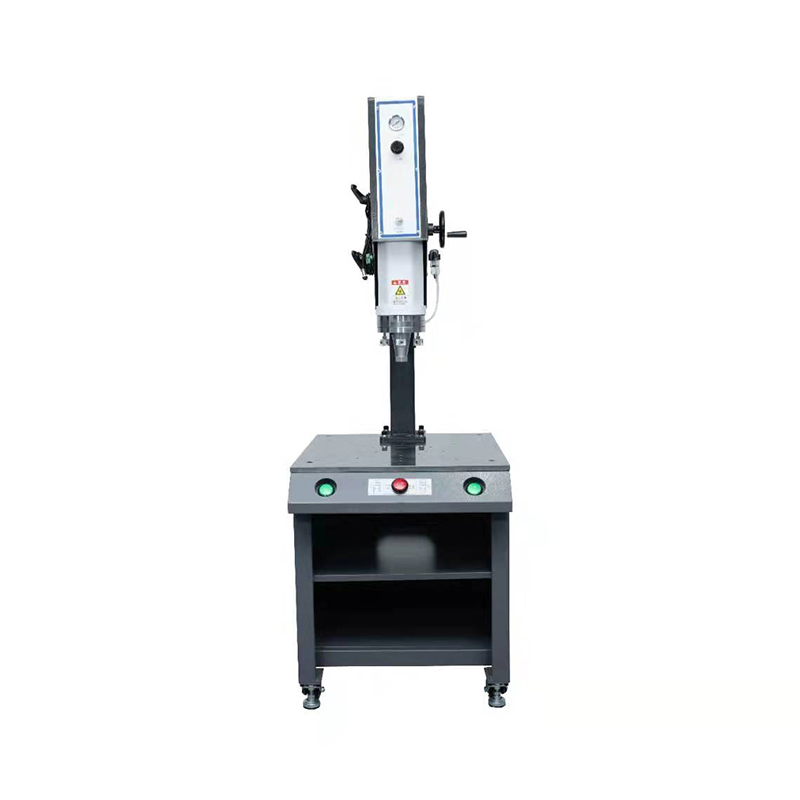 Custom AH-DSL 15KHz 4200w Plastic welding machine Suppliers, OEM/ODM Company - CChangzhou Aoheng Machinery Co., Ltd is China custom AH-DSL 15KHz 4200w Plastic welding machine suppliers and OEM/ODM company, details: M...View Product →
Time-based welding is adequate for stable, low-cavity parts. Energy or distance-based control is preferable for parts with dimensional variation, because it compensates for flash, sink marks, and mold wear. If your production feeds from multi-cavity tools, invest in a generator that supports energy or absolute-distance mode.
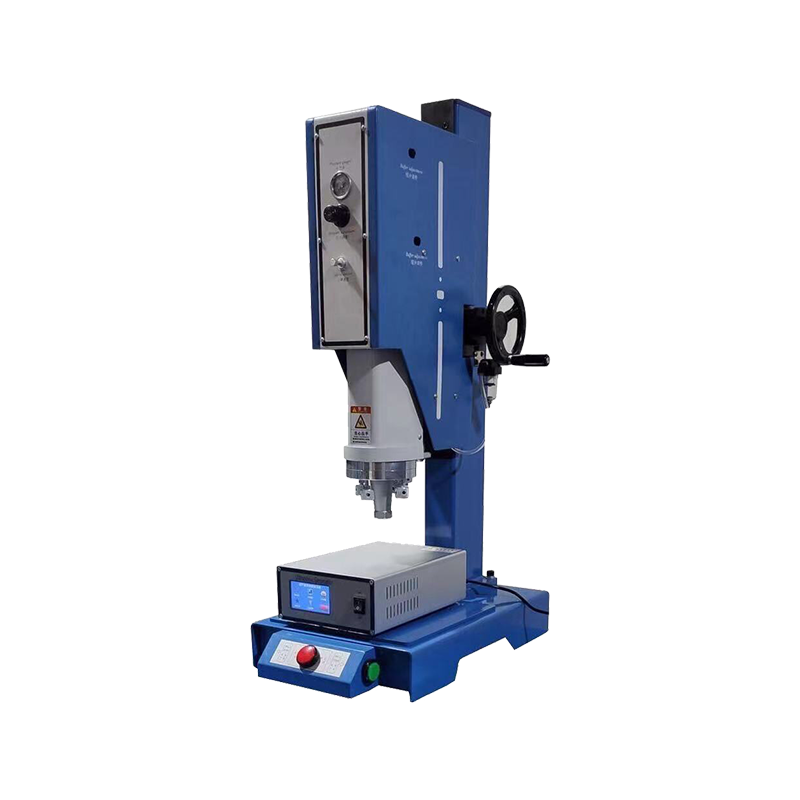
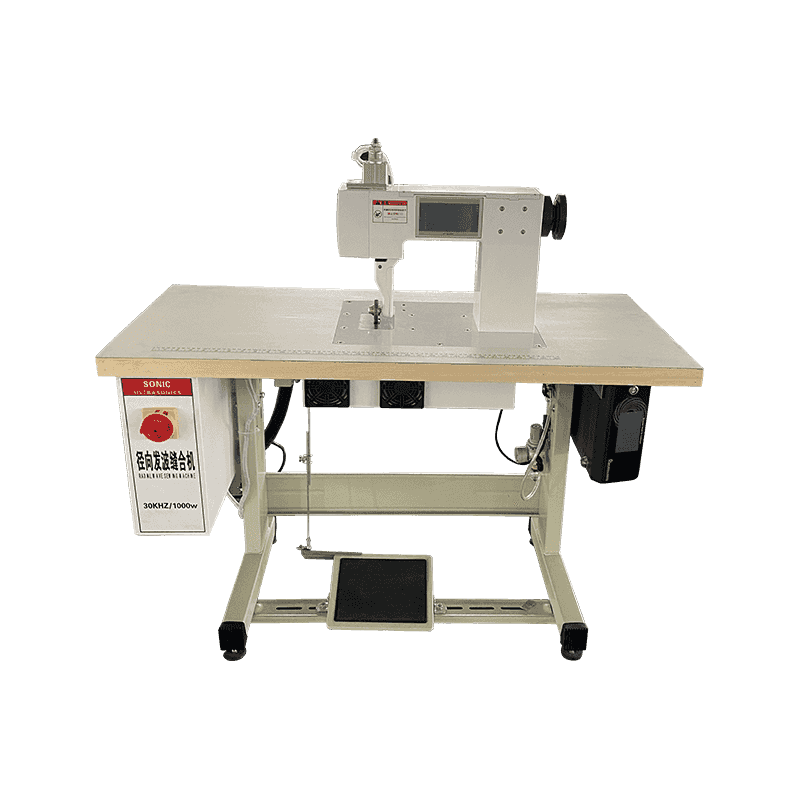
For short runs and process development, the manual plastic welding machine gives operators direct control over weld force and hold time, which makes it easier to establish parameters before moving to a fully automated cell.
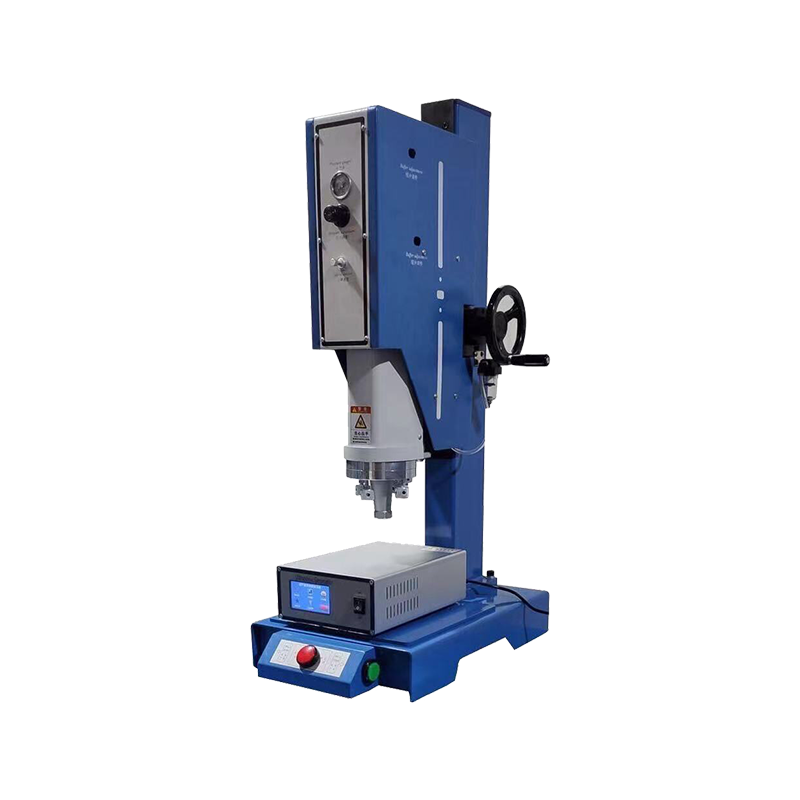 Custom AH-SL Manual working mode plastic welding machine Suppliers, OEM/ODM CompChangzhou Aoheng Machinery Co., Ltd is China custom AH-SL Manual working mode plastic welding machine suppliers and OEM/ODM company, deta...View Product →
The horn and fixture are half of the process. A custom horn matches the part geometry and delivers uniform amplitude across the weld line; a rigid fixture prevents the parts from shifting under weld force. The supplier's ability to design, build, and tune tooling is often more important than the machine brand.
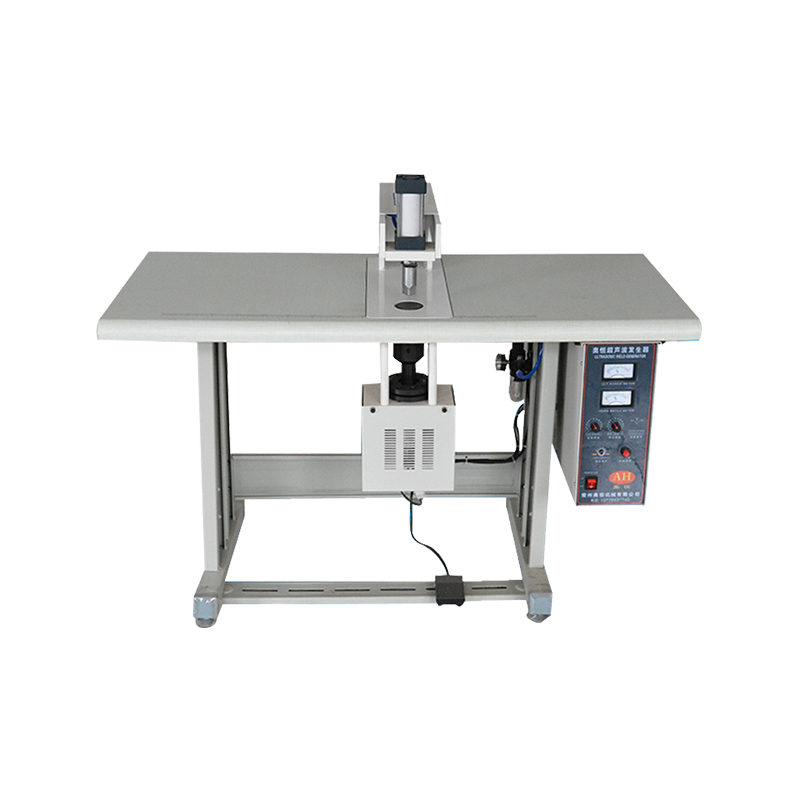
When the part is thin and the joint consists of a few discrete points, the ultrasonic spot welding machine avoids the expense of custom tooling while still producing a consistent, localized bond. If you want to compare the broader range, browse the ultrasonic plastic welding machines in our production catalog.
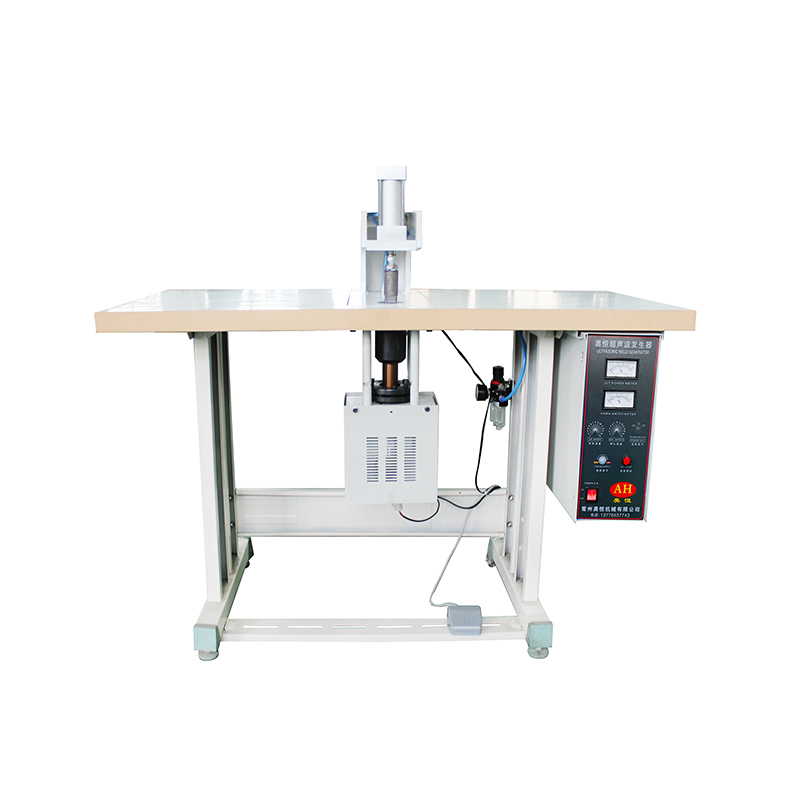 Custom AH-50Q Ultrasonic spot welding machine Suppliers, OEM/ODM Company - ChangChangzhou Aoheng Machinery Co., Ltd is China custom AH-50Q Ultrasonic spot welding machine suppliers and OEM/ODM company, details: Width...View Product →
Ultrasonic welding for plastics appears in automotive interiors, medical devices, consumer electronics, packaging, and nonwoven products because it offers repeatability, short cycle times, and no consumables. But the technology delivers those benefits only when the part is designed for it. Start with the resin, verify the joint geometry, then select the machine and tooling. That order rarely fails.
Before committing to a full production system, run a small batch study. Weld a few dozen parts, cut them through the weld line, and inspect the cross-section for consistent fusion. Check that no flash appears on visible surfaces and that the parts maintain dimensional tolerances after cooling. These simple checks take an afternoon and eliminate most downstream problems.

Copyright © ChangZhou AoHeng Machinery Co., Ltd. All Rights Reserved