English
 中文简体
中文简体 русский
 Español
Home / Blog / Industry News / Why Should You Choose a Shear Type Air Cutter Slitting Machine Over Other Slitting Methods?


Request A Quote

In converting operations where rolls of film, foil, paper, nonwoven fabric, or flexible packaging material must be slit into narrower widths, the choice of cutting mechanism has a direct and measurable impact on edge quality, production speed, material yield, and equipment maintenance cost. The shear type air cutter slitting machine — a configuration that uses pneumatically actuated rotary shear blades to cut material through a scissor-like shearing action — has become one of the most widely adopted slitting technologies across packaging, electronics, medical, and industrial material converting. Understanding the specific advantages this machine type offers over score-cut, crush-cut, and razor-cut alternatives provides a clear basis for making informed capital equipment decisions.
Content
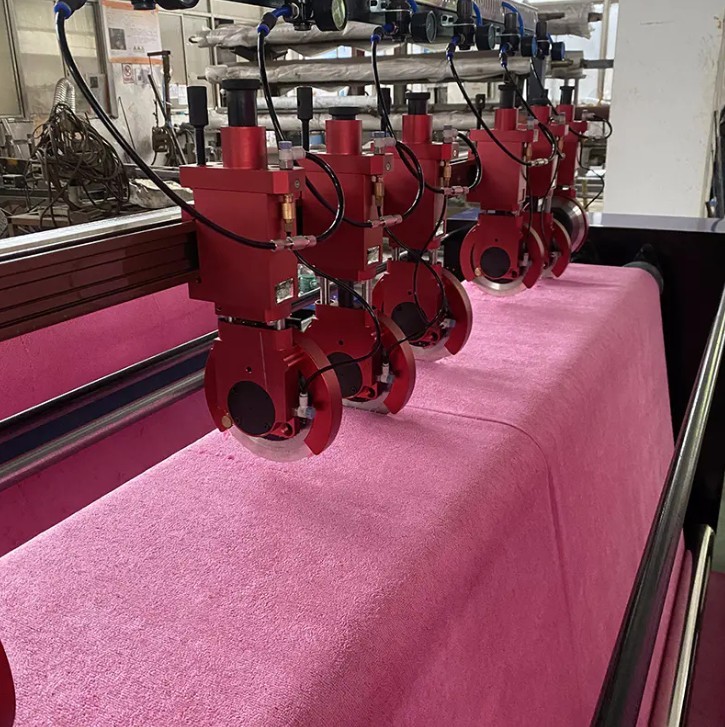
Before examining the advantages, a clear understanding of the operating principle is useful. In a shear type slitting configuration, pairs of circular upper and lower blades are positioned along the width of the web path. The upper blade overlaps the lower blade by a controlled amount — typically 0.5 to 2.0 mm — and the two counter-rotating blades apply a shearing force to the web as it passes between them, cutting it in the same mechanical manner as scissors cutting paper. The "air cutter" designation refers to the pneumatic actuation system: compressed air cylinders engage and disengage the blade holders, positioning the blades with precision and applying consistent, controllable lateral force to maintain correct blade-to-blade contact throughout the slitting run.
This pneumatic engagement system is fundamental to several of the machine's most important operational advantages. Unlike mechanically fixed blade holders that require manual repositioning using hand tools, pneumatically actuated holders can be engaged and disengaged rapidly from a control panel, and the air pressure supplied to each blade station directly controls the lateral force — called side force or overlap force — applied to the blades. Adjusting this force by changing the supply pressure takes seconds, without stopping the machine or touching the blade assembly physically.
Edge quality is the most consequential output characteristic of any slitting operation, and the shear cutting mechanism produces consistently cleaner edges than score-cut or crush-cut methods across the broadest range of material types. In shear slitting, the material fibers or molecular chains are cleanly severed by opposing blade faces passing in close proximity, with minimal compressive force applied perpendicular to the web surface. This produces a slit edge that is straight, smooth, and free from the ragged tearing, dust generation, or edge curl that score-cutting often produces in brittle or layered materials.
For multilayer films used in flexible packaging — such as PET/AL/PE or nylon/PE laminates — the shear cutting action holds each layer in compression between the two blades simultaneously, preventing interlayer delamination at the slit edge that commonly occurs when crush-cut methods apply uneven compressive loading across the laminate thickness. Aluminum foil, which is particularly prone to edge cracking under score-cut stress, responds especially well to shear cutting because the shearing action distributes cutting stress laterally rather than concentrating it at a score line.
Clean slit edges have cascading benefits through the converting and end-use supply chain. In printed packaging, edge defects generate visible quality rejections at retail. In battery electrode foil slitting for lithium-ion cells, burr-free edges are a safety-critical requirement — metallic burrs at the electrode edge can penetrate the separator and cause internal short circuits. In medical packaging, edge integrity is part of seal quality validation. The shear type air cutter's consistent edge output reduces defect rates at these downstream checkpoints, lowering total quality cost across the production chain.
In high-mix converting environments where slit widths change frequently between production orders, the time required to reposition blade assemblies is a direct driver of machine downtime and labor cost. The pneumatic actuation system of the air cutter slitting machine addresses this directly. Blade holders are mounted on a precision shaft or beam and can be slid to the required positions with the blades in the disengaged state. Once positioned, pressing the air engagement control brings the blades into cutting contact in under a second per station, without any manual tightening, clamping, or mechanical adjustment of individual blade holders.
On fully featured machines, the side force applied by the pneumatic cylinders can be set individually per blade station using proportional pressure regulators, allowing the operator to fine-tune the cut quality for different materials or different positions across the web width — for example, applying higher side force at edge trim stations and lower force at interior slit positions — without changing blades or hardware. This level of per-station control is not available on mechanically actuated slitting systems and is a significant process flexibility advantage for converters running diverse material specifications on the same machine.
Many converting applications are highly sensitive to particulate contamination. Electronic component tapes, optical films, medical device packaging, and clean-room-processed materials cannot tolerate cutting dust or micro-debris deposited on the web surface during slitting. Score-cut and crush-cut methods apply a compressive force that fractures material at the cut line, generating fine particles — especially from brittle materials such as PET film, polypropylene, and coated papers — that contaminate both the slit rolls and the converting environment.
The shear cutting mechanism produces dramatically less particulate because the material is cut by opposing blade faces rather than fractured under compression. The clean scissor action leaves minimal material at the cut face to break away as debris. For applications requiring cleanliness standards equivalent to ISO Class 7 or better, shear slitting is typically the only mechanically viable cutting method that can meet particulate requirements without enclosing the entire slitting zone in a filtered, pressurized environment.
Reduced dust generation also benefits blade and machine longevity. Cutting dust that is not extracted efficiently from the machine accumulates on bearing surfaces, linear guides, and blade holders, accelerating wear and contributing to positioning inaccuracy over time. A shear-cut machine running clean materials produces less internal contamination, reducing maintenance frequency and extending the service interval between precision component replacements.
Shear type air cutter slitting machines are designed for continuous high-speed web processing. Modern machines in this category operate at web speeds ranging from 200 m/min for heavier laminates up to 800 m/min or higher for thin film applications, depending on the material, slit width, and winding tension requirements. The rotary shear cutting action scales smoothly with increasing web speed because the cutting force is applied continuously by the counter-rotating blades rather than intermittently as in die-cut or perforating configurations. There is no mechanical impact event that would limit speed or require dynamic balancing at high velocities.
Crucially, the pneumatic side force that maintains blade contact is independent of web speed — it is a static force applied by the air cylinder regardless of how fast the web moves through the cutting zone. This means that the edge quality produced at 100 m/min is essentially identical to the edge quality at 600 m/min, provided tension and tracking are controlled correctly. Score-cut and crush-cut methods, by contrast, often show speed-dependent edge quality changes because the compressive forces and friction dynamics at the cutting point change as web velocity increases.
One of the most commercially significant advantages of the shear type air cutter configuration is its ability to process a genuinely broad range of materials on the same machine platform by adjusting blade geometry, side force, overlap, and web tension. The table below summarizes common material categories and how shear slitting parameters are adapted for each.
| Material Type | Typical Thickness | Key Parameter Adjustments | Edge Quality Result |
|---|---|---|---|
| PET / BOPP Film | 12–50 µm | Low side force, minimal overlap | Clean, dust-free, no curl |
| Aluminum Foil | 6–100 µm | Sharp blade angle, controlled overlap | Burr-free, no cracking |
| Flexible Laminate (packaging) | 60–250 µm | Medium side force, matched blade clearance | No delamination at edge |
| Nonwoven Fabric | 30–300 gsm | Higher side force, frequent blade sharpening | Clean fiber cut, minimal fraying |
| Coated Paper / Release Liner | 60–200 gsm | Moderate overlap, anti-static measures | Smooth edge, no coating fracture |
This adaptability is a key economic advantage for converters who process multiple product lines on shared equipment. A single shear type air cutter slitting machine can be reconfigured between foil, film, laminate, and nonwoven runs within a single shift by changing blade geometry and adjusting pneumatic pressure settings — eliminating the need for dedicated machines per material family that would otherwise be required with less adjustable cutting technologies.
Blade longevity is a significant operational cost variable in high-volume slitting operations. Shear type blades — typically manufactured from high-speed steel (HSS), tungsten carbide, or ceramic-coated tool steel — wear more gradually than score-cut or crush-cut tooling because the shearing action distributes cutting stress along the full blade edge circumference rather than concentrating it at a single score point. As the blade rotates during web travel, different portions of the edge engage the material sequentially, spreading wear evenly around the blade perimeter rather than creating a localized wear flat as occurs with stationary scoring knives.
The pneumatic side force system contributes to blade life in a subtle but important way: by allowing the operator to set the minimum side force necessary to achieve the required cut quality, it prevents the over-forcing that rapidly dulls blades when operators manually tighten blade holders beyond the optimum setting to compensate for perceived edge quality problems. Controlled, repeatable pneumatic force means blades consistently operate at the correct engagement level, maximizing the interval between resharpening or replacement cycles.
Operator safety in slitting operations is a persistent concern given the sharp rotary blades involved. The pneumatic engagement system of the air cutter slitting machine provides a meaningful safety improvement compared to mechanically actuated blade holders that require operators to reach into the blade zone with hand tools during setup or adjustment. With pneumatic actuation, blades can be fully disengaged from the cutting position using a panel control before any operator contact with the blade assembly is required. Many machine designs additionally incorporate safety interlocks that automatically disengage all blade stations when guards are opened or when the emergency stop circuit is activated.
The ability to disengage blades instantly without stopping the web drive is also operationally valuable. If a web splice, defect patch, or foreign object approaches the slitting station, the operator can momentarily disengage the blades to allow the anomaly to pass through without contacting the cutting edges — preventing blade damage and avoiding a web break that would require a full machine stop and rethreading cycle. This capability is particularly valued in high-speed operations where stopping and restarting the machine represents a significant productivity cost.
The shear type air cutter slitting machine delivers its most compelling combination of advantages in the following operational scenarios:
Across all of these scenarios, the shear type air cutter slitting machine's combination of precision pneumatic control, clean shearing action, fast setup, and broad material compatibility positions it as the most technically well-rounded slitting platform available for demanding converting applications.

Copyright © ChangZhou AoHeng Machinery Co., Ltd. All Rights Reserved