English
 中文简体
中文简体 русский
 Español
Home / Blog / Industry News / What Actually Happens Inside an Automatic Ultrasonic Quilting Machine During Production?


Request A Quote

Content
An automatic ultrasonic quilting machine is an industrial textile processing system that bonds and patterns multiple layers of fabric — typically a face fabric, a filling material such as polyester batting or wadding, and a backing layer — using high-frequency ultrasonic vibration rather than conventional needle-and-thread stitching. The technology replaces mechanical sewing with a precisely controlled acoustic energy delivery system that generates localized frictional heat at the fabric interface, melting and fusing synthetic fiber layers together at defined points or along continuous patterns to create the quilted structure. The result is a permanently bonded, patterned textile assembly that is visually and functionally equivalent to a traditionally stitched quilt but produced at dramatically higher speeds, with no thread consumption, no needle breakage downtime, and no seam pucker or thread tension management challenges.
The "automatic" designation refers to the integration of computerized pattern control, servo-driven fabric feed systems, and automated process monitoring that allows modern ultrasonic quilting machines to execute complex, multi-element quilting patterns across wide fabric widths with minimal operator intervention. Contemporary automatic ultrasonic quilting machines are capable of producing finished quilted panels at speeds of 20 to 80 meters per minute depending on pattern complexity, fabric type, and ultrasonic parameters — production rates that would be impossible to achieve with conventional multi-needle quilting machines running the same pattern densities.
Understanding how an automatic ultrasonic quilting machine works requires a clear grasp of the physical mechanism by which ultrasonic energy bonds synthetic textile layers — a process fundamentally different from any mechanical fastening or adhesive bonding method. The bonding mechanism is intermolecular frictional heating, driven by the rapid cyclic deformation of polymer molecules under the influence of a high-frequency acoustic field.
When a vibrating ultrasonic horn — oscillating at frequencies of 20 kHz, 35 kHz, or 40 kHz depending on the machine design — is pressed against a stack of synthetic fabric layers at a defined contact pressure, the acoustic energy propagates through the material as compressive and shear stress waves. At the interfaces between fabric layers, and within the fiber structure of the fabric itself, the rapid cyclic mechanical deformation causes polymer chain segments to move against one another at rates too fast for the material's viscous relaxation to accommodate. This internal friction converts mechanical energy to thermal energy with extraordinary spatial precision — the heating occurs exactly at the material interfaces and fiber contact points where the acoustic stress is concentrated, rather than being applied externally and conducted inward as in conventional heating processes.
The localized temperature rise at the bonding zone reaches and exceeds the melting point of the synthetic fiber polymers — typically 255–265°C for polyester — within milliseconds of horn contact. The molten polymer flows under the applied contact pressure, intermixing across the layer interface and filling the interstitial spaces between fibers from adjacent layers. When the ultrasonic energy is removed and the material cools — a process that takes only a fraction of a second under the continued contact pressure of the horn — the mixed polymer solidifies into a monolithic, covalently continuous bond that is structurally stronger than the surrounding unmelted fiber in many cases. This is the bonding mechanism that produces the characteristic raised, embossed appearance of ultrasonically quilted patterns — the compressed, melted bonding zones are slightly thinner and denser than the surrounding fabric, creating a textured relief that defines the quilting pattern.
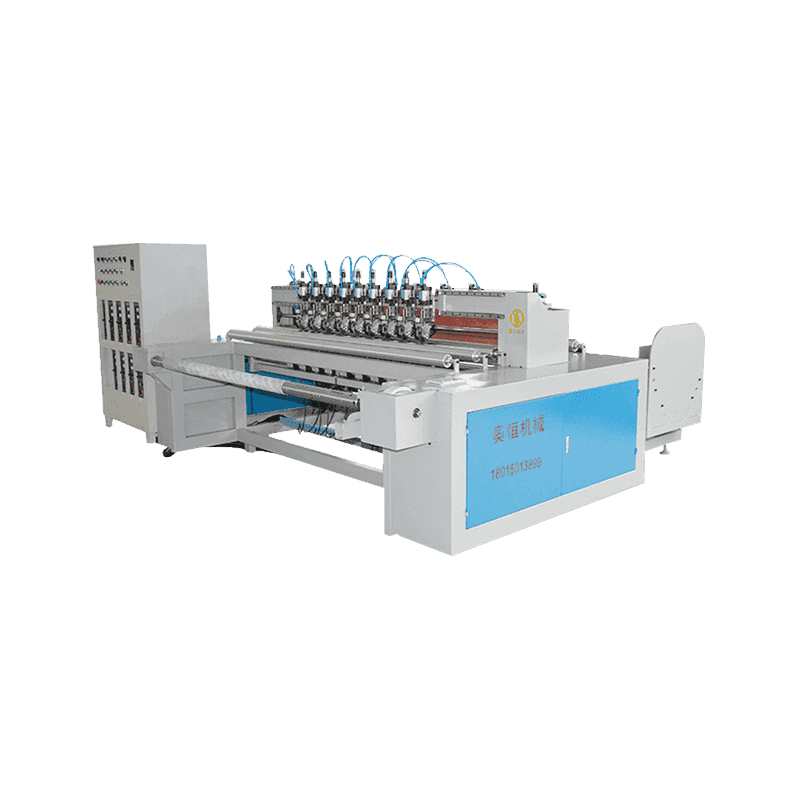
A complete automatic ultrasonic quilting machine integrates several distinct subsystems that must operate in precise coordination to produce consistent, high-quality quilted output. Understanding each component's function is essential for operators, maintenance engineers, and procurement specialists evaluating machine specifications.
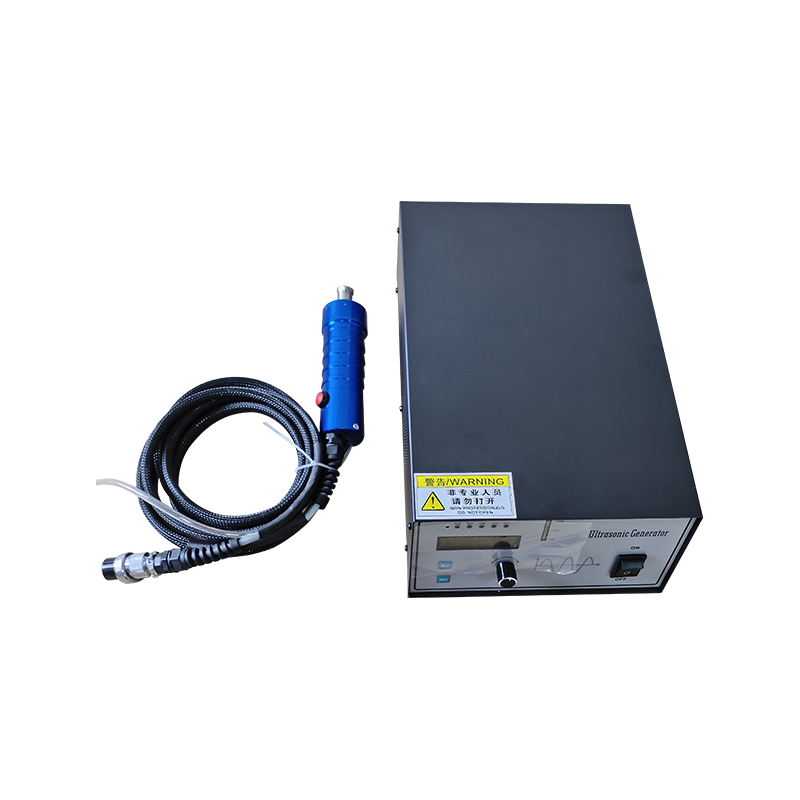
The ultrasonic generator — also called the power supply or converter — is the electrical heart of the system. It takes standard mains AC power (typically 220V or 380V at 50/60 Hz) and converts it to a high-frequency AC electrical signal at the operating frequency of the ultrasonic system — most commonly 20 kHz for heavy textile applications or 35–40 kHz for finer, higher-resolution bonding work. Modern digital generators use phase-locked loop (PLL) control circuits to continuously track and maintain resonance with the transducer-booster-horn assembly as it changes temperature during operation, ensuring stable energy delivery regardless of load variations. Generator output power for quilting applications typically ranges from 500W to 3,000W per bonding head, with multi-head machines carrying multiple generators operating in synchronized parallel.
The transducer converts the high-frequency electrical signal from the generator into mechanical vibration using the piezoelectric effect. It contains a stack of piezoelectric ceramic discs — typically lead zirconate titanate (PZT) — that expand and contract in response to the alternating electrical field, generating longitudinal mechanical oscillations at the same frequency as the electrical input. The transducer is precision-manufactured to resonate mechanically at its design frequency, maximizing energy conversion efficiency. Vibration amplitude at the transducer output face is typically 5–10 microns, which is amplified by the booster and horn to the levels required for effective textile bonding.
The booster is an intermediate acoustic component that amplifies or attenuates the vibration amplitude from the transducer before it reaches the horn. Different booster ratios (1:1, 1:1.5, 1:2) allow the system to be tuned for different material thicknesses and bonding force requirements. The horn — also called the sonotrode — is the component that makes direct contact with the fabric and delivers the ultrasonic energy to the bonding zone. Horn geometry is critically important: its shape must be designed to resonate at the system frequency while delivering uniform vibration amplitude across its full working face. For quilting applications, horns are typically cylindrical with patterned working faces — the embossed pattern on the horn face defines the quilting pattern transferred to the fabric, with raised features concentrating the ultrasonic energy at the intended bonding points.
In rotary ultrasonic quilting systems — the configuration used in most automatic high-speed quilting machines — the fabric passes continuously between the vibrating horn and a rotating patterned metal roller called the anvil. The anvil carries the embossed quilting pattern on its surface and rotates in synchronization with the fabric feed speed. The gap between the horn and the anvil determines the contact pressure applied to the fabric at the bonding points — precise gap control, typically achieved through servo-driven horn positioning, is critical for consistent bond quality. Too little gap produces insufficient pressure for complete melting and bonding; too much gap allows the horn to bounce or the fabric to slip, producing irregular or incomplete bonds.
The automatic fabric handling system feeds the face fabric, batting, and backing layers from separate supply rolls, aligns them precisely, maintains controlled tension across the full working width, and draws the bonded composite through the machine at the programmed speed. Servo-driven nip rolls, edge guides, and tension control dancers ensure that all layers enter the bonding zone in perfect registration without wrinkle, skew, or tension variation — any of which would produce pattern misalignment or bonding defects in the finished product.
The complete production sequence on an automatic ultrasonic quilting machine follows a defined process flow from raw material loading to finished quilted panel output:
The "automatic" capability of modern ultrasonic quilting machines is realized through sophisticated CNC (computer numerical control) systems that govern every aspect of pattern execution, machine speed, and process parameter management. In machines using flat-bed or multi-axis bonding head configurations — as opposed to pure rotary anvil systems — the bonding head is driven by servo motors across the fabric width while the fabric advances, executing complex programmed patterns under closed-loop position control with positioning accuracy of ±0.1 mm or better.
Pattern libraries stored in the machine controller allow operators to select from hundreds of pre-programmed quilting designs — from simple diamond grids to complex floral, geometric, and custom logo patterns — and switch between patterns in minutes by loading a new program rather than physically changing tooling. For rotary anvil machines, pattern changes require physical anvil roller exchange, but the machine's automatic parameter recall system loads the correct speed, pressure, and power settings associated with each anvil pattern automatically, minimizing setup time and operator error. The integration of touch-screen HMI (human-machine interface) panels with intuitive pattern visualization allows less experienced operators to set up and run production efficiently, while data logging functions record process parameters continuously for quality traceability and process optimization purposes.
The performance advantages and limitations of automatic ultrasonic quilting machines become clear when compared directly against conventional multi-needle quilting machines across the dimensions most important to industrial textile producers:
| Parameter | Ultrasonic Quilting | Needle Quilting |
| Bonding Method | Ultrasonic fusion of synthetic fibers | Mechanical stitching with thread |
| Thread Consumption | None | High — major consumable cost |
| Production Speed | 20–80 m/min | 5–20 m/min typical |
| Needle Breakage Downtime | None | Frequent and costly |
| Compatible Materials | Synthetic only (polyester, nylon, PP) | Natural and synthetic fabrics |
| Pattern Flexibility | High with CNC; limited by anvil in rotary | High with multi-needle pantograph |
| Edge Sealing | Yes — bonds seal cut edges simultaneously | No — separate edge finishing required |
| Water Resistance at Bond Points | Excellent — no needle holes | Poor — needle perforations allow leakage |
The ultrasonic bonding mechanism is entirely dependent on the thermoplastic behavior of synthetic polymers — the ability of the fiber material to melt, flow, and re-solidify under controlled thermal and pressure conditions. This fundamental requirement defines both the strength of ultrasonic quilting technology and its primary limitation: it works exclusively with thermoplastic synthetic materials and cannot bond natural fibers such as cotton, wool, or silk that do not melt but instead char or decompose when heated.
The materials fully compatible with ultrasonic quilting include:
For products requiring natural fiber face fabrics — such as cotton-covered down quilts or wool-topped mattress toppers — hybrid approaches can be used where a synthetic scrim or backing layer provides the thermoplastic bonding medium while the natural fiber face fabric is mechanically held by the compressed bond zones without requiring the face fibers themselves to melt. This approach requires careful process optimization to achieve acceptable bond strength without damaging the natural fiber surface, and it is an active area of development for manufacturers seeking to expand ultrasonic quilting into premium bedding segments currently dominated by needle quilting.
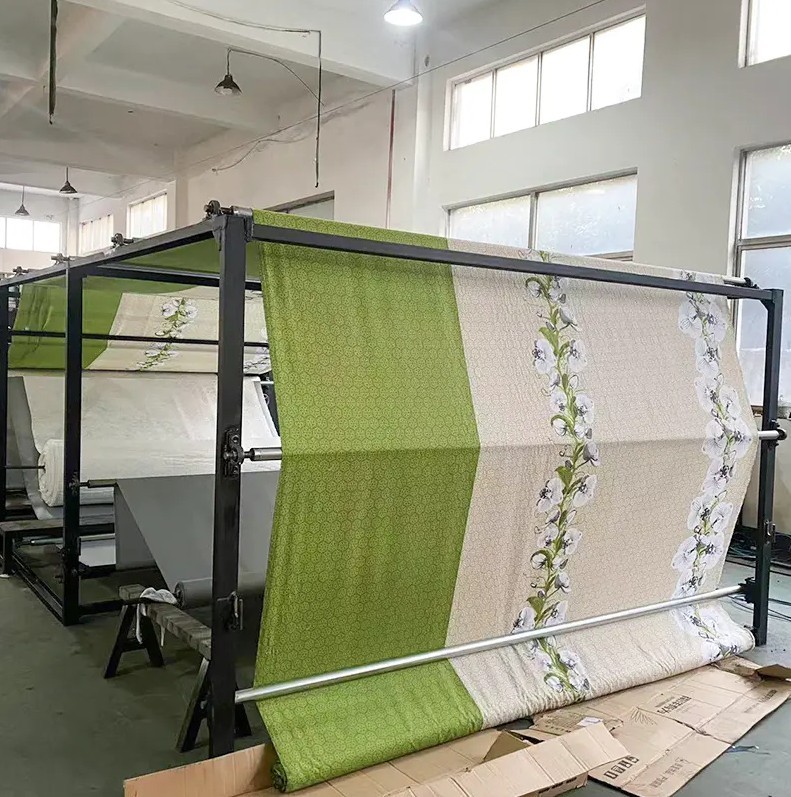
Automatic ultrasonic quilting machines serve a broad and growing range of industrial product sectors, with adoption accelerating as manufacturers recognize the productivity, quality, and cost advantages the technology delivers over conventional stitching:
Maintaining an automatic ultrasonic quilting machine in peak operating condition requires attention to the specific wear and failure modes of the ultrasonic components — which differ fundamentally from the mechanical wear patterns of needle quilting machines with which many textile maintenance engineers are more familiar.
The ultrasonic horn is the highest-wear component in the system. Repeated contact with fabric and anvil surfaces causes progressive wear of the horn face, which alters the vibration amplitude distribution and eventually degrades bond quality and pattern definition. Horn face condition should be inspected regularly — weekly in high-production environments — and horns should be re-machined or replaced when face wear exceeds the manufacturer's tolerance specification. Titanium alloy horns, while more expensive than aluminum alternatives, offer significantly longer service life and are the preferred material for continuous-production quilting applications.
The piezoelectric transducer requires periodic inspection for ceramic cracking — a failure mode caused by mechanical shock, overtorquing of the stud connecting transducer to booster, or operation at resonance frequencies significantly shifted from design by accumulated wear or temperature changes. Operating the generator in amplitude-controlled mode rather than power-controlled mode reduces transducer stress by maintaining consistent vibration amplitude regardless of load variation, extending transducer service life. Generator calibration and resonance frequency verification should be performed quarterly as part of a structured preventive maintenance program to ensure the full system continues to operate at peak energy conversion efficiency throughout its service life.

Copyright © ChangZhou AoHeng Machinery Co., Ltd. All Rights Reserved