English
 中文简体
中文简体 русский
 Español
Home / Blog / Industry News / Ultrasonic Welding Plastic: Process, Materials, Joint Design & Machine Selection


Request A Quote

Content
Every plastic assembly starts with the same question: screw it, glue it, snap it, or weld it? For thermoplastic components made in any meaningful volume, ultrasonic welding plastic is usually the fastest, cleanest, and most repeatable answer. High-frequency mechanical vibration creates frictional heat exactly where two parts meet, melting and fusing them in a fraction of a second, without adhesives, solvents, or consumables.
This guide explains how ultrasonic plastic welding works, which thermoplastics weld well, how to design reliable joints, and what to consider before buying an ultrasonic welding machine.
Think of ultrasonic welding as a chain of energy conversion. The generator converts mains electricity into a high-frequency electrical signal, typically 15, 20, 30, 35, or 40 kHz. A piezoelectric transducer changes that signal into mechanical vibration, the booster adjusts the amplitude, and the horn, or sonotrode, delivers the vibration to the upper part. The lower part sits in a rigid fixture or anvil. Friction at the interface generates heat, the polymer melts, and the surfaces fuse under controlled pressure as the weld cools.
In plunge welding, the most common mode, the cycle looks like this:
The same physics drives continuous welding of films, synthetic fabrics, and nonwovens, where a rotating horn seams, cuts, or laminates in a single pass.
The rule is simple: amorphous thermoplastics weld easily, semi-crystalline thermoplastics weld with more energy and care, and thermosets do not weld at all.
| Material type | Common examples | Weldability | Practical note |
|---|---|---|---|
| Amorphous thermoplastics | ABS, polystyrene, SAN, PMMA, polycarbonate | Excellent | Wide softening range and efficient vibration transfer; most forgiving in production. |
| Semi-crystalline engineering grades | PA6, PA66, PBT, PET | Good | Requires higher amplitude and energy; dry hygroscopic grades before welding. |
| Semi-crystalline commodity grades | PP, PE, POM | Moderate | Narrow melting window; use shear joints and check flash regularly. |
| High-performance polymers | PSU, PES, PEI | Fair to good | Needs high power delivery; may reduce cycling speed. |
Amorphous materials soften over a wide temperature range, so they tolerate small variations in amplitude or weld time. Semi-crystalline plastics melt over a much narrower range, so the joint can fail if the energy director melts before the surrounding material is ready to flow.
Dissimilar plastics can be welded only when they are chemically compatible and their melting temperatures overlap closely, typically within about 20 °C. Moisture-sensitive grades such as nylon and polycarbonate should be dried first to avoid bubbles and voids. Our detailed comparison of weldable materials and their limitations covers these effects and the influence of fillers and additives.
Joint geometry decides how much energy reaches the interface and where the molten plastic goes. A good joint concentrates vibration, traps flash, and gives the melt room to flow.
An energy director is a triangular or pointed ridge molded on one surface. It concentrates mechanical stress into a tiny contact area, melts first, and spreads across the joint. Energy directors suit amorphous plastics and are common in butt and step joints, with typical ridge heights of 0.25 to 0.5 mm.
A shear joint creates an interference fit between an upper and lower wall. As the parts vibrate, the contacting surfaces melt over the full overlap height and form a strong continuous bond. Shear joints are preferred for semi-crystalline materials and for leak-tight or high-strength seals.
Tongue-and-groove joints provide self-location and shear resistance. Criss-cross and textured patterns suit large flat areas, fabrics, and films. Peripheral joints follow a part contour and are often used for sealing.
Whatever the joint, horn and fixture must match the part geometry. Tooling quality is often the difference between a reliable joint and one that drifts during a shift; our guide to ultrasonic welding tooling and fixturing solutions covers horn selection, nest alignment, and pressure control.
When material and joint are right, ultrasonic welding is hard to beat for speed and cleanliness.
The process also has clear boundaries:
Four parameters do most of the work: frequency, amplitude, weld time or absorbed energy, and hold time.
| Parameter | Typical range | Effect on joint |
|---|---|---|
| Frequency | 15 to 40 kHz | Lower frequencies provide higher power and amplitude for large parts; higher frequencies suit small, delicate components. |
| Amplitude | 10 to 60 microns at the horn face | Sets the heating rate and melt flow; too low produces no bond, too high causes degradation and flash. |
| Weld time or energy | 0.1 to 1.0 s, or an energy limit | Determines melt volume and how completely the joint fills. |
| Trigger force | Machine-dependent | Starts the vibration; affects fit-up, flash, and initial melt distribution. |
| Hold time | 0.1 to 1.0 s | Allows the melt to cool under pressure; prevents voids, warpage, and springback. |
Modern power supplies weld in energy, distance, or time mode. Energy mode compensates for small variations in part height and material by stopping the weld once a set amount of ultrasonic energy has been absorbed; distance modes control joint collapse precisely.
Ultrasonic plastic welding appears in automotive air ducts and lamp housings, medical filters and valve assemblies, electronics enclosures, and sealed packaging. The same technology also welds synthetic textiles and nonwovens for masks, filters, and garment seams, so textile and hygiene producers rely on the same equipment family.
Work through these points before comparing models:
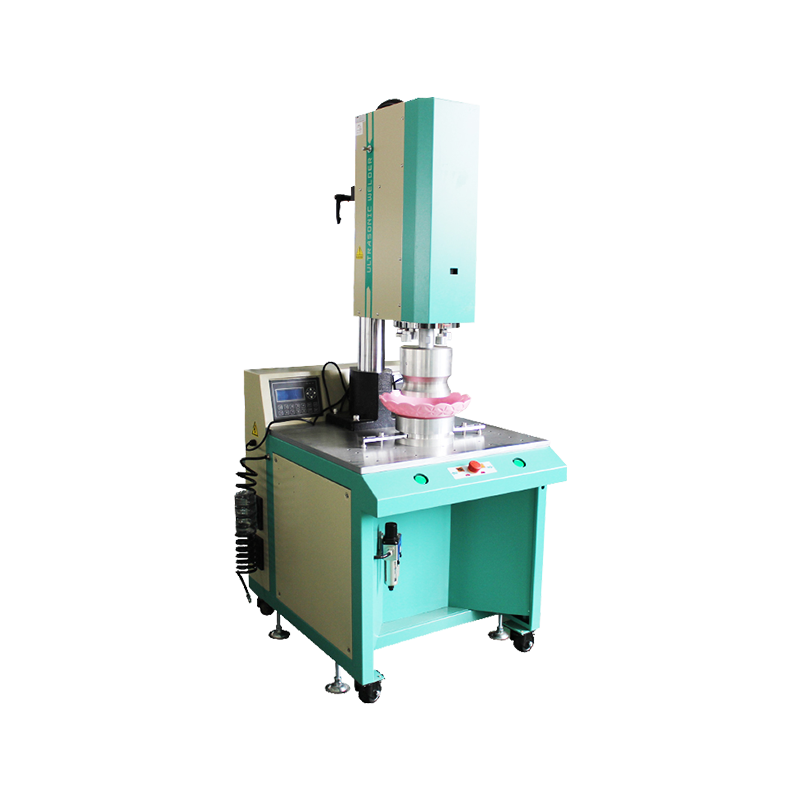
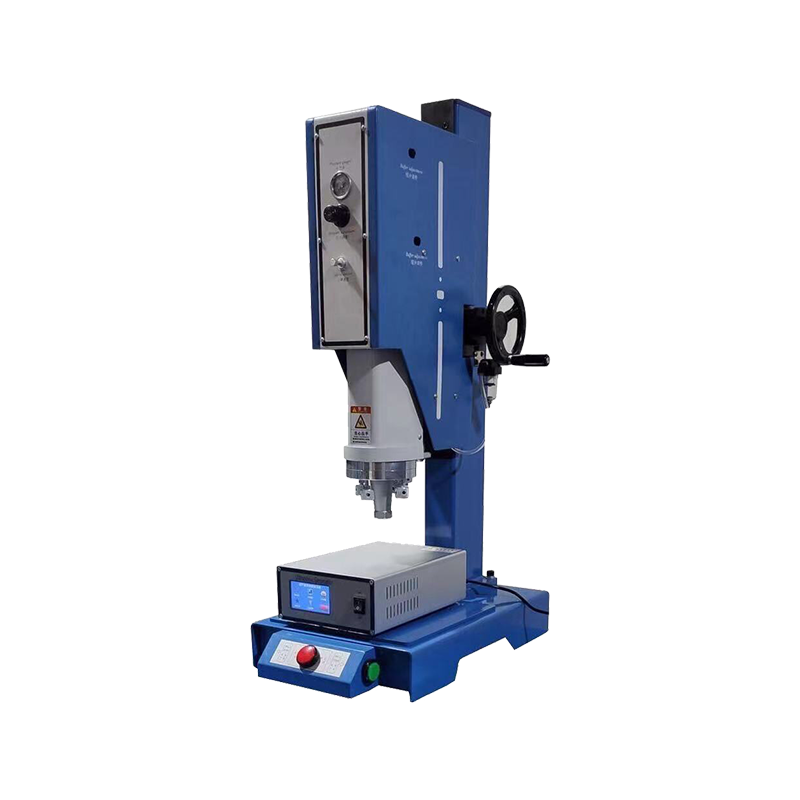
Machine format should follow the part. For large-area or high-power joints, a bench-top machine with a 15 kHz converter is the practical choice. The AHDSL 15 kHz 4200 W plastic welding machine delivers the power and amplitude needed for bigger thermoplastic parts and long joint lines while keeping cycle times short.
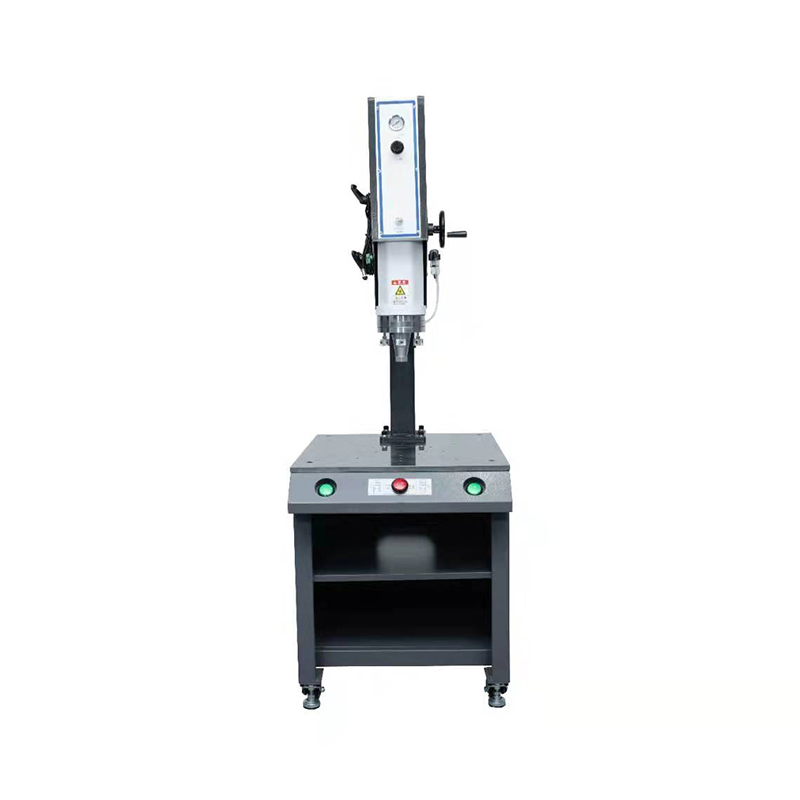 Custom AH-DSL 15KHz 4200w Plastic welding machine Suppliers, OEM/ODM Company - CChangzhou Aoheng Machinery Co., Ltd is China custom AH-DSL 15KHz 4200w Plastic welding machine suppliers and OEM/ODM company, details: M...View Product →
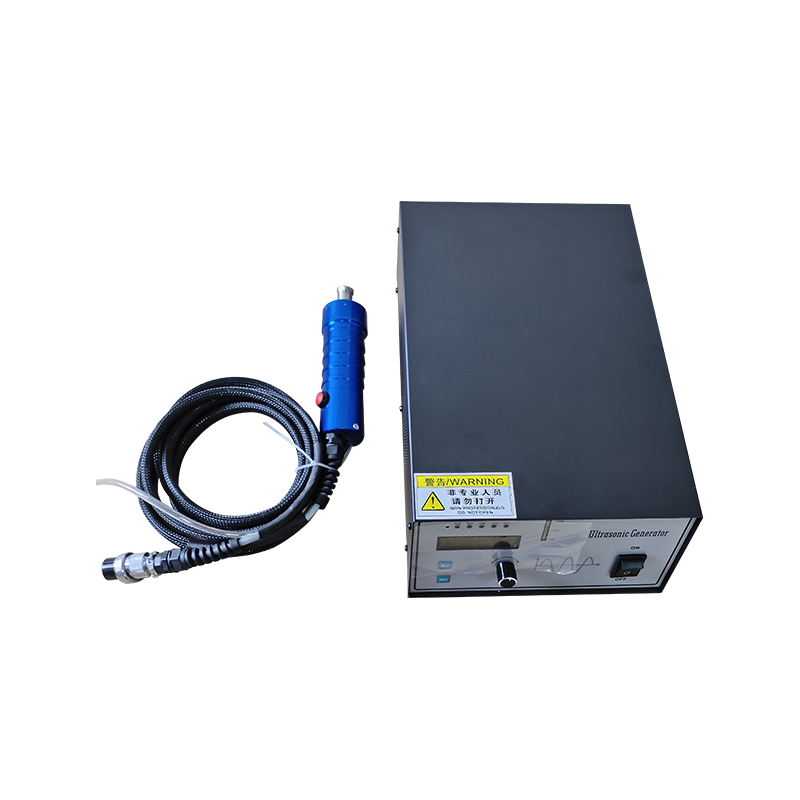
When the part cannot be moved to a press, a custom handheld ultrasonic welder brings the horn to the workpiece for spot welds, insert installation, staking, and field repairs, and it is equally useful during prototyping and short runs.
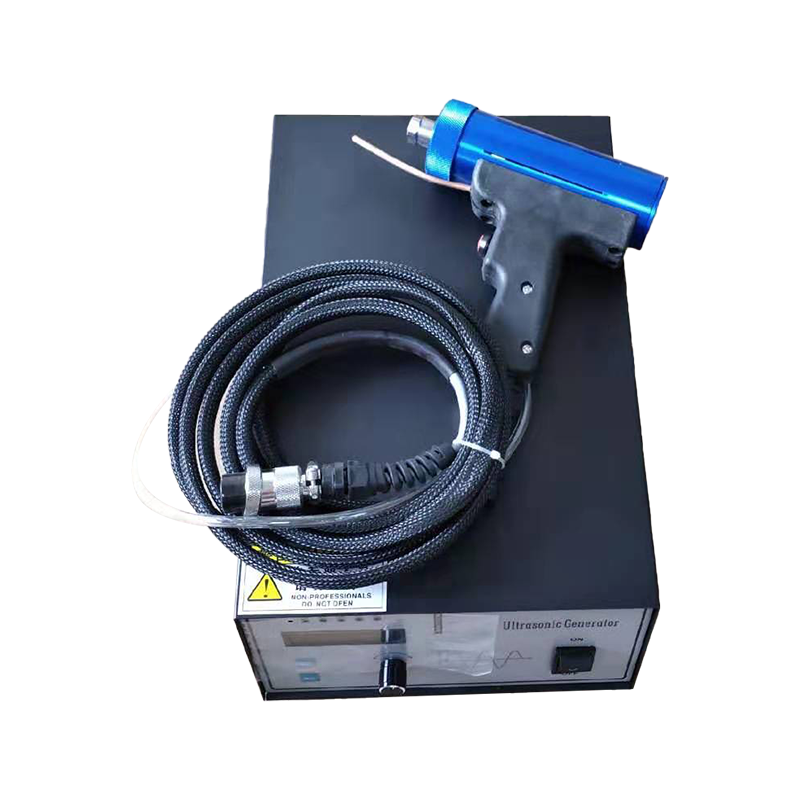 Custom AH-30 Sonic custom handheld ultrasonic welder Suppliers, OEM/ODM Company Changzhou Aoheng Machinery Co., Ltd is China custom AH-30 Sonic custom handheld ultrasonic welder suppliers and OEM/ODM company, details:...View Product →
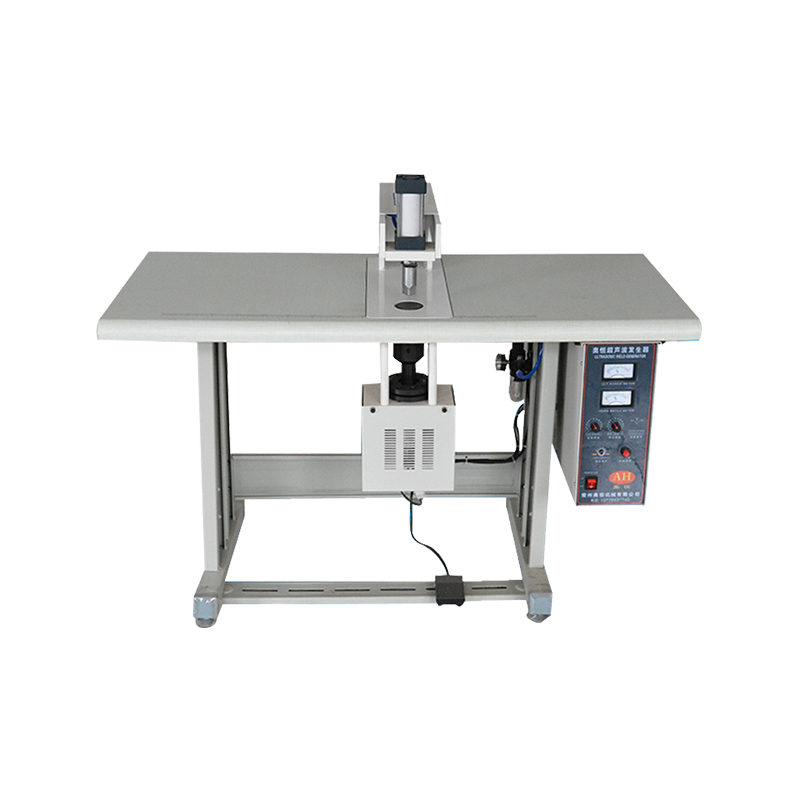
For light tacking and small-part joining, a compact spot welder is the simplest entry point. An ultrasonic spot welding machine with adjustable power suits thin-walled parts, quick tack welds, and secondary operations where full joint tooling is not yet justified.
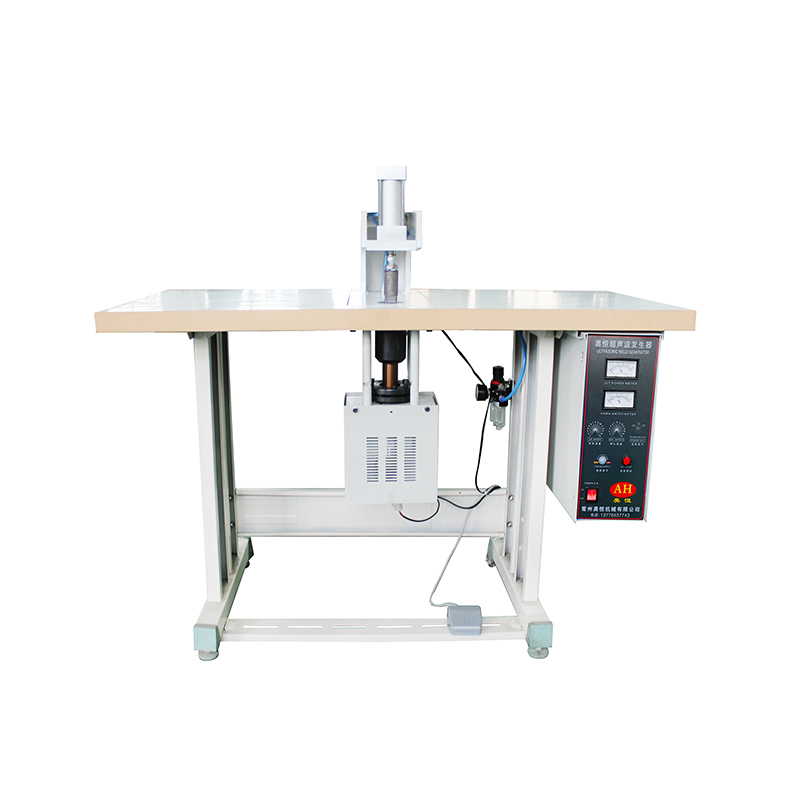 Custom AH-50Q Ultrasonic spot welding machine Suppliers, OEM/ODM Company - ChangChangzhou Aoheng Machinery Co., Ltd is China custom AH-50Q Ultrasonic spot welding machine suppliers and OEM/ODM company, details: Width...View Product →
Never run the generator without the horn in contact with a part or a tuned test load, because a free-running horn can damage the transducer and booster. Keep hands clear of the horn area, since heads can cycle unexpectedly, and use hearing protection because the process generates audible noise even though the welding frequency itself is above the range of human hearing.
Keep converter, booster, and horn threads clean and correctly torqued, check air filters and pressure on pneumatic systems, keep cooling fans unobstructed, and verify the generator ground connection. The full list appears in our guide to safety considerations when operating an ultrasonic welding machine.
Ultrasonic welding is the default choice for mass-produced thermoplastic parts that need fast, clean, repeatable joints. The practical formula is consistent: choose weldable amorphous materials where possible, design an energy director or shear joint that matches the polymer, control amplitude, time, and force digitally, and match machine frequency to part size.
Start with material and joint design before comparing machines. When those foundations are right, an ultrasonic plastic welding line runs with remarkably few surprises, whether you are joining automotive, medical, or nonwoven products.

Copyright © ChangZhou AoHeng Machinery Co., Ltd. All Rights Reserved