English
 中文简体
 русский
 Español
Home / Blog / Industry News / ultrasonic welder horn: Applications, Selection Criteria, and Practical Guidance


Request A Quote
If you have spent any time around ultrasonic assembly, you already know the horn is the part everyone blames when a weld looks wrong. In practice, the ultrasonic welder horn is the single component that decides how much of the generator's energy actually reaches the joint — and how evenly it arrives. After years of building and servicing ultrasonic equipment for textile, nonwoven and plastics producers, we have learned that most horn problems are not mysterious. They come from a mismatch between geometry, material and the job the horn is being asked to do.
This guide walks through what the horn does, how it is built, which profiles suit which applications, and the small maintenance habits that keep a stack performing for years.
Content
The horn — also called a sonotrode — is the last piece of metal in the vibration path. It sits at the bottom of the stack, below the converter and booster, and it touches the workpiece directly. Its job is twofold: amplify the mechanical vibration coming down the stack to the amplitude the material needs, and deliver that energy across the right footprint.
Both duties are governed by resonance. A horn is machined to vibrate at a specific frequency, usually 15 kHz, 20 kHz or 40 kHz, and it only works efficiently when the whole stack is tuned to that same number. Push a horn off resonance and the symptoms show up quickly: the generator draws more current, the weld becomes inconsistent, and heat builds in places it should not. If you want to understand the upstream half of that chain, our notes on how the transducer converts electrical signals into mechanical vibration are a useful companion read.
A horn that looks correct on paper can still be wrong in the machine. Material grade, grain direction, the mass of the mounting flange and even the finish on the working face all shift the resonant frequency. Reputable manufacturers measure every horn on a frequency analyser before it ships and adjust the tuning slots until the horn lands within a narrow window of the target frequency. This is why a copy of a horn is rarely an equal replacement: the geometry may match while the tuning does not.
Horn shape is really an energy-distribution decision. A slim blade concentrates energy into a narrow line; a wide bar spreads it across a seam; a contoured face shapes it around a specific part. The table below summarises the profiles we are asked about most often.
| Profile | Geometry | Typical application | Watch points |
|---|---|---|---|
| Blade / wedge | Narrow working edge | Slitting, sealing and trimming nonwoven fabric | Edge wear; keep the blade cool and clean |
| Bar / rectangular | Long flat face | Continuous seam welding, lace and embossing | Face flatness and uniform amplitude along the length |
| Round / cylindrical | Circular contact face | Spot welding, tube sealing, small plastic parts | Concentricity of the mounting thread |
| Contoured / custom | Machined to part shape | Automotive trim, filters, medical components | Requires part-specific tuning and drawings |
| Composite | Multiple tuned sections joined | Large or awkward parts that a single horn cannot reach | Joint integrity and balanced amplitude across sections |
Composite horns deserve a special mention. By joining several tuned segments, they can reach into cavities, cover a wide area without multiplying welders, and reduce internal stress in parts that are sensitive to concentrated energy. The trade-off is that every junction has to be designed and verified, so composite horns are almost always a custom engineering exercise rather than an off-the-shelf purchase.
Start from the material, not the catalogue. Thin polypropylene nonwoven wants higher frequency and lower amplitude to avoid burn-through. Thicker thermoplastics and heavily filled compounds need more amplitude and a face geometry that holds contact pressure. Coated or laminated fabrics often weld best with a serrated or patterned face that concentrates energy at the interface instead of across the whole surface.
Then check the machine side. Frequency must match the generator and converter. Amplitude at the horn face must fall inside the material's working window — too little gives weak bonds, too much causes flash and punctures. The mounting stud and flange must carry the load without introducing losses. And the horn must physically fit the fixture, because a horn that cannot be aligned square to the anvil will produce welds that vary from one edge to the other.
For textile and nonwoven producers, the working face is where most of the value sits. Our
 AH Textile-Optimized Ultrasonic Welding HornsUltrasonic welding horns for textile and nonwoven processing, offered in multiple amplitudes and frequencies to support efficient energy transfer and clean seams.View Product →
are profiled with that in mind, balancing face width, pattern and amplitude so that seams stay clean at production speed.
Horns do not usually fail dramatically. They drift. A few sensible habits keep that drift visible before it reaches your scrap rate:
Warning signs worth acting on immediately include a sudden rise in generator current, a weld that needs progressively longer hold times, visible crazing near the amplitude slots, and a dull thud instead of a clean hum when the stack starts. Any of these suggests the horn should come out for measurement rather than being pushed harder. Running a damaged horn risks the converter and booster as well.
Many production problems cannot be solved by choosing a different catalogue item. A part with an awkward flange, a seam that must follow a curve, or a pattern that has to match a customer's embossing design all call for a horn machined to the application. That work starts with the part drawing, the material specification and the machine's frequency and power, and it ends with a tuned horn that has been verified on the actual stack.
Custom tooling is where experience pays off, because the same drawing can be tuned in several ways and only one of them will hold up over a long production run. Our
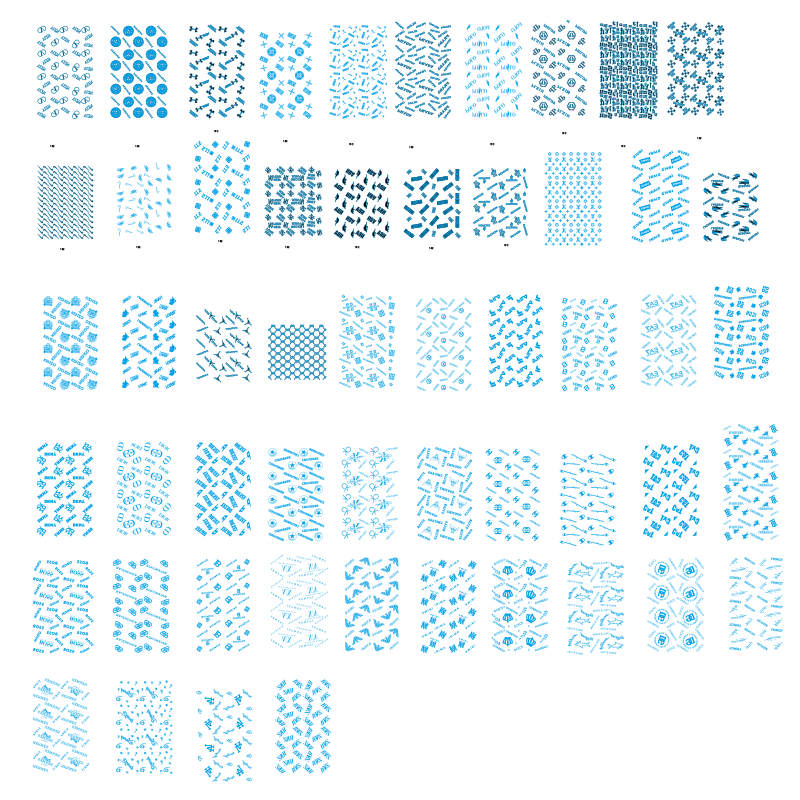 Custom Ultrasonic Molds for Welding, Cutting and SealingHigh-precision custom tooling in industrial-grade steel, built for ultrasonic welding, cutting, or sealing and customizable to suit different customer requirements.View Product →
are developed with the customer's part in hand, and where the job is better served by a different machine format entirely, a handheld unit is sometimes the more practical route — for example the
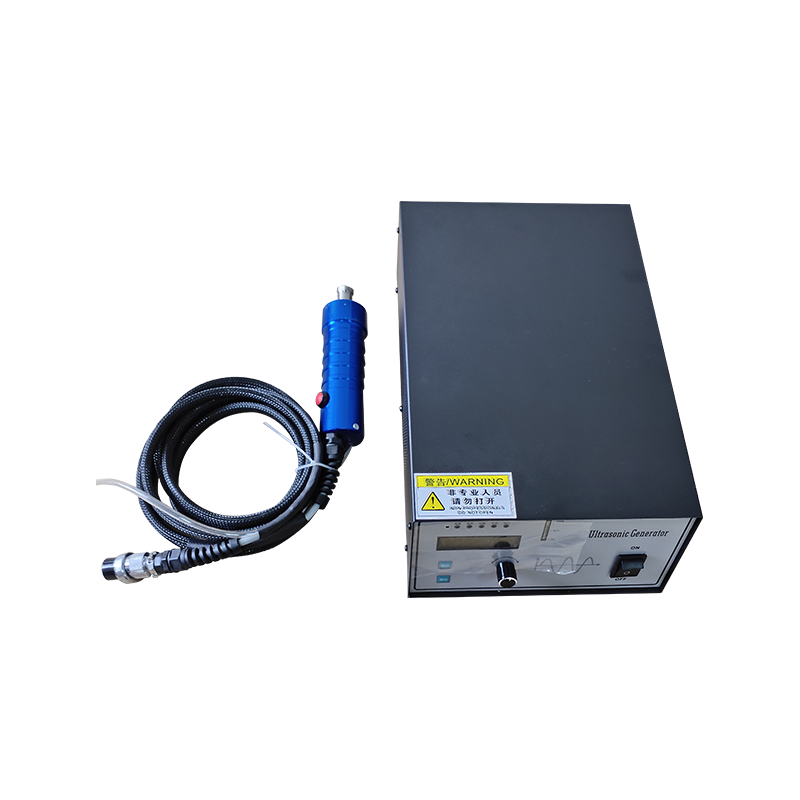
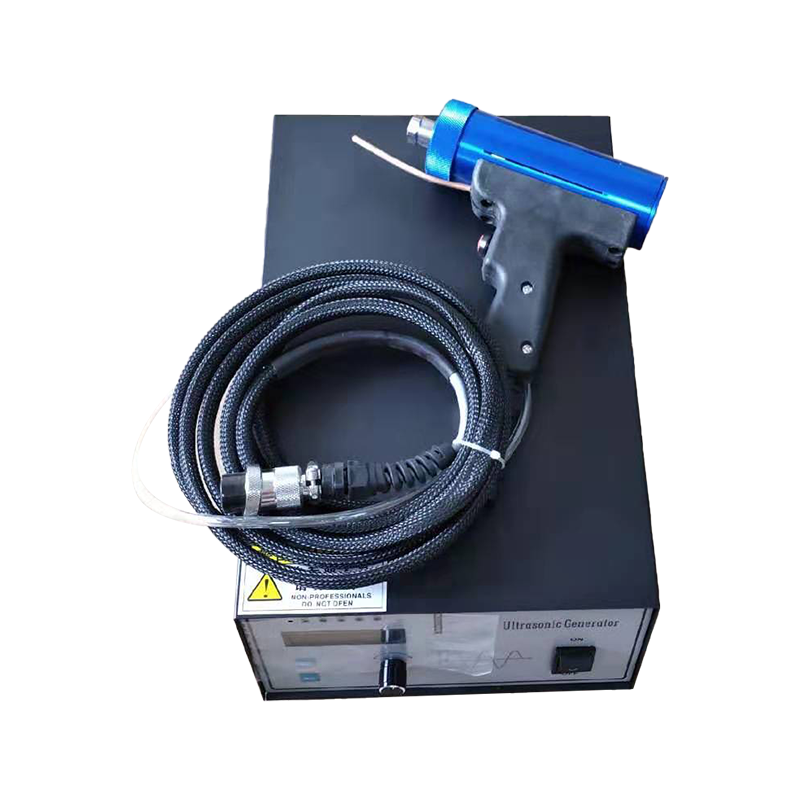 AH-30 Sonic Handheld Ultrasonic Spot WelderCompact handheld ultrasonic spot welder for thin sheet metal or wires, suited to repair work and low-volume assembly, with 28 kHz or 35 kHz operation.View Product →
used for repair work and low-volume assembly.
If you are reviewing the whole assembly rather than just the tooling, our overview of ultrasonic welding machines shows how horn, fixture and drive electronics are matched in practice.
The ultrasonic welder horn is a tuned mechanical component, not a shaped block of metal. Get the material, profile and tuning right and the rest of the stack behaves predictably; ignore any one of them and you will spend your maintenance budget chasing inconsistent welds. Start with the material you are joining, match the horn to the machine's frequency and amplitude window, and inspect the face and stud regularly. Most of the horn problems we are asked to diagnose turn out to be selection or upkeep issues rather than manufacturing defects — which is good news, because both are within your control.

Copyright © ChangZhou AoHeng Machinery Co., Ltd. All Rights Reserved