English
 中文简体
 русский
 Español
Home / Blog / Industry News / Ultrasonic Welder for Plastic: A Practical Guide to Setup and Selection


Request A Quote
Somewhere in almost every plant we visit there is a machine that makes a short, sharp hiss, and a finished assembly appears before you can blink. That is an ultrasonic welder working on plastic, and it has quietly replaced glue pots, screws and solvent baths on thousands of production lines. We have spent years building these machines and standing beside the people who run them, and this guide gathers what we have learned along the way: how the process works, which plastics behave, how to design the joint, and how to pick a machine you will not regret.
Content
There is no flame, no hot plate and no adhesive. A power supply sends a high-frequency electrical signal to a converter, which converts it into mechanical vibration, usually at 15, 20 or 40 kHz. That vibration travels down a horn, sometimes called a sonotrode, which presses against the part. The movement is tiny, measured in microns, but it happens tens of thousands of times per second.
Where the two plastic halves touch, that motion creates friction between the molecules, and friction becomes heat. The temperature rises only at the interface, just enough to soften the material, and the weld forms in a fraction of a second to a couple of seconds. Pressure holds the melt together while it cools, and the part comes out bonded, with no curing time and no consumables to buy.
This is why the process earns its keep on high-volume lines. Cycle times are short and repeatable, energy goes only where the joint needs it, and the finished part looks clean, without the squeeze-out you get from glue. The trade-offs are real too: the joint has to be designed for the process, the fixture has to hold the part precisely, and not every plastic plays along.
A well-set machine follows the same rhythm every cycle, and understanding it makes troubleshooting much easier:
Each of those steps is a setting on the machine. Weld time, hold time, down force, amplitude and trigger force all interact, so change one at a time when you are dialling in a new part.
Broadly speaking, the easier a plastic flows when it melts, the easier it welds. Amorphous resins soften gradually over a wide temperature range, which gives you room to work. Semi-crystalline resins melt sharply, so the window between "not bonded" and "over-welded" is narrow and the joint design matters more. Fillers add stiffness and absorb energy, and parts with high glass content often need higher amplitude or a different joining method entirely.
| Material family | Common examples | How it welds | What to watch |
|---|---|---|---|
| Amorphous thermoplastics | ABS, PS, PC, PMMA, PVC | Very forgiving | Dry PC and PMMA; keep mould release sprays away from the joint |
| Semi-crystalline thermoplastics | PP, PE, PA, POM, PET | Needs more amplitude and a sharper joint design | Narrow melt window; shear joints usually outperform simple ridges |
| Filled and reinforced grades | Glass-filled PA, talc-filled PP | Weldable but energy-hungry | Above roughly 30 percent filler, expect to rework the joint geometry |
| Elastomers and thermosets | TPE, EPDM, epoxy, phenolic | Not suited to ultrasonic welding | Choose adhesive bonding or mechanical fastening instead |
Two practical notes from the shop floor. First, moisture is the quiet enemy of a good weld, especially with nylon and polycarbonate, so dry the resin properly. Second, contamination at the joint, whether it is dust, oil or a stubborn mould release agent, will cost you more failed parts than any machine setting.
If a weld fails, most of the time the answer is in the drawing rather than the machine. The purpose of a joint feature is to concentrate energy at a small contact area so melting starts there first.
A triangular ridge, typically a fraction of a millimetre tall, moulded into one half of the part. It touches down first, melts quickly and flows into the gap. This is the default choice for amorphous plastics and small, neat assemblies.
One half has a step that fits tightly inside the other, and the two vertical walls rub against each other during welding. Melt forms along that wall, which gives strong, leak-tight seals and works far better than a simple ridge on semi-crystalline resins.
Not every job needs a full perimeter. Staking turns a moulded boss into a rivet head over another component, and spot welding joins two flat moulded surfaces at a single point, which is handy for large parts that cannot be pressed evenly across their whole face.
Frequency, power and format all follow from the part you are welding. Small, delicate components usually prefer 40 kHz because the amplitude is lower and the risk of damage is smaller. General plastic assembly sits comfortably at 20 kHz. Larger, stiffer parts often weld better at 15 kHz, where higher amplitude moves more material.
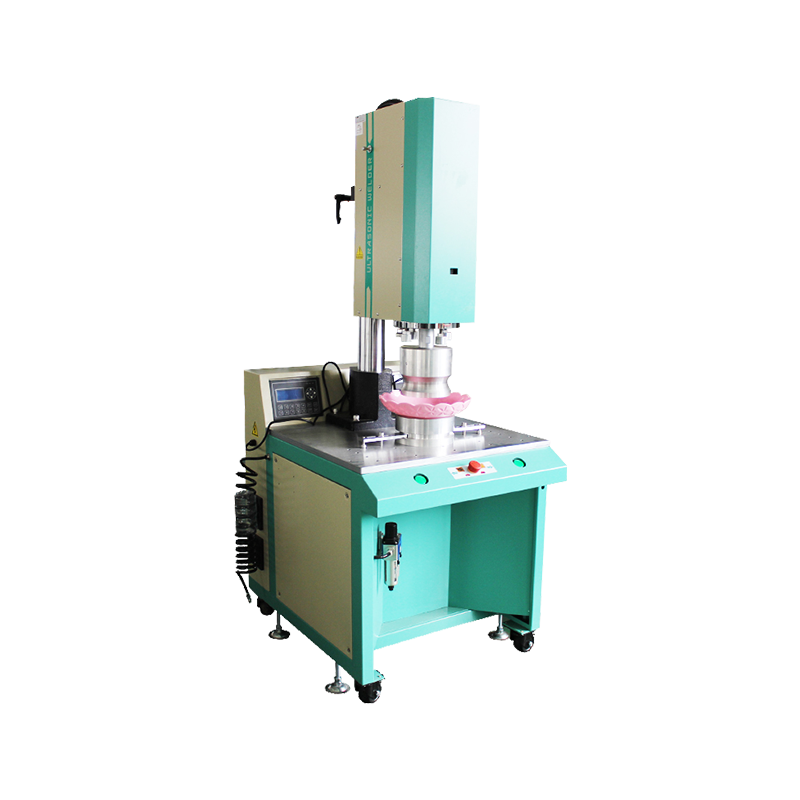
Power ratings typically run from around one kilowatt up to four or more. A higher rating does not automatically make a better weld, but it gives you headroom for bigger weld areas and short cycle times. For repeatable bench work with a fixture and pneumatic press, a column-mounted unit is the usual first purchase.
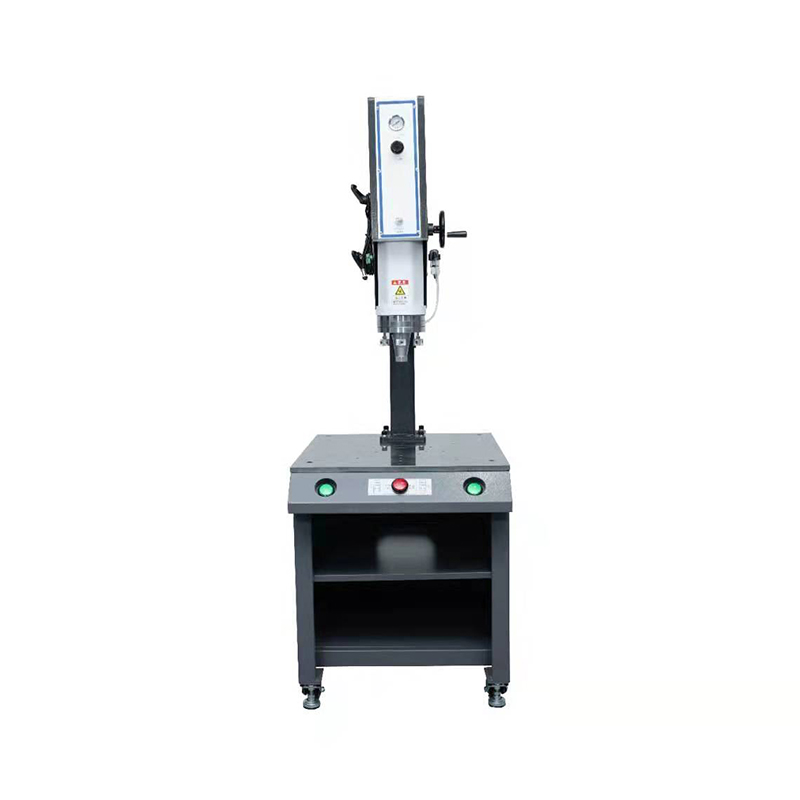 AH-DSL 15kHz 4200W Column-Mounted Ultrasonic Plastic Welding MachineA column-mounted ultrasonic welder with 15kHz operation and 4200–6000W power, suited to repeatable bench welding with fixtures and pneumatic presses.View Product →
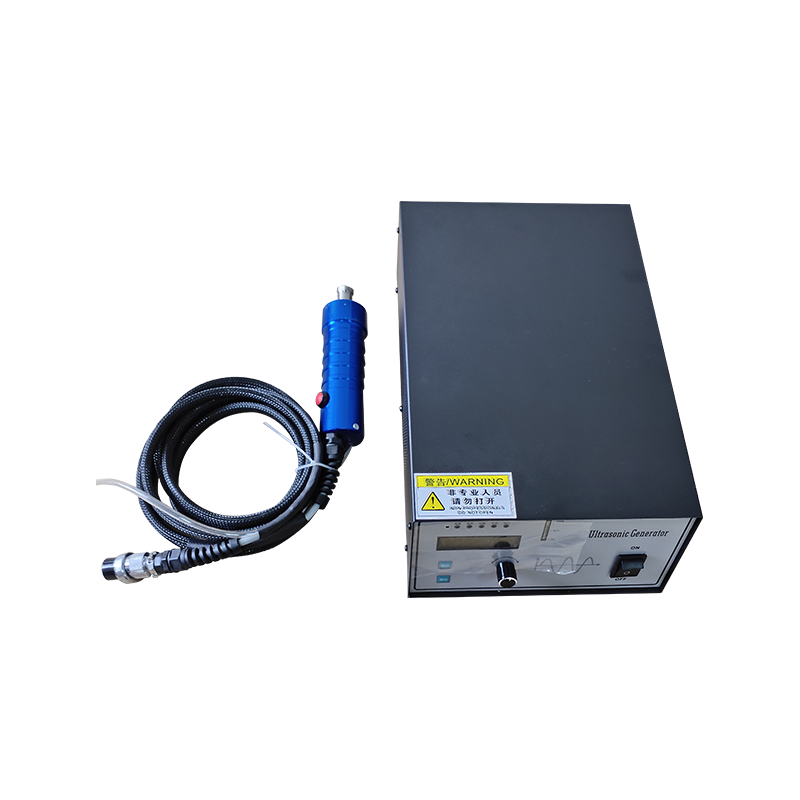
When parts are large, awkward or already clamped in a jig somewhere else on the line, a handheld unit saves you from building a press around an object that was never meant to fit in one.
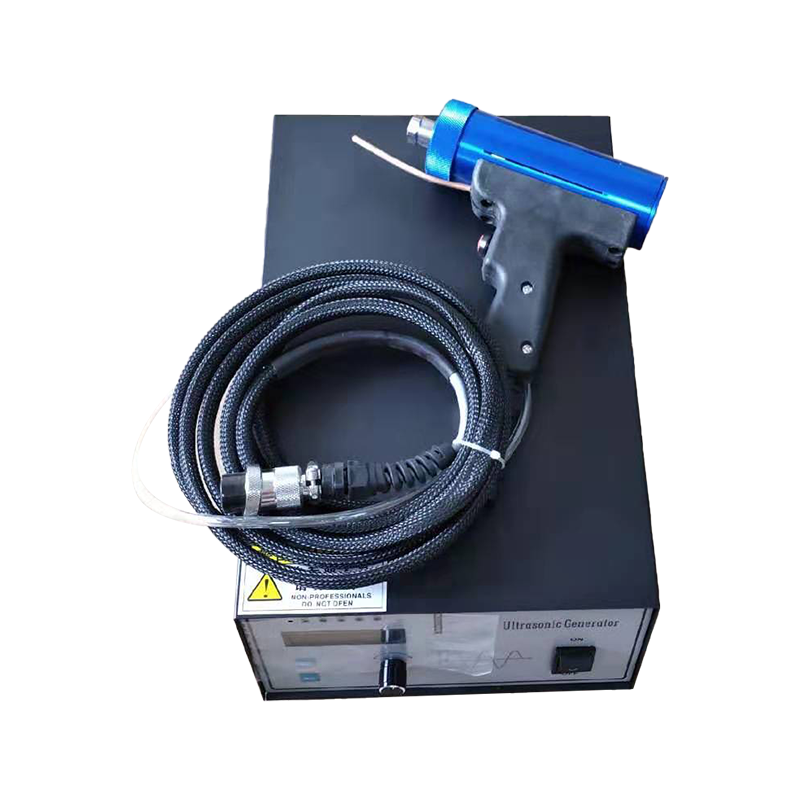 AH-30 Custom Handheld Ultrasonic Spot WelderA compact 28/35kHz handheld spot welder for awkward or already-jigged parts, with up to 1000W output and typically no filler material required.View Product →
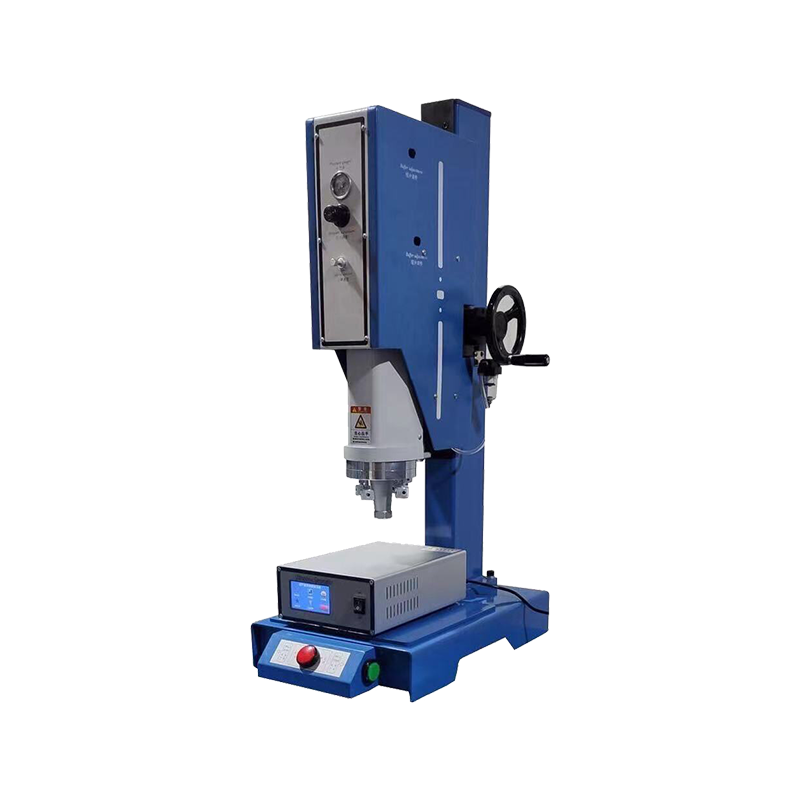
And for low-volume runs, prototyping or repairs, a manual machine with a simple lever and a clear view of the joint is often the most sensible place to start.
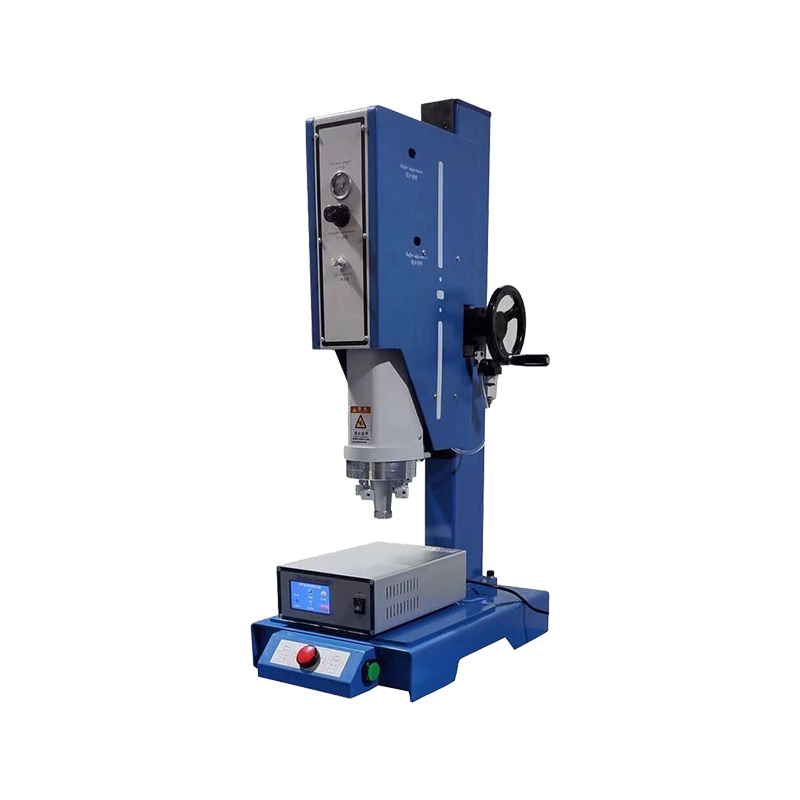 AH-SL15K Manual Ultrasonic Plastic Welding MachineA 15kHz manual-mode welder with pneumatic drive and 2000–3200W power, suited to low-volume runs, prototyping and repairs where simple lever operation and joint visibility matter.View Product →
Whichever format you choose, the horn and fixture are part of the system, not accessories. A horn shaped for your part profile focuses energy where it belongs, and a fixture that holds the geometry firmly prevents the shifting that produces inconsistent welds. We make custom ultrasonic moulds for exactly this reason, and it is worth reading up on how ultrasonic welding machine models and specifications line up with different production tasks before you settle on a configuration.
Flash or stringy melt around the joint usually means too much energy, too much amplitude or a joint that is too small for the load. Weak welds that pull apart cleanly point the other way: not enough energy reaching the interface, poor contact because of warped parts, or contamination. Inconsistent results across a batch are nearly always mechanical, such as a fixture that lets the part rock, a worn horn face or air pressure that drifts through the shift.
One habit worth building: keep a first-off sample from every setup and compare new parts against it under the same light. Eyes catch far more than a specification sheet does.
Ultrasonic welding is clean, but it is not risk-free. The vibration is audible, and prolonged exposure at 15 and 20 kHz can affect hearing, so enclosure or hearing protection is sensible. Horn faces get hot during continuous running, so let them cool before you touch them. Keep the press guarded and interlocked, and never reach into the weld zone while the machine is live.
On the maintenance side, inspect horn faces weekly for pitting and wear, check mounting torques, keep the converter and booster dry and clean, and log air pressure. Small habits like these extend tooling life considerably and keep weld quality stable from the first part of the shift to the last.
We have watched this technology move from a specialist tool to a standard part of the production line across textiles, disposable hygiene products and general plastics. The machines have become more capable, but the fundamentals have not changed: a sensible joint, a firm fixture, the right frequency and a well-trained operator. If you are weighing up a purchase, send us your part and your resin grade, and we will tell you honestly what the process can and cannot do for it.

Copyright © ChangZhou AoHeng Machinery Co., Ltd. All Rights Reserved